



Embedded System Programming: Languages, Architecture, and Applications
Embedded systems combine specialized hardware and firmware to perform a single, well‑defined task—think of a washing machine or a car’s engine control unit. By integrating the two, these systems offer compact size, lower cost, and higher reliability compared to general‑purpose computing platforms.
Key Components of an Embedded System
- Microcontroller – The central processing unit that drives all other peripherals.
- Real‑Time Operating System (RTOS) – Manages time‑critical tasks and scheduling.
- Device Drivers – Translate OS requests into hardware actions.
- Communication Stacks – Handle data exchange with external devices.
- Application Code – Implements the device’s core functionality.
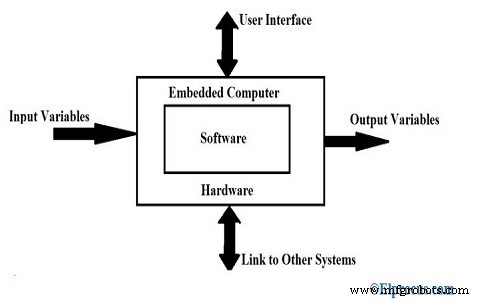
What Is Embedded Software?
Embedded software, often called firmware, is the code that directs hardware behavior. It must meet strict timing and resource constraints, storing data in volatile (RAM) or non‑volatile (ROM) memory and executing with minimal latency.
Programming Languages for Embedded Systems
Developers choose from several languages based on memory footprint, execution speed, portability, and development effort. The most common are:
- C / Embedded C – Offers low‑level access with high performance.
- C++ – Adds object‑oriented features, though often avoided for very small devices.
- Python – Used on higher‑end boards like Raspberry Pi.
- Java / JavaScript – Employed when a virtual machine is available, e.g., Android devices.
Typical RTOSs include Linux, VxWorks, QNX, FreeRTOS, and µC/OS‑II. The language choice directly influences code size, speed, and maintainability.
Assembly vs. High‑Level Languages
Assembly offers maximum control and compactness but sacrifices portability and increases development cost. For most embedded applications, C or Embedded C strikes the best balance.
Embedded C: The Industry Standard
- Small learning curve and easy debugging.
- Compiler portability across microcontrollers.
- Combines high‑level constructs with direct hardware manipulation.
- Highly efficient, reliable, and flexible.
Illustrative Example: LED Blink on an 8051
Below is a concise Keil C program that toggles an LED connected to PORT1:
#include <reg51.h>

void delay(int);

void main(void) {
    P1 = 0x00;          // LED off
    while(1) {
        P1 = 0xFF;      // LED on
        delay(1000);
        P1 = 0x00;      // LED off
        delay(1000);
    }
}

void delay(int d) {
    unsigned int i;
    for (; d > 0; d--) {
        for (i = 250; i > 0; i--);
        for (i = 248; i > 0; i--);
    }
}
Benefits of Embedded C
- Fast data loading.
- Cost‑effective development.
- Minimal resource usage.
Limitations
- Upgrades can be complex.
- Many devices require a reset after a fault.
- Scaling to larger applications may be challenging.
Typical Applications
- Automotive controls
- Home appliances
- Medical devices
- Industrial automation
- Defense systems
FAQs
- What is embedded software?
- Firmware that drives hardware, executing precise instructions to perform a dedicated task.
- Which languages are used?
- C, C++, Python, Java, and JavaScript on suitable platforms.
- How does an embedded system differ from a PC?
- Embedded systems run a single, often real‑time, task with limited resources, whereas PCs support multitasking and general computing.
- What categories exist?
- Real‑time, stand‑alone, networked, mobile; and small, medium, sophisticated based on microcontroller capability.
- Key applications?
- Washing machines, digital cameras, automotive ECUs, and more.
Embedded
- Control Unit Explained: Components & Design in CPUs
- What Is Coding? A Practical Guide to Languages, Workflows, and Common Challenges
- Operating System Fundamentals: Key Components and Functions
- Embedded System Design: Steps, Principles, and Real‑World Applications
- Embedded Operating Systems: History, Architecture, and Real‑World Applications
- Embedded Systems Fundamentals & Real-World Applications
- Embedded Systems: Definition, Architecture, and Real‑World Applications
- Safeguard Off‑Site Firmware Programming for Your Embedded Devices
- Conveyor Systems Explained: Types, Applications, and Benefits (PDF Included)
- Refrigerant Charging Explained: Why Proper Gas Levels Matter