



Embedded Operating Systems: History, Architecture, and Real‑World Applications
The first true embedded system appeared with Charles Stark Draper’s Apollo Guidance Computer, developed at MIT’s Instrumentation Laboratory in 1965. In 1987 Wind River Systems released VxWorks, the first real‑time embedded OS, followed by Linus Torvalds’ Linux kernel in 1991. Today, embedded OSs such as Apple iOS, Google Android, and Microsoft Windows Embedded power a wide array of devices. Leading vendors include Delphi Automotive PLC (Chennai), Tata Elxsi (Thiruvananthapuram), Audrey Technologies (Kerala), Brisa Technologies (Karnataka), and Microwave Technologies (Bangalore).
What Is an Embedded Operating System?
An embedded OS is a specialized operating system tightly integrated with hardware to control a dedicated device. Unlike general‑purpose OSs that run on a variety of machines, an embedded OS is designed for a specific function, often with real‑time constraints and limited resources.
Block Diagram of an Embedded System
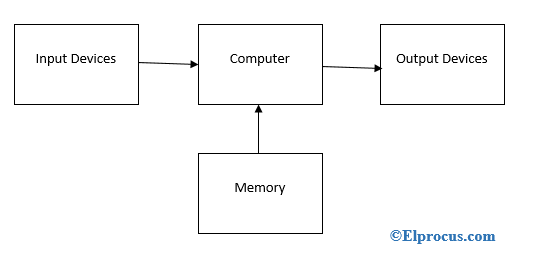
A typical embedded system consists of three core components:
- Input Devices: Sensors, keyboards, microphones, switches, etc., capture data from the user or environment.
- Output Devices: Displays, LEDs, motors, buzzers, and other actuators present results or actions to users.
- Memory: Non‑volatile storage such as flash or EEPROM, and volatile RAM (e.g., DRAM) hold firmware, configuration data, and runtime information.
Windows Embedded Operating Systems
Microsoft’s Windows platform has evolved to support various embedded scenarios. Since the first Windows release in 1985, Microsoft has offered dedicated OSs for servers, PCs, and mobile devices.
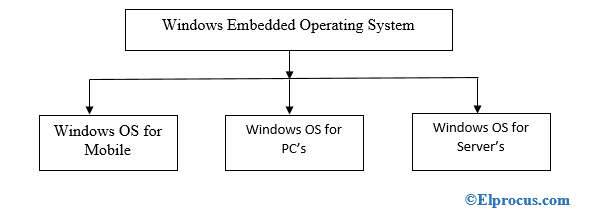
- Server OS: Windows NT (1993), Windows 2000 Server (2000), Windows Server 2016.
- Mobile OS: Windows 6.1 (2008), Windows 6.5 (2009), Windows 7 (2011), Windows 8/9, Windows 10 (2015).
- PC OS: Windows 1.0 (1985), Windows 95 (1995), Windows ME (2000), Windows 9/10 (2015).
Operating System Types
Operating systems can be classified into several categories, each suited to different computing contexts:
- Real‑Time OS (RTOS): Handles time‑critical tasks; includes soft‑real‑time and hard‑real‑time variants.
- Multitasking OS: Supports concurrent execution; can be preemptive or cooperative.
- Network OS: Manages LAN connectivity; examples include Windows 2000 and Linux.
- Distributed OS: Coordinates multiple independent computers to act as a single system.
- Batch OS: Processes jobs in groups, common in payroll or reporting systems.
Embedded OS vs. Desktop OS
The following table highlights key distinctions between embedded and desktop operating systems:
| S.NO | Embedded Operating System | Desktop Operating System |
|---|---|---|
| 1 | First embedded OS: Apollo Guidance Computer (1965) | First desktop OS: NLC (On‑Line System, 1960) |
| 2 | Designed for single‑task execution | Supports multitasking |
| 3 | Fast boot times | Slower boot times |
| 4 | Quick web‑browser load times | Longer load times |
| 5 | Rapid application launch | Slower application launch |
| 6 | Primarily flash‑based storage | Hard drives and flash |
| 7 | Lower cost | Higher cost |
| 8 | Requires minimal storage | Requires more storage |
| 9 | Limited application features | Rich application ecosystem |
Common Applications
- Mobile phones
- Home appliances (washing machines, microwave ovens, dishwashers)
- Televisions and displays
- Personal computers and laptops
- Automotive systems (vehicles, infotainment, control units)
- Financial terminals (ATMs)
- Spacecraft and satellites
Advantages of Embedded OSs
- Easy to design for a specific function
- Low development and operational cost
- High performance with tight integration
- Low power consumption
- Compact footprint
- Reliability in mission‑critical environments
Disadvantages
- Limited diagnostic and troubleshooting capabilities
- Data transfer between systems can be cumbersome
- Hard to modify once hardware is finalized
Real‑Time Characteristics
- Reliability – consistent performance under load
- Predictability – deterministic response times
- Manageability – streamlined configuration and maintenance
- Scalability – ability to add features without compromising timing
- Compactness – minimal resource usage for maximum efficiency
Embedded operating systems are integral to modern technology, powering everything from everyday appliances to critical aerospace systems. They embody a blend of specialized hardware control and efficient software design that enables reliable, real‑time performance in a wide range of applications.
Embedded
- Radar Sensors Explained: How They Work & Their Modern Applications
- How Distance Sensors Work and Their Key Applications
- Infrared (IR) Sensors: How They Work & Practical Circuit Diagrams
- Embedded System Programming: Languages, Architecture, and Applications
- Interrupts Explained: Types, Mechanisms, and Applications in Modern Computing
- Operating System Fundamentals: Key Components and Functions
- Embedded System Design: Steps, Principles, and Real‑World Applications
- Embedded Systems Fundamentals & Real-World Applications
- Embedded Systems: Definition, Architecture, and Real‑World Applications
- What Is Destructive Testing and Its Critical Applications