



Kneron Unveils KL720 AI SoC, Boosting Edge Device Power Efficiency
San Diego‑based AI silicon and IP startup Kneron has introduced its second‑generation AI system‑on‑chip (SoC), the KL720. The new device builds on Kneron’s existing neural processing unit (NPU) IP, adding a Cadence DSP AI co‑processor and an Arm Cortex‑M4 core for system control.
Designed for low‑power edge and smart‑home applications—ranging from video doorbells to robot vacuums—the KL720 is also suitable for a wide spectrum of devices, from electric cars to kitchen appliances, according to Kneron’s marketing materials.
In terms of energy efficiency, Kneron claims the KL720 surpasses Intel’s Movidius line and Google’s Coral Edge TPU. The NPU core delivers 1.4 TOPS, while the entire SoC—including the DSP and Cortex‑M4—achieves 0.9 TOPS/W. This performance level is more than enough to process 4K video and Full‑HD 1080p imagery. For comparison, the predecessor KL520 (launched in May 2019) delivered 0.3 TOPS at 0.6 TOPS/W.
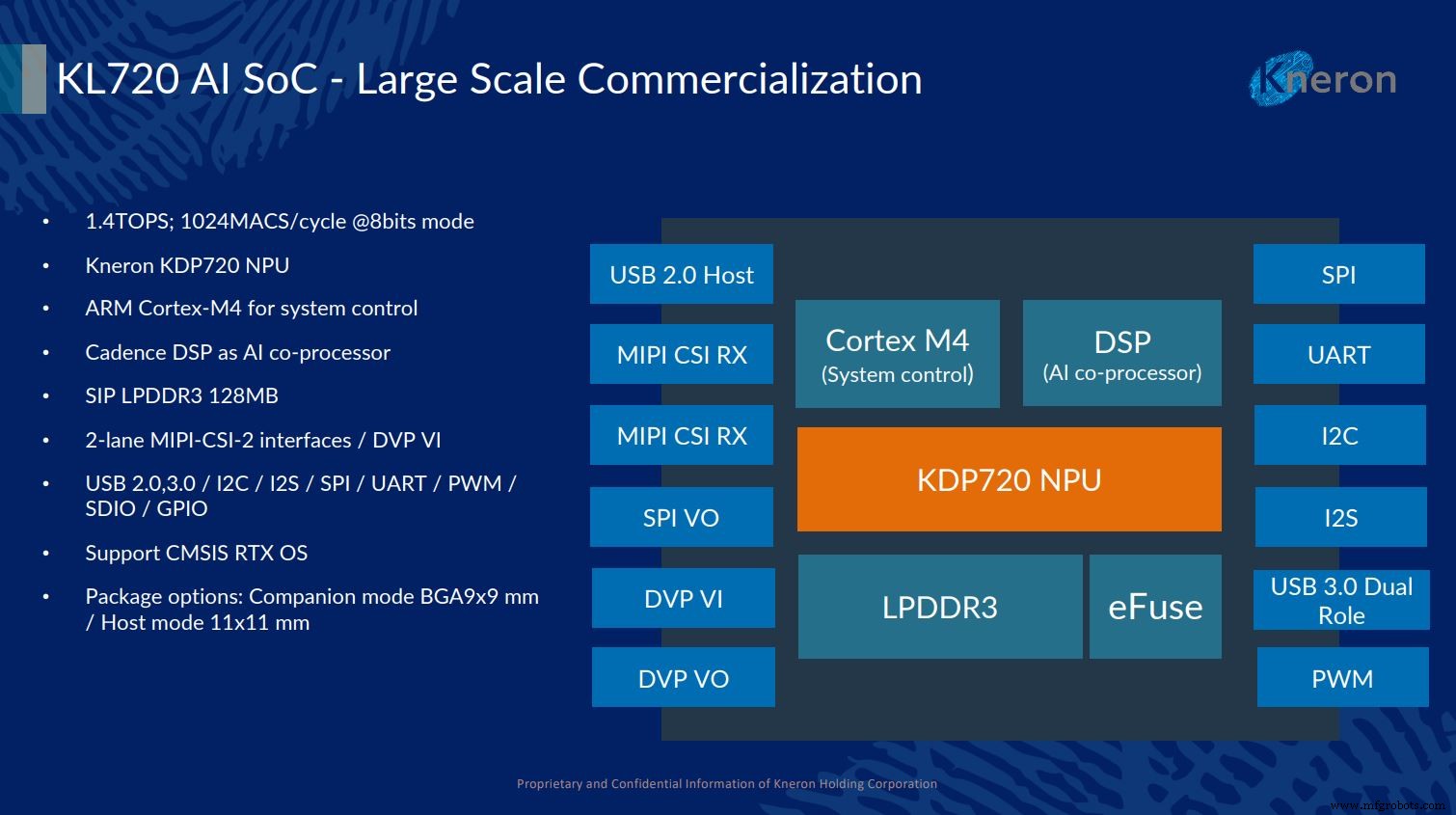
Kneron’s KL720 AI SoC features the company’s NPU IP alongside a DSP AI co‑processor and a Cortex‑M4 system control core (Image: Kneron)
Unlike its predecessor, which focused exclusively on image processing, the KL720 also excels at audio tasks. With voice‑control interfaces becoming ubiquitous, on‑device AI offers faster, cheaper, and privacy‑preserving alternatives to cloud‑based processing. Kneron asserts the KL720’s computational headroom can recognize a full dictionary of words—well beyond competing chips that support only specific wake words.
Since at least January, Kneron has been demoing the KL720 prototype to potential customers. Founded in 2015, the company began by developing AI models for facial recognition and has since expanded into AI silicon and NPU IP licensing. The KL720’s NPU has already been successfully integrated with Cadence Tensilica Vision P6 DSP IP and Synopsys’ ARC processor IP.
The NPU’s versatility stems from its reconfigurable architecture. CEO Albert Liu explained in a prior interview with EE Times: "We break down mainstream AI frameworks and convolutional neural network models into basic building blocks, reconfiguring them to match the application and framework. This lets our solution adapt and accelerate the relevant CNN models."
"For instance, ResNet for face recognition and LSTM for voice recognition share common building blocks. While other vendors may need separate solutions, Kneron’s reconfigurable engine can switch between ResNet and LSTM in real time," Liu added.
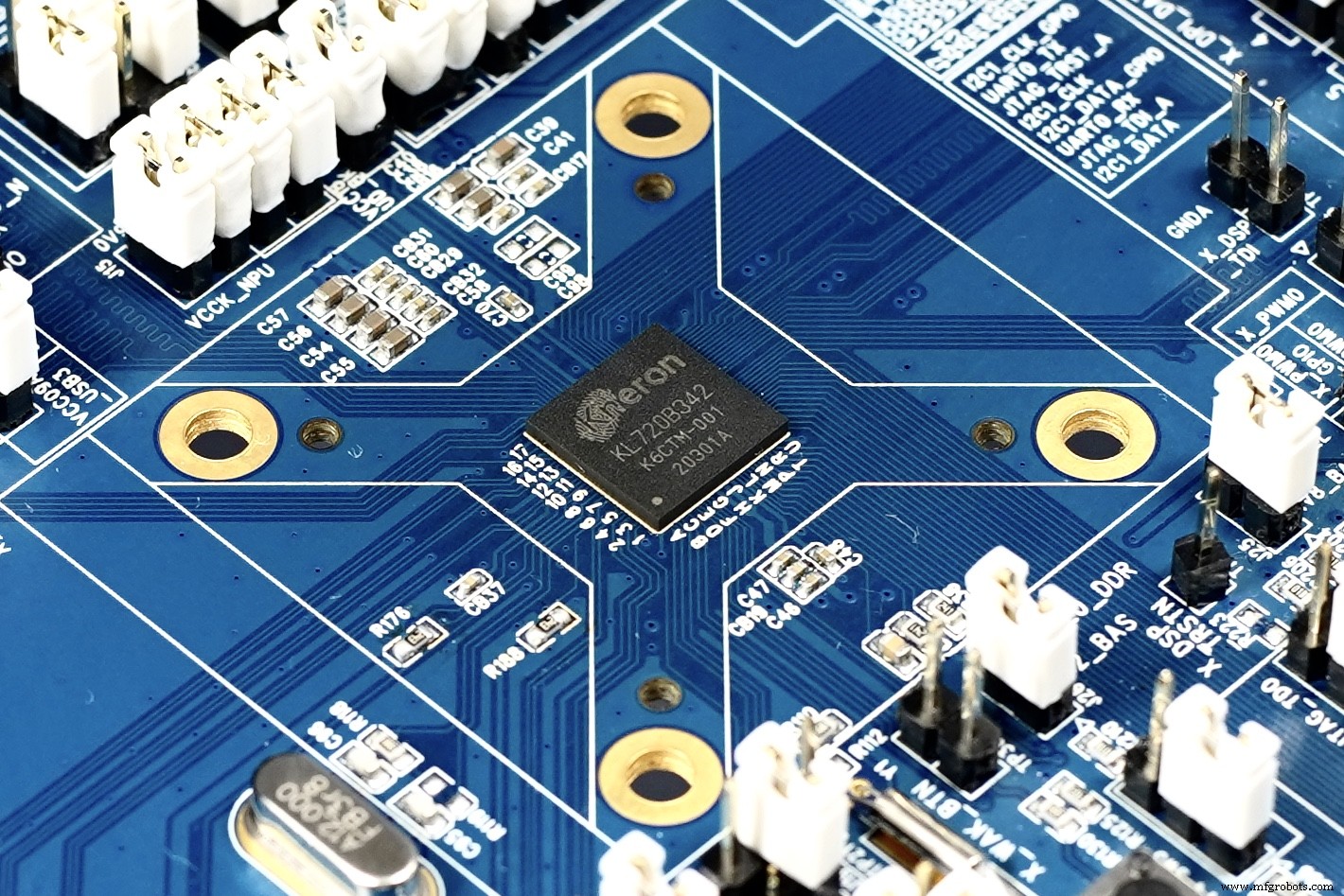
Kneron’s KL720 can handle both video and audio processing (Image: Kneron)
In addition to the KL720, Kneron has introduced Kneo—a private mesh network for connected AI‑powered sensors. Kneo allows devices equipped with Kneron chips to communicate locally, storing data on‑device and protecting it with blockchain. The solution empowers consumers to keep their data away from large cloud providers and, if desired, sell it on their own terms.
Samples of the KL720 will be available “soon.”
>> This article was originally published on our sister site, EE Times.
Embedded
- Harnessing Energy Harvesting for Reliable Edge IoT Devices
- Mouser Stocks Microchip SAM R34 LoRa SiP: Ultra‑Low‑Power Edge Device Solution
- Blaize Unveils Graph Streaming Processor (GSP) for AI Workloads
- AImotive Launches aiWare3P Neural Network Accelerator for High-Performance Automotive Vision
- GreenWaves Unveils GAP9: Ultra‑Low‑Power AI Accelerator Achieves 50 mW Power with 50 GOPS Performance
- Low‑Power LED Drivers Empower Next‑Gen Automotive Lighting
- ImeC Introduces First Spiking Neural Network Radar Chip, Cutting Power by 100× and Latency by 10×
- Atmosic Low‑Power Wristband Powers Bluetooth 5 Contact Tracing for Toronto Wolfpack Events
- SFM3019: Precision Flow Sensor for Advanced Respiratory Devices
- Self‑Retracting Fall Protection Devices: Essential Safety Solutions for Heights