



Micro‑Force FMA Sensors: Precision Force Sensing for Medical Infusion Pumps
Applications of Micro‑Force FMA Sensors in Healthcare
In today’s healthcare landscape, the demand for reliable, high‑precision medical devices continues to grow. At the heart of many life‑supporting instruments are force sensors that provide critical data on fluid delivery, ensuring both patient safety and operator efficiency.
Force Sensors in Infusion Pumps
Infusion pumps—used in hospitals, ICUs, emergency wards, and home care—deliver medications, nutrients, or fluids at exact rates. Key types include ambulatory pumps, enteral feeding pumps, dialysis machines, and portable units.
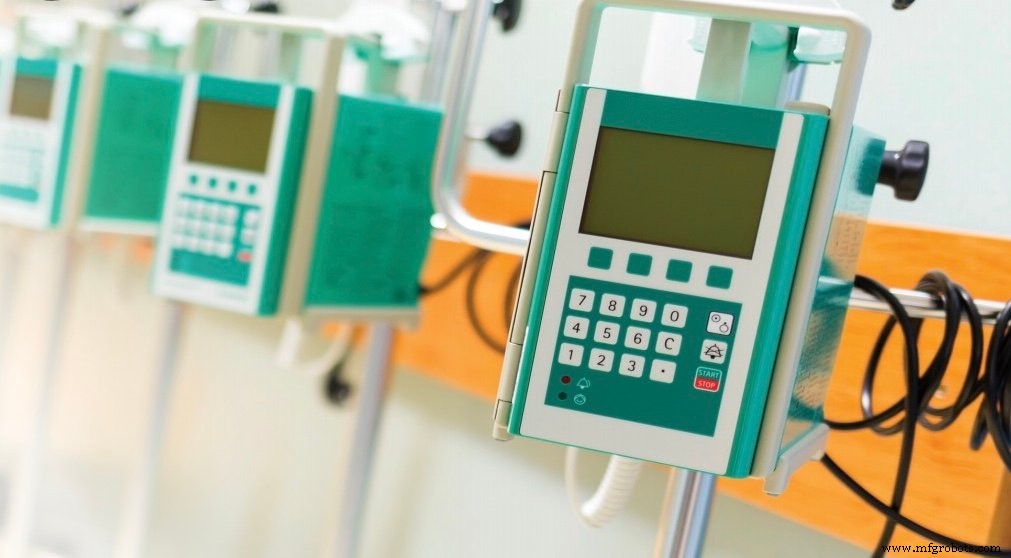
Within these devices, precision force sensors measure pressure in the delivery tube to:
- Verify accurate delivery of fluids, nutrients, or medications.
- Detect blockages or obstructions promptly.
- Signal when the fluid bag requires replacement.
Design requirements for these sensors include high accuracy, sensitivity, reliability, and compliance with medical standards.
Micro‑Force FMA Sensors Overview
Honeywell’s Micro‑Force FMA series delivers piezoresistive force sensing tailored for medical precision. Each sensor offers configurable analog or digital (I2C/SPI) outputs, with optional amplification and temperature compensation. An onboard ASIC maintains calibration, offset, and non‑linearity corrections across temperature variations.

Available force ranges—0–15 N, 0–5 N, and 0–25 N—enable fine‑tuned resolution and sensitivity. Features include direct mechanical coupling, a corrosion‑resistant stainless steel sphere interface, selectable supply voltages, and low power consumption (14 mW). The sensors meet ISO 9001, REACH, RoHS, MIL‑STD‑202 Method 214 (20.71 Gms) for vibration, and Method 213 (50 G) for shock.
Benefits for Infusion Pumps
Integrating Micro‑Force FMA sensors into infusion pumps offers:
- High Accuracy: Precise fluid flow rates guarantee correct dosage.
- Early Blockage Detection: Enhanced safety through timely alerts.
- Long‑Term Stability: Consistent performance over extended use.
- Ease of Maintenance: External placement isolates media, reducing cleaning and sterilization needs.
- Compact Design: 5 mm × 5 mm form factor suits tight‑space applications.
The need for reliable, precision medical devices will only increase. Honeywell’s Micro‑Force FMA sensors are engineered to meet this challenge and are also suitable for laboratory instruments, touch panels, load sensors, compression sensing, weight measurement, and force‑grip equipment.
Industry Articles are a form of content that allows industry partners to share useful news, messages, and technology with All About Circuits readers in a way editorial content is not well suited to. All Industry Articles are subject to strict editorial guidelines with the intention of offering readers useful news, technical expertise, or stories. The viewpoints and opinions expressed in Industry Articles are those of the partner and not necessarily those of All About Circuits or its writers.
Sensor
- How Connected Sensors and Smart Processors Power Industry 4.0
- Maxim Integrated’s New Sensors Slash Power, Size, and Boost Accuracy for Wearable Health Devices
- MEMS Sensors: Powering the Invisible IoT
- Evonik’s Implant‑Grade PEEK Filament: Advanced 3D‑Printing Material for Medical Implants
- New Thermoplastic Biomaterial Offers Precise Control Over Degradation and Mechanical Properties for Medical Applications
- 9T Labs Elevates Additive Manufacturing for Advanced Medical & Aerospace Applications
- Hardinge GT27 Super-Precision Turning Center – Precision Machining for Medical Devices
- Graphite‑Based Sensor Boosts Sensitivity & Flexibility for Wearable Medical Devices
- Specialty Metals Advancing Medical Device Innovation
- Vickers VH02 Vane Pumps: Precision Fluid Management for Commercial Industries