



Organic vs. Inorganic Pigments: Definitions, Differences, and Key Applications
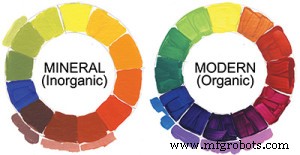
Pigments—whether organic or inorganic—are the coloring agents that give life to everything from everyday textiles to high‑performance automotive coatings. They come in a variety of forms and serve multiple roles beyond mere color.
What are pigments?
Pigments are insoluble coloring materials that remain stable on the surface or medium they are applied to. In practice they are used as dispersions or pastes that can be mixed into inks, paints, plastics, and more. Their core functions include:
- Delivering vibrant, long‑lasting color
- Providing corrosion resistance
- Masking underlying surfaces
- Enhancing mechanical strength
- Improving flow and leveling characteristics
- Boosting durability and weathering performance
Organic vs. Inorganic Pigments
By definition, organic pigments contain carbon (and often sulfur or nitrogen) in their molecular structure, while inorganic pigments do not. Classic examples of organic pigments include the highly stable phthalocyanine family, which is prized for its deep blues and greens. Inorganic pigments are typically metal‑cation based compounds—such as zinc, titanium, or iron oxides—paired with non‑metal anions. Because of their crystalline nature, inorganic pigments are almost always insoluble in both solvents and many polymers.
Plant‑derived dyes and pigments—such as indigo or cochineal—fall under the organic category and are generally considered safe for consumer use. In contrast, many inorganic pigments contain heavy metals or other toxic elements, which can pose environmental or health risks if not handled properly.
Key Application Areas
- Printing Inks – From everyday office printer cartridges to specialty inks for metal foils and lacquers, pigments are essential for achieving sharp, fade‑resistant images.
- Paints – Whether you’re applying protective coatings to steel, decorative finishes to interiors, or automotive enamels, pigment pastes are the backbone of virtually every paint formulation.
- Textiles and Leather – High‑quality dyes and pigments bind strongly to polyester, nylon, and leather fibers, providing long‑lasting color that resists washing and sunlight.
Choosing the right pigment—and ensuring it meets industry standards—can make the difference between a product that lasts years and one that fades or fails prematurely.
Dye
- Tantalum Products Explained: Powder, Wire, Capacitors & Their High-Tech Applications
- 13 Types of Refractory Materials and Their Key Industrial Applications
- Special Oxide Refractories: Types, Applications, and Industrial Benefits
- Mastering Polymer Architecture for Optimal Phthalocyanine Pigment Dispersion
- How Pigments Power Paints: A Deep Dive into Color, Protection, and Industrial Applications
- Shifting Industry Standards: From Inorganic to Eco‑Friendly Organic Pigments
- Robotic Positioners: Key to Precision and Efficiency in Welding
- Explore How CNC Machining Enhances Precision, Efficiency, and Innovation in Modern Manufacturing
- Essential PCB Components & Their Applications: How They Drive Modern Electronics
- Exploring Hot and Cold Chamber Die Casting: Types, Applications, and Advantages