



Why Formula 1 Engines Rely on Tungsten‑Alloy Crankshafts
Why Formula 1 Engines Rely on Tungsten‑Alloy Crankshafts
In the relentless pursuit of speed, Formula 1 teams demand components that combine extreme strength, durability, and precise balance. Tungsten‑alloy crankshafts meet these criteria by offering a density 60 % greater than lead, twice that of steel, while delivering exceptional hardness, wear resistance, corrosion resistance, a high melting point, and outstanding temperature tolerance.

As the heart of the engine, the crankshaft transforms the pistons’ reciprocating motion into rotational energy that powers the car’s drivetrain. In an F1 power unit, the crankshaft’s design is critical for delivering peak torque and maintaining stability at extreme speeds.
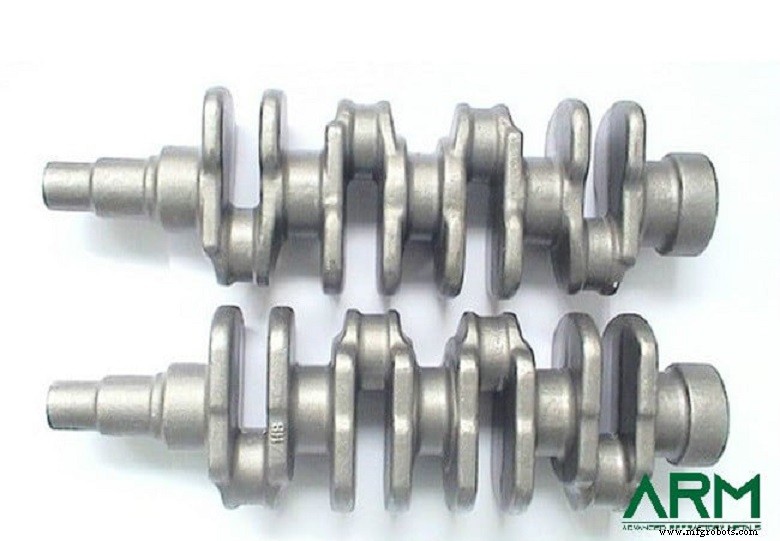
Tungsten‑Alloy Crankshafts
Engineers categorize tungsten‑alloy crankshafts into counterweight and power variants. Counterweights balance the rotating inertia produced by the connecting rods and pistons, ensuring smooth operation. Power crankshafts directly receive the piston’s force, converting it into rotary motion while minimizing vibration.
In an F1 engine, precise counterweight placement is essential; any imbalance can lead to catastrophic failure. Tungsten’s high specific gravity allows designers to fine‑tune the weight distribution without adding bulk, enabling optimal engine balance and improved handling.
The design of a tungsten‑alloy counterweight is highly specialized: shape, mass, and position are engineered to match the engine’s cylinder configuration and firing order. These optimizations reduce turbulence and improve power delivery across the rev range.
Conclusion
Understanding the role of tungsten‑alloy crankshafts offers insight into why Formula 1 teams invest in these high‑performance materials. For deeper knowledge on tungsten alloys and other refractory metals, visit Advanced Refractory Metals (ARM).
ARM, headquartered in Lake Forest, California, is a leading global supplier of high‑quality refractory metals and alloys—including niobium, molybdenum, tantalum, rhenium, tungsten, titanium, and zirconium—at competitive prices.
Metal
- Tungsten Alloy: The Ultimate Forklift Counterweight Solution
- Tungsten Alloy Wafers: Applications, Benefits, and Industrial Uses
- Tungsten Copper Alloy vs Tungsten Nickel‑Iron Alloy: A Technical Comparison
- Premium Tungsten Alloy Fishing Sinkers: Advanced Design & Performance
- Tungsten Alloy Bullets: The Eco‑Friendly, High‑Performance Alternative to Lead
- Tungsten Alloy Spherical Fragments: Design, Performance, and Tactical Applications
- Tungsten‑Copper vs. Molybdenum‑Copper Alloys: Key Differences & Applications
- Tungsten Alloy in Modern Weaponry: Applications, Properties, and Global Resources
- Lead‑Free Tungsten Alloy Radiation Shielding Plate – Superior X‑Ray and Gamma Protection
- Military Tungsten Alloy Fittings: Unmatched Density, Strength, and Heat Resistance