



How Much E‑Waste Does an Average U.S. Household Discard Each Year?
How Much E‑Waste Does an Average U.S. Household Discard Each Year?
How much e‑waste does your household generate each year? Think of 80 kg—roughly the weight of 20 laptops—clumped together in your living room. That’s the average amount of e‑waste discarded by a typical U.S. household annually.
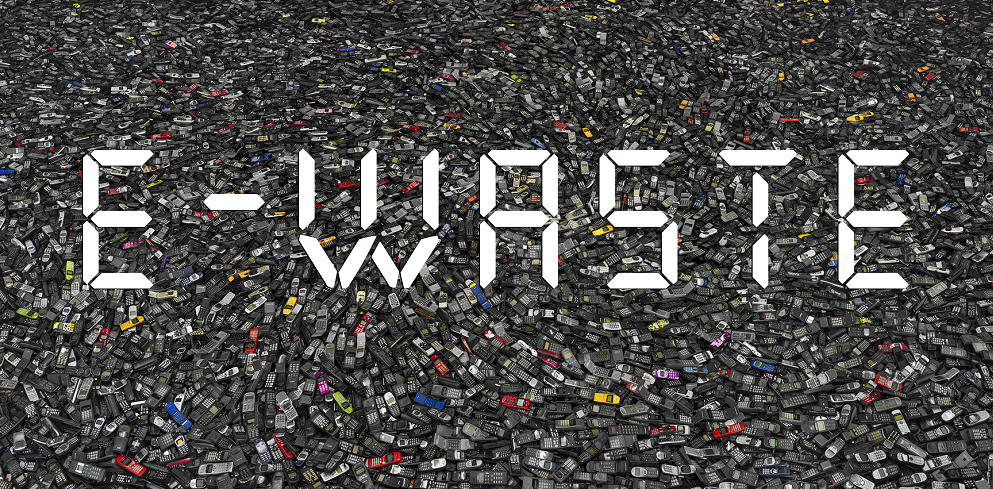
According to the 2017 Global E‑Waste Monitor, published by the United Nations University, the International Telecommunication Union and the International Solid Waste Association, rising incomes and falling device prices are driving a relentless increase in e‑waste volumes.
In 2016, the world generated 44.7 million tonnes of e‑waste—enough to fill 123 million 18‑wheel (40‑ton) trucks. By 2021 that figure is projected to grow 17 % to 52.2 million tonnes.
Globally, the average person produced 6.1 kg of e‑waste in 2016, translating to 24.5 kg per household of four. That is roughly three‑thirds of the amount generated by a U.S. household.
Many of those discarded items are legacy televisions replaced by flat‑screen models. In the U.S., about 70 % of old TVs are collected for separate recycling, though state‑level performance varies.
In the United States, roughly 30 % of e‑waste ends up in landfills, incinerators, or is exported as waste, while the remaining 70 % is either recycled or lost to other channels. Worldwide, 80 % of e‑waste suffered a similar fate in 2016. ‘We’re discarding at least $55 billion worth of recyclable materials,’ says Vanessa Gray of the ITU.
A single discarded smartphone contains valuable metals—gold, silver, copper, tantalum, platinum, palladium, tungsten alloys and more. From 100 000 phones, recycling would recover approximately 2.4 kg of gold, 900 kg of copper, 25 kg of silver, and a substantial amount of other metals, worth about $250 000 at current prices.
Ruediger Kuehr, director of UNU’s Sustainable Recycling Program, warns that ‘we’re wasting precious resources, and future production of these devices will suffer if we don’t recover these materials.’
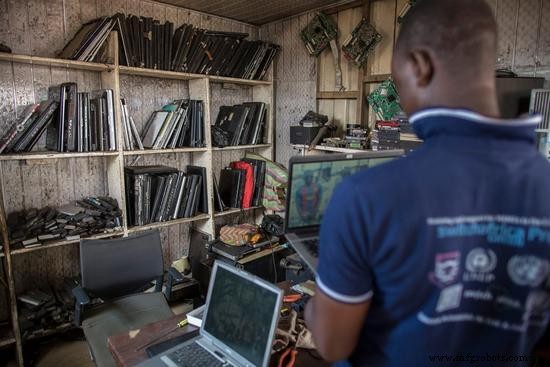
Electronics leave a large ecological footprint: their production demands significant energy, water, and often scarce raw materials. Efficient recycling is essential to mitigate that impact, but the process is complex.
A typical smartphone contains 40–60 different elements. Manufacturers rarely design devices for repair or easy disassembly because their business model relies on frequent new‑device sales.
While consumers prioritize price and performance, many call for ‘healthier’ electronics—devices that are easier to repair and recycle. Vanessa Gray notes that consumers desire universal, interchangeable chargers, yet manufacturers still supply a fragmented array of proprietary adapters.
Last year, the ITU adopted a new environmental standard mandating universal chargers for laptops and other portable devices. Adoption rates remain uncertain, but shifting business models—such as car sharing and cloud‑based services—can also reduce the volume of e‑waste.
Thank you for exploring the scale of e‑waste with us. We are Advanced Refractory Metals (ARM), a global supplier of high‑performance refractory metals. Our expertise helps businesses select the right materials for their applications, ensuring durability and sustainability.
Metal
- How Much Does Your Equipment Really Cost to Operate?
- Stop Losing Time to Manual Data Entry: A Proven Solution for Maintenance Managers
- Choosing the Right Coupling: A Practical Guide to Fit, Performance, and Compliance
- How to Apply PTFE (Teflon) Tape to Threads for a Leak‑Proof Seal
- Expert Guide to Cleaning Burnt Aluminum: Safe, Eco‑Friendly Methods
- Optimizing Your Manufacturing Marketing Budget: Smart Spending Strategies
- How to Calculate the Solar Panel Capacity Needed for Your Home Appliances
- Mastering Analog Electronics: Essential Knowledge for PCB Design
- Unlocking the Benefits of CNC-Milled Aluminum Enclosures
- Determining the Horsepower Needed to Run a Hydraulic Pump