



Nanocellulose from Blue‑Green Algae: A Sustainable Pathway to High‑Purity Biomaterials
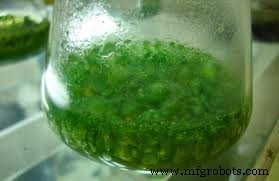
Nanocellulose from Blue‑Green Algae
Recent breakthroughs have demonstrated that cyanobacteria—commonly known as blue‑green algae—can be engineered to produce nanocellulose, a versatile, high‑purity biomaterial with applications ranging from bioplastics to biofuels.
Cellulose: The Earth’s Most Abundant Polymer
Cellulose is a linear polysaccharide composed of hundreds to tens of thousands of β(1→4)-linked D‑glucose units. It forms the structural backbone of plant cell walls, many algal species, and certain bacterial biofilms. Key examples of its prevalence include cotton fibers (≈90 % cellulose), wood (40–50 %), and hemp (≈45 %). Only a few organisms can synthesize cellulose in its native nanostructure—microfibrils—directly.
What Is Nanocellulose?
Nanocellulose refers to cellulose fibrils with lateral dimensions of 5–20 nm and lengths ranging from tens of nanometers to several microns. It can be produced via acid hydrolysis of native fibers, yielding highly crystalline nanowhiskers, or by bacterial fermentation, which yields bacterial nanocellulose (BNC) known for its exceptional purity and gel‑like, pseudo‑plastic behavior.
Engineering Cyanobacteria to Produce Nanocellulose
Building on early work that sequenced nanocellulose‑producing genes in Acetobacter xylinum, researchers at the University of Texas at Austin have genetically modified cyanobacteria to synthesize long‑chain, crystalline nanocellulose. These engineered strains harness sunlight and water, converting CO₂ into nanocellulose and potentially scaling production to industrial levels.
Why Nanocellulose from Cyanobacteria Matters
Unlike conventional sources, cyanobacterial nanocellulose can be grown in aqueous, non‑agricultural settings, reducing land use and competition with food crops. Moreover, the process offers a carbon‑negative feedstock that could underpin sustainable biofuels and a broad range of high‑performance composites.
Key challenges remain—notably, optimizing yield, downstream purification, and cost‑effective scaling—but the science is sound, and the potential economic and environmental benefits are substantial.
Nanomaterials
- Converting Decimal Numbers to Binary, Octal, and Hexadecimal: A Practical Guide
- From Electric to Electronic: The Evolution of Control in Circuits
- Lyocell: A Sustainable, Strong Cellulose Fiber for Fashion and Industry
- Rayon: History, Production, and the Future of a Versatile Cellulosic Fiber
- Why Switching from C to C++ Can Boost Embedded Development
- Alumina Nanorods Synthesized from Chromium‑Containing Alumina Sludge: Influence of Cr, Fe, and Mg Doping on Crystal Transformation
- Small-Angle Scattering Reveals Structure of Deterministic Nanoscale Fat Fractals
- Blink Two LEDs at Different Rates on Arduino Without delay()
- From UI to AI: Navigating the Automation Landscape
- Japan's Pioneering Journey into Robotics