



The Most Common Screw Drives Explained: Types, Uses, and Features
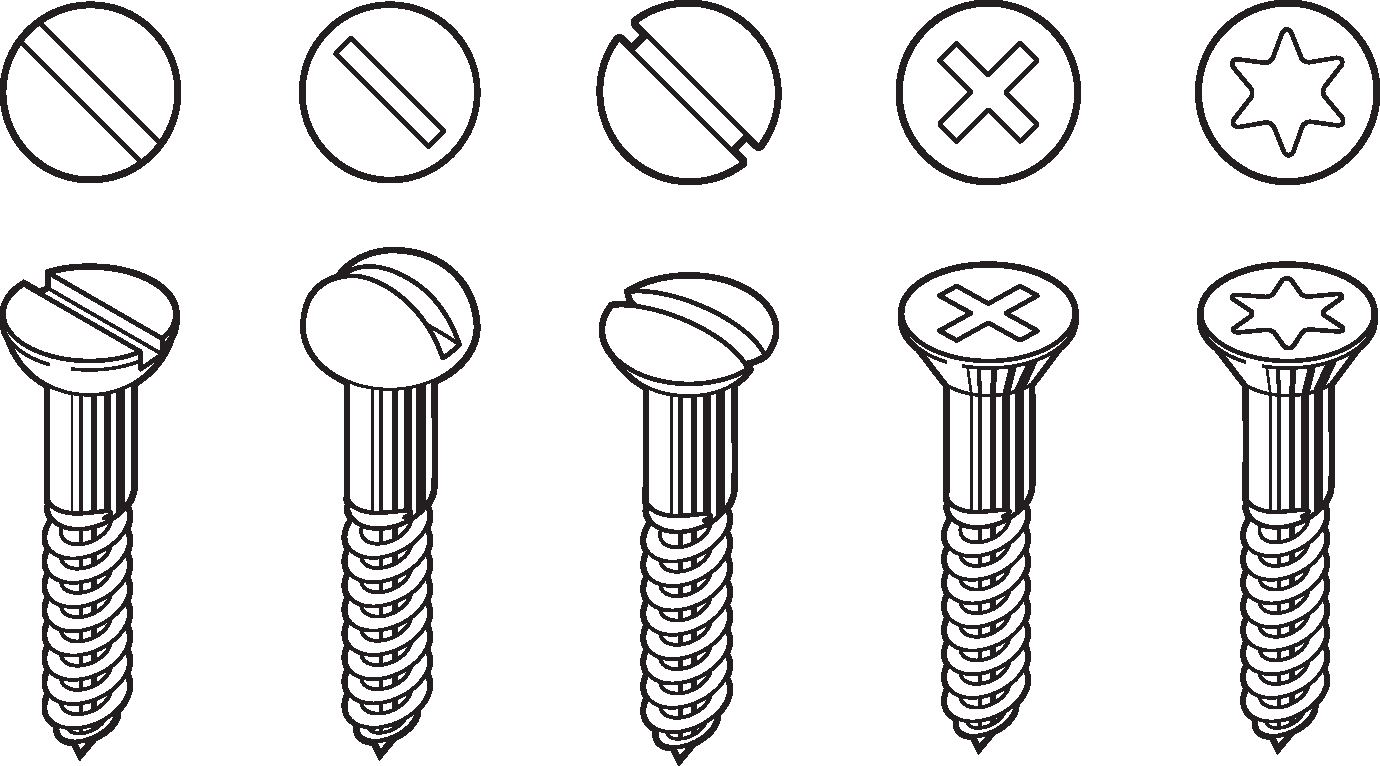
With hundreds of screw drive designs available, selecting the right one can be daunting. This guide focuses on the most widely used drives—slotted, Phillips, Hex, Hex socket (Allen), Torx, and One‑Way—highlighting their key characteristics, typical applications, and advantages.
1. Slotted Drive
The slotted screw head features a single slot and is driven with a flat‑bladed screwdriver. It was the earliest screw design, prized for its simplicity and low cost. While ideal for hand‑driven work, the slot can easily slip when using power tools, potentially damaging surrounding material.
2. Phillips Drive
Invented by John Thompson and later refined by Henry F. Phillips, the Phillips head was patented until 1966. Designed to cam‑out—slip out of the head when torque exceeds a threshold—it prevents overtightening. Although the term “Phillips” is often applied generically to crossed‑recess screws, only true Phillips designs provide this safety feature.
3. One‑Way Drive
Also known as a tamper‑free or one‑way clutch screw, this head accepts a standard flat‑bladed screwdriver for tightening but resists unscrewing. Specialized tools, such as a one‑way extractor, or methods like drilling or using locking pliers, are required to remove it.
4. Hex Drive
The hex head (six‑point) can be driven with a wrench or 6‑ or 12‑point socket. It is ubiquitous in mechanical assemblies and offers a good balance between torque capacity and ease of use.
5. Hex Socket (Allen) Drive
Featuring a recessed hexagon, this drive is operated with an Allen wrench. Tamper‑resistant variants include a pin that blocks removal with a standard tool.
6. Torx™ Drive
Introduced in 1967, Torx™—or “hexalobular internal driving feature” per ISO—has a six‑point star shape. It delivers higher torque than a comparable hex socket, resists cam‑out, and is widely used in automotive, computing, and consumer electronics. Tamper‑resistant Torx™ incorporates a central pin.
Other less common drives—such as square and 12‑point flange—are available for specialized applications.
Craftech supplies a comprehensive range of screw drives and head styles in numerous materials, ensuring the right fit for every project.
Questions or Comments? Share them in the comments below.
Want to dive deeper? Download our free guide to thread styles.

Resin
- Top 3 Tungsten Alloys and Their Key Applications
- 4 Essential Types of Coil Springs Explained
- Understanding the Three Most Common Hose Clamp Types
- Understanding the Four Most Common Types of Plungers
- The 6 Most Common Screw Drives Explained – Torque, Usage, and Selection
- Top 6 CNC Machine Types Every Manufacturer Should Know
- Top 5 Precision CNC Machining Techniques You Should Know
- Top 6 Precision CNC Machining Techniques Every Manufacturer Should Know
- Top Conveyor System Types for Efficient Material Handling
- Essential Guide to the Most Common Types of Car Jacks