



Five Ways Digital Anatomy 3D Printing Is Transforming Modern Medicine
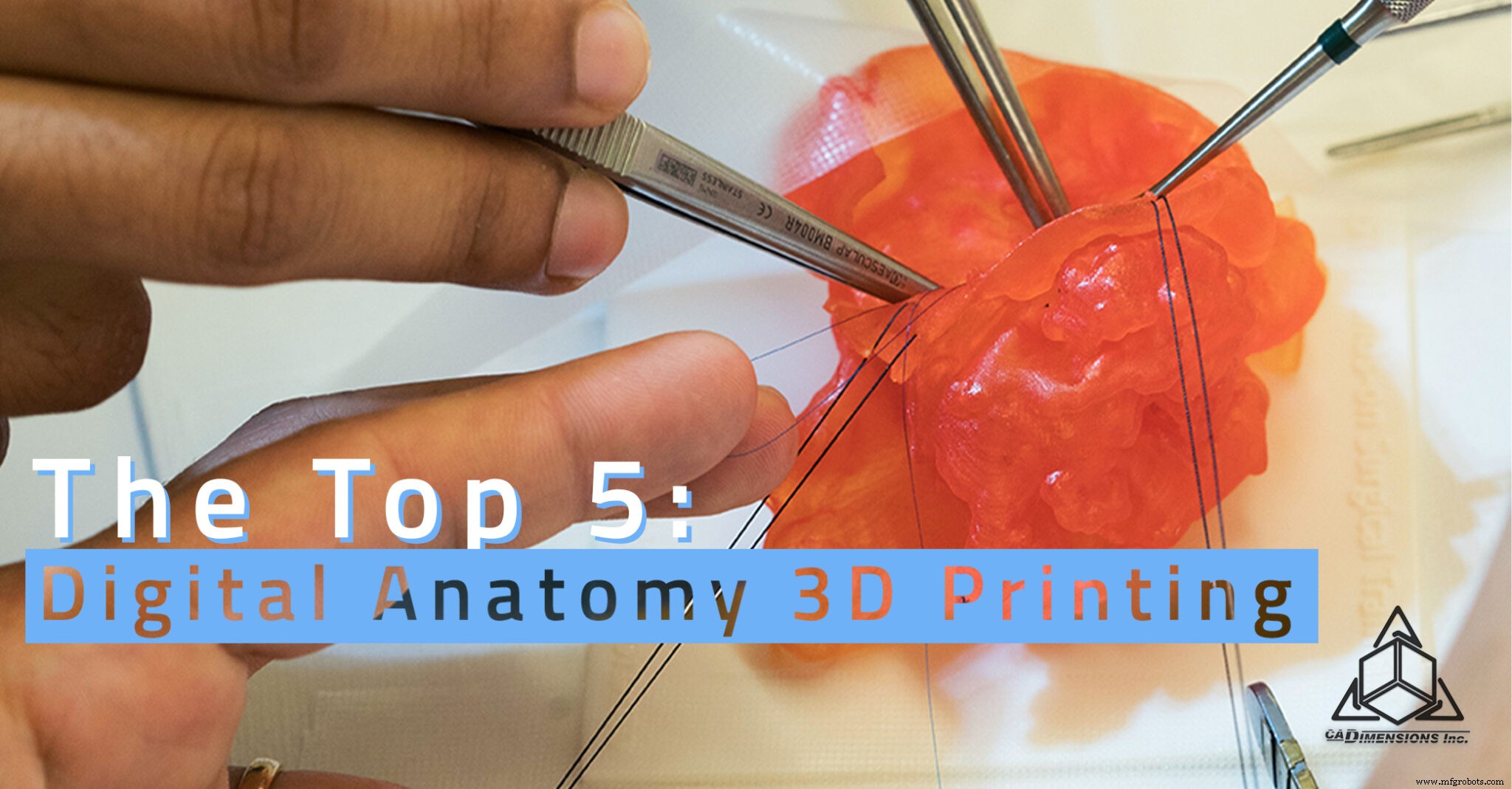
Medical 3D printing has progressed rapidly, thanks to innovations in hardware, materials, and software that now support FDA‑approved applications. Gartner analyst Pete Basiliere notes that by 2021, 25 % of surgeons will have rehearsed procedures on patient‑specific 3D‑printed models before operating. Stratasys’ new Digital Anatomy Printer is expanding these possibilities. Below are five key applications.
1. Surgeons and trainees can practice safely outside the operating room
Traditional in‑OR training is costly and carries patient risk, while the pressure on surgeons to enhance safety is mounting. 3D‑printed anatomical models let clinicians rehearse procedures in a controlled, risk‑free environment—allowing them to refine skills, learn from errors, and reach mastery before operating on a patient.
2. It replaces cadaver models that often lack targeted pathology
Cadavers are costly to procure, store, and dispose of, and they rarely replicate the precise pathology required for training. Digital anatomy printing uses patient imaging data to produce exact replicas, delivering ultra‑realistic, biomechanically accurate simulations at a cost up to 70 % lower than traditional methods.
3. It offers tactile feedback beyond CT and MRI
While CT and MRI scans are invaluable, they lack the tactile dimension that real tissue offers. Physical 3‑D models give surgeons a palpable sense of tissue resistance and instrument handling, enabling them to evaluate procedural strategies more accurately.
4. It eliminates the need for animal models
Animal‑based training raises ethical issues and public scrutiny. Leading companies such as Johnson & Johnson have pledged to phase out animal models, and many universities in Canada, the UK, and the U.S. have already eliminated them from surgical curricula. 3‑D printed anatomy offers the same, if not superior, realism without compromising ethical standards.
5. It enhances hands‑on product demonstrations
Surgeons evaluate instruments on realistic models or cadavers, making hands‑on demos essential for device adoption. 3‑D printed anatomy replicates the exact pathology a device targets, allowing manufacturers to showcase their products effectively while safeguarding proprietary designs.
Tags: 3D Printing, Digital Anatomy, Medical
3D printing
- 6 Key Insights Into Vanadium
- Tantalum: 5 Fascinating Facts About the High‑Temperature Refractory Metal
- 8 Fascinating Facts About Zirconium
- 6 Fascinating Facts About Nickel – History, Properties, and Global Impact
- 7 Expert-Backed Facts About Hafnium: Discovery, Properties, and Modern Applications
- 7 Fascinating Facts About Tungsten: From Discovery to Modern Applications
- Titanium Unveiled: 10 Key Facts About the World’s Most Versatile Metal
- Upcoming 3D Printer Models Poised to Transform the Industry
- 9 Myths About 3D Printing Debunked: What You Need to Know
- Laser Metal Printing: Key Facts for Precision Parts Manufacturing