



Markforged’s 3D‑Printed Soft Jaw Delivered the First 25 Mark One Printers
Even the most meticulous teams encounter unforeseen setbacks. When Markforged was racing to ship its inaugural 25 Mark One printers, the 6061 aluminum fixture used to shape the Z‑axis flag pocket turned out to be incorrect. With a looming deadline, the company faced a dilemma: send machines that were near‑perfect but imperfect, or delay delivery to correct the flaw. A tool responsible for carving the final radius in the Z‑axis flag pocket failed. Grinding the flag bases and shipping the units would have transferred the defect to the first users—a risk Markforged could not accept. The team needed a rapid, reliable fix. At that stage, the Mark One line was operating at full capacity for testing, making it difficult to divert resources to tooling. Nevertheless, the machinists were accustomed to crafting aluminum jaws, so a traditional route was initially considered. They milled a new 6061 fixture and tested it. The jaw performed well, but it scratched the forward‑facing surface—an unacceptable flaw for the precision required. Markforged then decided to harness its 3D‑printing capabilities. The idea was simple yet bold: print a soft jaw composed of a Kevlar (R) core for strength, wrapped in nylon layers to prevent scratching. The team exported the Solid Edge model as an STL, imported it into Markforged’s proprietary Eiger software, and the system automatically added Kevlar reinforcement. The estimated print time was 17 hours. During a scheduled maintenance window, the bed was cleaned, glued, and leveled. One of the Mark One printers was then instructed to print the new jaw. The team monitored the build overnight, watching the printer’s progress with cautious anticipation. The result was a flawless, scratch‑free jaw that fit perfectly into the vise. Engineers verified that the soft jaw could withstand over‑tightening without yielding, ensuring reliable machining of all 25 Z‑flag pockets. Initially skeptical, the machinist was won over when the jaw showed no give under clamping pressure. The transition from aluminum to a 3D‑printed Kevlar‑nylon jaw proved its superiority, and the first batch of Mark One printers shipped with pristine pockets and no surface defects. This episode exemplifies Markforged’s commitment to continuous improvement, leveraging additive manufacturing to solve critical manufacturing challenges on the fly.Markforged’s 3D‑Printed Soft Jaw Delivered the First 25 Mark One Printers
A Last‑Minute Breakdown Forced a New Approach
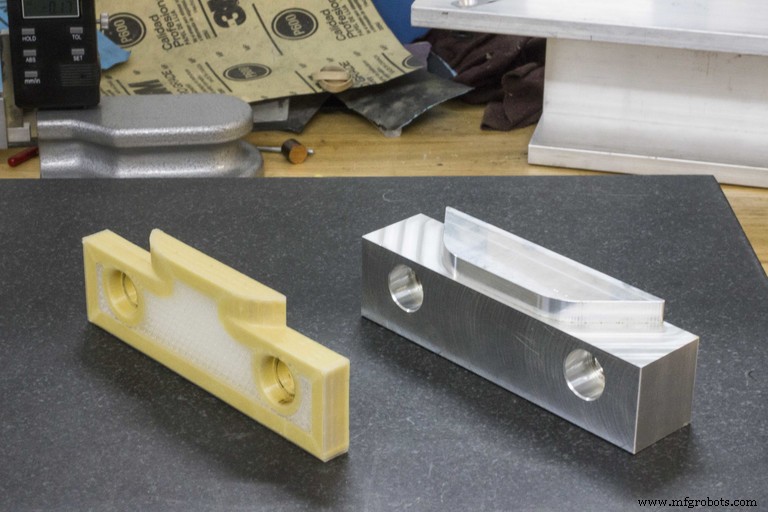
Leveraging Kevlar‑Nylon for a Superior Tooling Solution
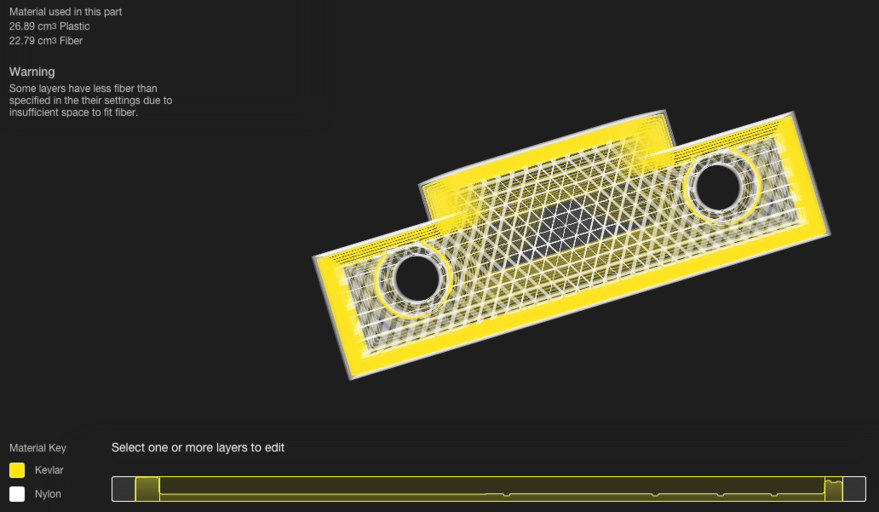
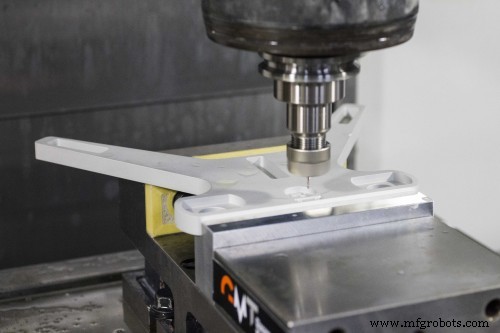
A Milestone in Production Tooling
3D printing
- 3D‑Printed Prosthetics: Transforming Access and Affordability for Amputees
- What to Make of 3D‑Printed Firearms: Ethics, Technology, and Public Policy
- Mark Two Unveiled at SolidWorks World 2016 – Faster, Stronger, Smarter 3D Printing
- Mark X Unibody 3D‑Printed Drone: Design, Build, and Flight Performance
- Revolutionizing Production: Markforged’s 3D‑Printed Spool Dispenser Innovation
- Weekly 3D‑Printed Highlight: Kevlar‑Reinforced Pliers
- Five Essential Commandments for Flawless 3D Printing on the Markforged Mark One
- Wärtsilä's First CE‑Certified 3D‑Printed Lifting Tool: A Game‑Changing Innovation
- Build Your First Arduino Robot: A Comprehensive Beginner's Guide
- Create Stunning 3D Printed Lithophanes: A Step‑by‑Step Guide