Industrial manufacturing
3D printing
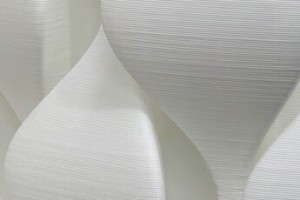
The 3D print layer height is one of the most important parameters when we talk about setting up a 3D printed model. If you want to achieve the best quality in the least amount of time possible it is very useful for you to understand how it works. In this article focused on the 3D print la
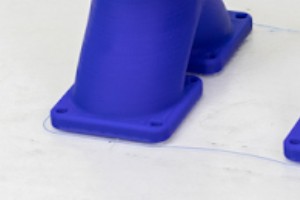
A well-adhered first layer is key in 3D printing to making sure your print turns out perfect. There are 3 distinct bases that, when strategically used, and depending on the piece and filaments, can greatly improve the adhesion to your model: the 3D printing brim, and raft modes. One shoul
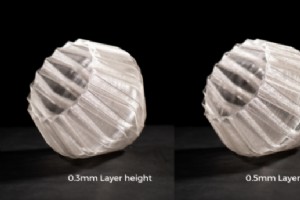
PLA is one of the easiest and most accessible materials in 3D printing. It has a wide variety of colors and can be purchased anywhere. Among them, there is one that stands out more than the rest; transparent PLA. In this article, we will teach you how to print with this material and how to
PLA is one of the most common materials used in FFF 3D printing due to its versatility and how easy to print it is. You can use it for a lot of applications and it’s very affordable in comparison to other 3D printing materials. In this article, we are gonna give some tips and tricks on how
Follow these 3D printing sustainable insights to see if this technology could help reduce your company’s carbon footprint. We talk local manufacturing, material options, prototyping, and minimizing waste. Perhaps you’re thinking, how eco-friendly can 3D printing be if it’s all plastic? I
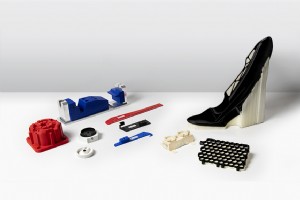
PLA, or Polylactic Acid, is one of the most common materials in FDM 3D printing due to its ease of printing. However, a new variant of this material has emerged, improving certain characteristics considerably without losing the unique properties of PLA; PLA+. In this article, we will make
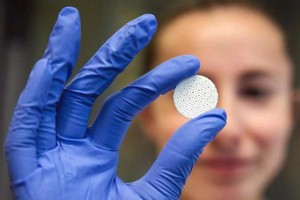
Using success stories with our BCN3D printers, we reveal some of the ways medical 3D printing is revolutionizing patient care. Unique properties such as design freedom and accuracy from 3D printing technology prove to be beneficial in all aspects from research to surgery. Can you think of

For any 3D printer food products heading out to market, it’s vital to ensure your clients are in safe hands. Let’s have a look at how it works, the considerations you should bear in mind, and the materials you have to choose from. Cutlery, packaging, water bottles…you name it and chances
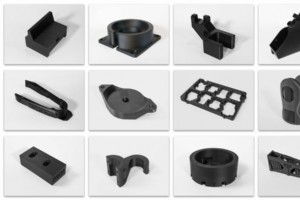
BCN3D Omega I60 is an industrial FFF 3D printer built for the factory floor designed specifically to produce large-scale, strong tooling, jigs, and fixtures. It has a wide range of features designed to take your 3D printing experience to new heights. In this blogpost, we invite you to ex

As we say goodbye to another remarkable year, the ending of 2023 marks an important moment for BCN3D. Rather than letting the achievements and innovations of the past months fade into memory, now is the perfect time to highlight the remarkable milestones we’ve made in the additive manufact
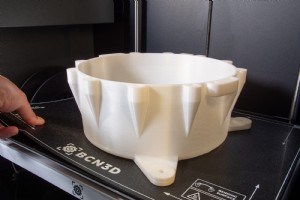
We are pleased to introduce the Flexible Printing Surface, a new product that is compatible with BCN3D Epsilon and Sigma D25 3D printers that are autocalibration enabled. This upgrade offers a faster way to remove print jobs with minimal effort. This not only saves time but also contribute

This study aims to investigate the influence of 3D printing parameters, specifically using the Fused Filament Fabrication (FFF) technique, on the mechanical characteristics of produced parts. The analysis involved examining 495 printed samples, with variations in key parameters such as ext

The Active Heated Chamber facilitates the fabrication of engineering polymers by maintaining an ideal temperature for the part throughout the printing process. In this article, it is explained how the heated chamber works and what stability is achieved throughout the entire printing proces
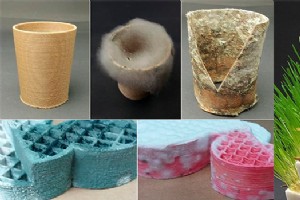
Every invention begins as an experiment and is considered revolutionary to some degree. Additive manufacturing is no different in this respect, and the experimental and revolutionary aspect of new materials and technologies in 3D printing is always very striking and exciting. This is due to t

Although most problems with FFF 3D printers are usually related to electronics, hotend performance or the condition of the printing surface, there are a number of mechanical problems that may occur on occasion and need to be checked periodically.Perpendicularity of axesThis is a problem cause
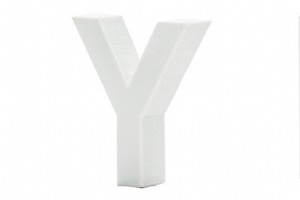
One of the major limitations of FFF 3D printing technology is the need to print each layer on top of the previous one, without the possibility of producing bridges, cantilevers or walls with large slopes.To overcome this, it is common to use printed support structures that serve as a support
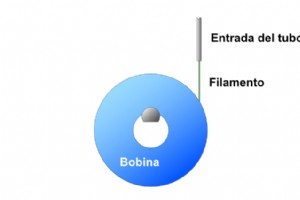
Something that is often not considered, but can be a source of failure, is the position of the spool and its path to the extruder. In order to facilitate the work of the extruder, the minimum resistance to traction of the filament should be sought. The higher the resistance, the harder the ex
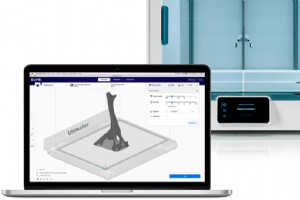
FDM/FFF 3D printing is one of the most widespread technologies currently on the market in the 3D printing segment. FDM printing (Fused Deposition Modeling) consists of driving a plastic filament through an extruder that melts it above its melting temperature and deposits it layer by layer on
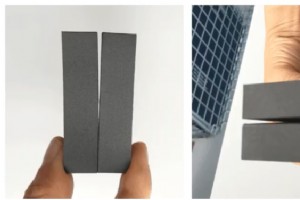
Correct positioning of the workpieces is essential for the success of the production process. The most important things to bear in mind are the following:The concentration of heat must be avoided and it must be possible to dissipate it properly: To this end, it is important to avoid printing

3D printing is one of the most important trends of recent years in the technological field, but contrary to the generalised idea, it is not reduced to a type of machine, but rather to a set of technologies that allow objects to be created without the need for moulds or minimums. Each technolo
3D printing