Industrial manufacturing
3D printing

Direct metal laser sintering (DMLS) and selective laser melting (SLM) 3D printing methods both fall under the category of powder bed fusion (PBF). They also both use laser beams—sometimes more than one at a time, and are compatible with different metal powders. Given these similarities, it’s easy to

FDM, which stands for Fused Deposition Modeling, and MJF, an abbreviation for Multi-Jet Fusion, are both types of 3D printing, but they differ in a few ways. In this article, we’ll learn a bit more about them, compare their pros and cons, and answer some frequently asked questions.FDM Definition and

AttributeDLPFDMAttributePrint resolutionDLP25 to 300 MicronsFDM50 to 500 MicronsAttributeCan print large partsDLPNoFDMYesAttributeWide range of material colorsDLPNoFDMYesAttributeMinimum feature sizeDLP100 MicronFDM1 mmAttributeCan produce high-strength partsDLPNoFDMYesAttributeHas isotropic materia

Elongation is the measurable tendency of a material to stretch when under strain. Engineers use a standardized testing procedure and a dumbbell-shaped test sample to evaluate a given material’s characteristic elongation behavior. The sample’s elongation is expressed as a percentage — its increase in

Fused Deposition Modeling (FDM) is a 3D printing technology that uses a polymer filament to ‘draw’ slices of a 3D file. It bonds the filaments to one another by partially melting them. PolyJet is also a 3D printing technology, but it works by inkjet-printing a ‘picture’ of each slice in modified acr
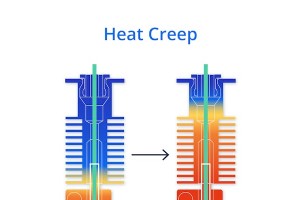
Heat creep is a problem that happens in hot extrusion 3D printing processes (FDM (fused deposition modeling) and FFF (fused filament fabrication). It is the unwanted travel of heat up the filament from the hot end. There are a variety of possible causes for this, but several can combine, so it’s imp

A direct extruder is a type of 3D printer extruder mechanism that directly feeds filament into the hot end assembly of an FDM® (fusion deposition modeling) or FFF (fused filament fabrication) machine, without the need for additional tubing or Bowden cables. It is commonly used in desktop FDM® direct

Gantry systems are an approach to creating a precision motion system for machine tools, such as 3D printers, laser cutters, and CNC routers. The terminology does not provide a precise definition of a structure, as various approaches to creating precision motion gantries diverge in key regards. Gantr
Knowing the various properties of a material is critical to designing a part that can satisfy a particular function. An important property to be considered is the hardness (durometer) of a material. Durometer is a standardized method to measure a material’s hardness or resistance to localized deform

Revit® and AutoCAD® are two CAD (computer-aided design) software applications developed by Autodesk® to assist architects and engineers with their work and streamline workflows. While both packages are widely utilized for various engineering and architectural applications, the two options differ in
A jet engine uses air and fuel to produce power to either provide thrust out of the exhaust or drive a shaft connected to a propeller or rotor blades. A jet engine is made up of a cold and hot section. The cold section includes the intake, bypass ducts, compressor, diffuser, and drive shaft. The hot
Heat creep in Fused Deposition Modeling (FDM) 3D printing refers to the undesired upward transfer of heat from the hot end of the extruder into the cooler zones of the extruder assembly. When this occurs, the filament may prematurely soften or partially melt above the intended melt zone. This soften
ABS vs. PETG reveals clear differences in mechanical properties, heat resistance, printability, and outdoor suitability. ABS delivers higher rigidity, impact resistance, and load-bearing strength, supporting demanding mechanical applications and functional components. PETG provides greater flexibili
PETG 3D printing filament is a glycol-modified version of polyethylene terephthalate (PET), known for its strength, flexibility, and moderate chemical resistance. PETG offers good durability and moderate-to-high impact resistance among 3D printing filaments. The filament is used in various industrie
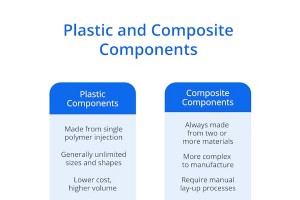
Composite Materials are engineered blends of a matrix and reinforcement, which work together to achieve performance characteristics that surpass individual components. Composite material relies on the matrix to bond the materials, while the reinforcement enhances strength, durability, and allows con

Conductive PLA 3D printing filament is a composite material consisting of polylactic acid combined with conductive fillers (carbon black, carbon nanotubes, or graphene), with conductivity levels dependent on filler type, concentration, and dispersion quality. The conductive Polylactic Acid (PLA) fil

Impact strength is the measure of the ability of a material to resist cracking, fracturing, or plastic deformation under sudden and intense impact, or shock loads. It is a critical property that determines the materials ability to withstand sudden forces. Designing components that will be subjected

Engineers who work with us here at Xometry use many different impact tests to learn a material’s characteristics, one of which is the IZOD impact test. There are various methods of determining how a material will respond or react; for the IZOD, you’ll need a pendulum and vises. Here’s more about thi
When choosing a manufacturing material, particularly plastic, the technical data sheet will give you a bunch of useful information to help in your selection. The heat deflection temperature (HDT) is one such tidbit, and it’s an important one to know if your product needs to keep its shape and size u

1. Get the ZBrush with 3D Print Hub PluginGet the ZBrush with its inbuilt 3D Print Hub to take advantage of a powerful and robust STL converter for designers and artists alike. The ZBrush 3D Print Hub Plugin enables users to optimize the polygon meshes of their models without the need for an interne
3D printing