Industrial manufacturing
3D printing

As far as types of manufacturing go, 3D printing is one of the most impressive because of how quickly it can be developed and how many different types exist—including material jetting. This layer-by-layer method is versatile and can handle a wide range of materials to build exactly the product you n

SLS and SLM are nearly-identical AM processes. They utilize similar technology, so are both expensive when compared to other AM processes. Both SLS and SLM produce parts that have equivalent properties to parts made through traditional methods such as injection molding or CNC machining. Therefore wh

Both of these methods are types of 3D printing. SLS stands for selective laser sintering, and FDM stands for fused deposition modeling. They share a number of similarities. For instance, they’re both used in lower-volume production and rapid prototyping, both use thermoplastic materials, and they’re
Whether youre a newcomer or looking to refine your 3D printing setup, it is crucial to configure your 3D printer correctly.Listed below are the nine steps in this step-by-step guide to setting up your 3D printer correctly:1. Identify What Kit You OwnStart by identifying what type of 3D printing kit

When you look past injection molding and extrusion, you’ll find 3D printing has shaken up the game for plastic part production. What was once a unique alternative is now a popular option that cuts down on processing times and makes it possible to print intricate and complex structures. However, ther

Another advantage SLS offers is that you don’t need any support structures during printing—the surrounding powder can actually provide support for any overhanging parts. A lot of our customers use it for their time-sensitive projects as it’s very quick. If you’re interested in buying one of these pr

PolyJet 3D printing is a process used to create multi-color and multi-material components using a process similar to standard inkjet printers. An inkjet-type head deposits multiple droplets of a photopolymer onto a build plate. A UV light source immediately cures this layer and the process is repeat

Comparisons Between SLS and MJFWhen comparing SLS and MJF, there are some common properties that come to mind. Matt Schmidt, a Senior Solutions Engineer here at Xometry, states, The SLS and MJF platforms are very similar and are capable of processing common materials such as Nylon 11 and 12. However

Sintering is a broad family of methods that forms integral and potentially highly complex parts from a wide range of materials, by compressing and then fusing powders and binders. The part goes through two stages. The first stage makes the required shape a weak and poorly integrated, oversize compon

Polycarbonate is a plastic that—more specifically—falls under the thermoplastic category, meaning it’s pretty fantastic at melting down and hardening over and over again. Interestingly enough, this makes for a material that’s well equipped to go through the 3D printing process. Not only that, but it

3D printing utilizes a diverse range of materials, each with distinct properties and applications. Choosing the right material for 3D printing is crucial, as it directly impacts the quality, durability, and functionality of your printed objects. Each material has its unique properties and use cases,
A 3D printing slicer is a software package that converts a 3D model into a set of machine-readable instructions to print the part. The success of the 3D printed part depends heavily on selecting the correct 3D printing slicer settings. These settings can mean the difference between a high-quality pa
Additive manufacturing, also known as 3D printing, is a cutting-edge manufacturing process revolutionizing industries worldwide. It involves building objects additively, layer by layer, using digital models, unlike traditional subtractive methods, which remove material.Additive manufacturing enables
The aviation industry has increasingly adopted 3D printing (additive manufacturing) to produce aircraft components. This technology offers several advantages, such as reduced material waste, faster production times, and greater design flexibility. However, despite its benefits, 3D printing also pres

AttributeDMLSEBMAttributeNumber of beamsDMLS4EBM1 – Very quick beam positioningAttributeBeam powerDMLS400 WEBM4500 WAttributeRequires vacuum build volumeDMLSNoEBMYesAttributeLayer heightDMLS30 to 40 micronsEBM70 micronsAttributeHas isotropic material propertiesDMLSYesEBMYesAttributeParts need to be
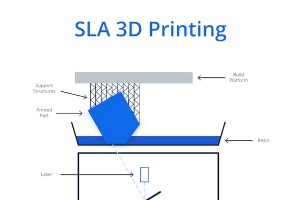
The development of 3D printing, also known as additive manufacturing, has been shaped by decades of scientific research, technological innovation, patent activity, and commercialization. These efforts have culminated in the widespread adoption of a technology that enables the production of low-cost,

The flexural modulus of a material is a critically important parameter because it enables engineers to quantify the amount of bending load a component can sustain without undergoing excessive deformation. This property plays a key role in designing safe and reliable structural elements and mechanica
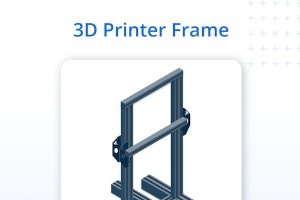
3D printing is both a hobby enjoyed by millions of people worldwide and a functional manufacturing technology that can produce a wide range of parts and products. To meet this demand, a variety of printers are available on the market. In general, these printers share the same underlying components,
“3D printing for education” encompasses all the facets of the integration of three-dimensional printing technologies into the learning environment. It offers a hands-on approach to instruction that transcends traditional teaching methods. This innovative form of education is pivotal, as it fosters c
The Charpy impact test was first developed in the 1900s to advance the understanding of why materials fail prematurely. The Charpy test determines how much energy a material absorbs during fracture, known as impact energy, and is used to assess the Charpy impact strength of a material. The test is c
3D printing