Industrial manufacturing
3D printing

Creep Deformation refers to the time-dependent, permanent strain experienced by a material under constant stress and temperature over an extended period. The creep deformation occurs when a material is subjected to long-term loading, causing it to gradually deform if the stress level remains below t
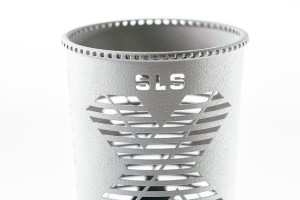
Selective laser sintering (SLS) is a revolutionary additive manufacturing (3D printing) technology that has transformed the way parts are designed and produced. SLS creates parts through a powerful laser that methodically sinters thermoplastic powders together to build parts by successive layers. Co
Selective laser sintering(SLS) is a laser powder bed fusion process that uses a high-power laser to center small particles of polymer powder, primarily nylon. A thin layer of the powder is distributed on top of the build platform from a supply container. The build chamber and bed plate are heated to
Vapor smoothing is a low-labor post-processing technique for PETG parts that can produce a moderate to high surface gloss and significantly improve smoothness. The process works by exposing the printed part to a controlled, solvent-rich atmosphere. The solvent partially dissolves the outermost polym
Tear strength is a material’s ability to resist failure perpendicular to the stress being applied. This is usually tested by measuring the force required to begin a tear, while that force is applied to an unrestrained area close to a clamp retaining the material edge.In 3D printing, tear strength he
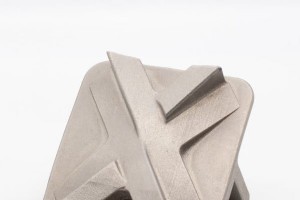
Additive manufacturing refers to the process of creating a part by incrementally building it up via the addition of material. This material can be metal, ceramic, plastic, photopolymer, or even food! ISO/ASTM has categorized all the different types of additive manufacturing technologies into seven c
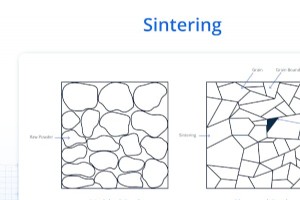
Sintering entails heating and compacting a powdered material to create a solid mass with desirable properties. There are more than a dozen different sintering methods, each with special benefits and uses. This includes pressure-assisted sintering, which improves densification, conventional sintering

Table 1. Metal Powder Bed Fusion Pros and ConsProsConsProsIntrinsic support from the powder bed, no supports requiredConsSome manufacturers offer a limited range of material compositionsProsSmooth surfaces direct from the printerConsRequires high-quality, expensive lasersPros20 µm minimum layer thic

Understanding the different stresses a material experiences is the key to knowing how it’ll respond when it’s a product and facing pressures and tensions in the real world. When you have an idea of how it’ll hold up, you’ll have science-backed peace of mind about the materials you choose and know ju
Tensile stress is an essential concept in understanding the strength of materials and their capability to endure loads in the real world. It is the ratio of a stretching force to the cross-sectional area of a material. This article will discuss the tensile stress definition, formula, and unit of mea
3D printing, otherwise known as additive manufacturing, has become a cornerstone manufacturing process for industries worldwide that use it to create plastic and metal parts with geometries that are impossible to achieve through more traditional manufacturing methods like CNC machining or injection

What is Full Color 3D Printing?Most 3D printing requires a single color filament or secondary processing like dyeing or painting to achieve color. Most 3D prints are limited to a single solid color. With technologies like PolyJet, full-color 3D printing technology is available. PolyJet enables thous

There are around 50 different types of nylon, but not all of them are suitable for 3D printing—it was originally designed as a textile fiber. Wallace H. Carothers, a researcher at DuPont, first discovered it in 1935 when he was trying to make the first fully synthetic fiber. Since then, nylon has go
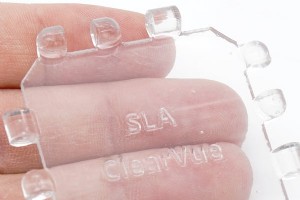
At Xometry, we offer a number of resin-based processes, such as SLA, PolyJet, and more. Likewise, we offer fused deposition modeling (FDM), which uses materials in the form of filaments. Although all these processes can be used to create custom 3D printed parts for our customers, there are some key

When manufacturers want to make 3D-printed parts with complex geometries, they often turn to powder bed fusion (PBF) machines. These parts are notoriously hard to make (sometimes impossible) with traditional manufacturing methods. Let’s learn more about it.What Are Powder Bed Fusion (PBF) Machines?P

Injection molding is a popular manufacturing process used to make parts in high volumes with consistent quality. The process involves injecting molten plastic into the cavity of a mold in the shape of the final part, which is typically made from metal. As anyone familiar with the process will tell y
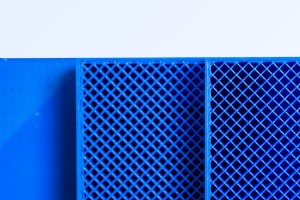
Infill in 3D printing refers to the internal structure of a printed part that fills the space between the outer layers, providing support, strength, and durability. The purpose of infill is to balance material efficiency, print time, and part strength. The infill pattern and density chosen for a pri
When you’re designing joining parts, the smaller details are just as important as the larger portions. Something as minuscule as an edge is a big determining factor in how smoothly two parts fit together or move off one another. That’s especially true for edge styles, like fillet and chamfer, which

FDM Definition and Comparison to FFFFDM was first developed by S. Scott Crump, and patented by Stratasys in 1989. It was one of the earliest 3D printing processes. FDM uses common manufacturing materials and additives to make precise models. Most professional manufacturers prefer FDM over FFF becaus
3D printing, more technically known as additive manufacturing, is not as new as people think. It dates back to the 1980s, but in recent years has become a popular manufacturing method for many Xometry customers, including those in aerospace, automotive, architecture, education, jewelry, and art. In
3D printing