Industrial manufacturing
3D printing

Ductility is a crucial property that describes the ability of a material to be stretched, pulled, or drawn into a thin wire or thread without breaking. It is a property associated mainly with metals and determined by atomic bonding and crystal structure. Metals with high ductility typically have m

Heat sinks are widely used in electronics to manage component temperatures. They work by increasing surface area to enhance heat transfer to the surrounding fluid, typically air. Active heat sinks use fans to increase airflow, while passive designs rely solely on natural convection. Different device

Hotends are the most crucial component of an FDM (fused deposition modeling) 3D printer, because they melt the plastic filament before it is applied, layer by layer, to build up a 3D part. The hotend primarily consists of a nozzle, a heat block, a heat break, and a heat sink. These components work t

Wood 3D printing filaments hit the market in 2012. The first was invented by German inventor, Kai Parthy, the founder of Lay Filaments. Wood filaments are unique in that they lend wood-like surface finishes to complex printed designs. Their compositions are usually 20-40% waste wood materials and 60
Vapor smoothing is a post-processing technique employed in the domain of additive manufacturing to improve the surface finish and aesthetics of objects that have been 3D printed in PLA plastic. PLA (polylactic acid) is a popular thermoplastic filament used in 3D printing because it is biodegradable
Material jetting’s limitations are:Plastic components printed by material jetting have some sensitivity to light and will degrade in elevated UV environments.Material jetting materials tend to be among the highest-priced, often exceeding $1000 per kg.The equipment is among the most expensive in the

Solid Edge and Solidworks are both computer-aided design (CAD) software tools used for 3D design, manufacturing, and simulation. The former is developed by Siemens, and the latter by Dassault Systèmes. They are very similar tools, but they do have a few different features and capabilities. Let’s loo
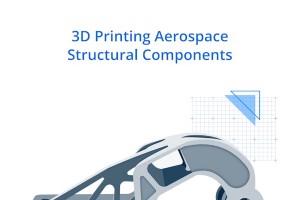
3D printing, also known as additive manufacturing, is highly valued in the aerospace industry. In an industry where reductions in weight or drag can lead to huge cost savings, 3D printing has enabled aerospace manufacturers to create lighter and more fuel-efficient aircraft in a more cost-effective
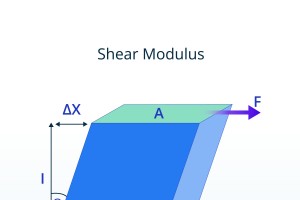
Diagram of shear modulus where Δx is the displacement, l is the initial length, θ is the displacement angle, A is the area and F is the force.This is different from Young’s modulus (or the modulus of elasticity), which refers to a material’s resistance to deformation from a tensile or compressive fo

Computer-aided design (CAD) modeling revolutionizes the way products are designed and engineered by employing software to create precise digital representations. CAD enables designers to conceptualize, visualize, and analyze complex designs before production, streamlining the entire development proc

3D printing, or additive manufacturing (AM), has become a fixture in dental offices and practices around the world. Dental 3D printing creates dental parts for dentists as tools or fixtures to print parts and for patients to use. These parts can range from models of teeth and dental aligners to full

AttributeSLADLPAttributePrint resolutionSLA25 - 300 microns without voxel pixelationDLP25 - 300 microns with voxel pixelationAttributeCan print larger partsSLAYesDLPNoAttributeWide range of material colorsSLANoDLPNoAttributeMinimum feature sizeSLA100 micronsDLP100 micronsAttributeCan produce very sm

Both PolyJet and MultiJet (MJP) 3D printing are additive manufacturing methods that build parts by depositing and curing photopolymers that react to ultraviolet (UV) light. They can both be used for proof of concept and functional prototypes and can make complex parts, some of which are often found
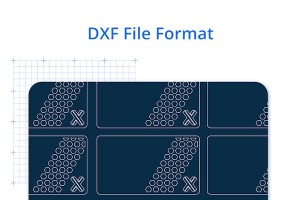
Both DXF (drawing exchange/interchange format) and STL (stereolithography or standard triangle/tessellation language) are traditional file formats used in design and 3D printing. DXF files typically represent detailed 2D and 3D designs and can accurately exchange data between CAD programs, while STL

Since its inception, the aerospace industry has been trying to reduce the weight of aircraft by all means necessary. 3D printing is a relatively new method for achieving such a goal. 3D-printed parts are nearly always produced quicker, lighter, and cheaper than their conventionally made counterparts
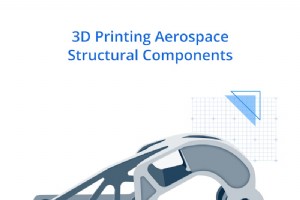
It’s no small feat to get a plane into the air, and before a pilot can even maneuver it through the sky, it needs all the right parts, components, and functioning systems in place. Building an aircraft is complex, but as technology advances, many processes are simplified, automated, and improved, an

How Does Digital Light Process 3D Printing Work?The digital light process typically works by lowering a build platform into a transparent resin tank filled with liquid photopolymer. A high-resolution projector then shines a UV light onto the build platform in the same shape as the cross-section of t
The VRML file format (originally Virtual Reality Markup Language, later the Virtual Reality Modeling Language) originated in 1995 as a standardized file format. It was developed for designing and communicating 3D vector graphics, with the ability to encode information about an objects color, texture

Metal 3D printing has transformed how complex metal tooling and parts are made. Electron beam melting, or EBM, is a sound alternative to CNC machining and metal casting due to its ability to print parts with the durability and strength of metals but at the speeds of 3D printing. EBM is a powder bed
An STL is an ASCII format file that originated with 3D Systems development of 3D printers. It was used as a means of communicating the printing requirements to the machines they were developing. STL files use the same basic methodology for communication of 3D objects that OBJ uses – but at a lower l
3D printing