


Industrial manufacturing
3D printing

Additive manufacturing (AM), commonly known as 3D printing, is the process of creating objects by adding materials in layers. This method is opposite to subtractive manufacturing, which makes objects by cutting away at a solid block of material. AM can use various materials, including plastics, meta

A Look Inside at the Table of ContentsPreferred file settings and typesOverlapping geometrySTL file resolutionMinimum thicknessClearances between moving partsConfined hollowsFilletsLightweightingBuild volumeAdditional resources at XometryAbout XometryXometry offers instant pricing for manufacturing,

The world of additive manufacturing relies on accurate cost estimation, budget planning, and decision-making for successful 3D printing projects. This article delves into the importance of 3D printing cost calculators and their role in optimizing expenses. By utilizing these calculators, manufacture

The CAD (computer-aided design) systems CREO and Solidworks®, produced by PTC and Dassault Systèmes respectively, are two of the most popular CAD software packages used by engineers, designers, and hobbyists alike. Both of these CAD programs are used to produce 3D designs and engineering drawings an

3D printing is a method of making 3-dimensional objects by additive means based on digital models. The process of creating these 3D objects is called printing. The term 3D printer refers to the device which creates these objects. 3D printers are usually stand-alone devices that can be fed digital da

Simplify3D® and Cura® are both 3D printing slicing software packages that specifically support FFF (fused filament fabrication) style printers. Slicer software is used to prepare 3D models for 3D printing by allowing users to set a large number of settings like the required printer speed, temperatur
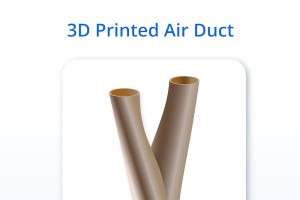
The aircraft industry is constantly evolving, with new technologies being introduced to improve safety, efficiency, and performance. One such technology that has revolutionized aircraft manufacturing and maintenance is 3D printing. 3D printing, also known as additive manufacturing, allows for the cr

Digital Light Processing (DLP) and Selective Laser Sintering (SLS) are two popular 3D printing technologies. Each of these processes yields high-quality, precise results and has different advantages depending on the project specifications, materials, and overall application. DLP utilizes a projected
XTC-3D™ is a specialized coating designed to enhance the finish of 3D-printed objects. This two-component system effectively smooths out the print lines, providing a high-gloss, protective layer without degrading the plastic. It involves a straightforward application process: mixing the resin and ha
Klipper and Marlin are two popular 3D printer firmware implementations. Marlin was first developed in 2011 and is the most popular FDM (fused deposition modeling) printer firmware today. It is easy to use, reliable, accurate, and compatible with the majority of 3D printers. Klipper was developed in
In 3D printing, achieving high-quality filament extrusion and successful adhesion to the print bed are critical factors for a successfully printed part. Three 3D printing techniques — skirt, brim, and raft—are used to verify and achieve these parameters. Each method serves a distinct purpose in enha
PLA (polylactic acid) filament is one of the most commonly used in fused deposition modeling (FDM) 3D printing because it’s easy to work with and looks great. In the history of plastics, PLA is the OG (well, one of them). It was invented in 1938 by DuPont chemist Wallace Carothers (who also, coincid
HIPS (High Impact Polystyrene) is made by combining polybutadiene rubber and pure polystyrene. HIPS is a thermoplastic material that possesses some unique characteristics not shared by most filaments, including: low hygroscopicity; solubility in d-limonene (a chemical solvent); and good impact resis
In the 3D print sector, PVA 3D filament (polyvinyl alcohol) is a critically important family of materials. Its water solubility is very valuable because it allows support scaffolds to be printed on dual/multi extruder machines and later removed with ease. PVA offers several useful characteristics th
Youngs modulus is a mathematical/engineering definition for one of the simplest methods of understanding elasticity. Elasticity is the ability of a material to undergo a change of shape when a force is applied to it and revert to its original shape/dimensions when the force is removed. Note that all

What is Magnetic Iron 3D Printing?Magnetic iron 3D printing is the use of iron-filled plastic filaments to 3D print parts that appear metallic. Printing with this filament is done by a completely different process than the techniques used for powdered metal printing, such as DMLS and SLM, which melt

Fusion® 360 is a relative newcomer in CAD modeling (2013 launch), whereas SolidWorks® is in its 28th generation as a market leader. Both Fusion 360 and SolidWorks integrate parametric and surfacing methods as well as CAM (computer-aided manufacturing), animation, image rendering, simulation tools, 2

AutoCAD® is a primarily 2D-based drafting software program used for civil construction plans, floor plans, and piping and instrumentation diagrams. Solidworks® is an engineering tool that is primarily used for the 3D modeling of complex parts and machinery assemblies. Solidworks can be used to simul
Fusion® and SketchUp are both relative newcomers in CAD modeling, and they’re both very popular. Fusion integrates parametric and surfacing methods as well as CAM (computer-aided manufacturing), animation, image rendering, simulation tools, 2D part drawing, and 3D printing. SketchUp, on the other ha
Due to the complexity of lattice structures, it is impractical to model them into the part using typical CAD tools. In most cases, the part is drawn in CAD as if it were solid. Then, after the part has been designed (with DFAM principles in mind) the model is imported into another software package t
3D printing
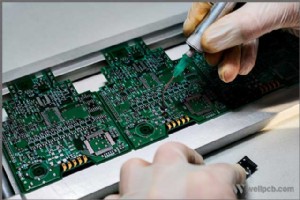
Avoid the Pitfall: Why Cheap PCBs Cost More in the Long Run – Insights from 9 Years of Experience
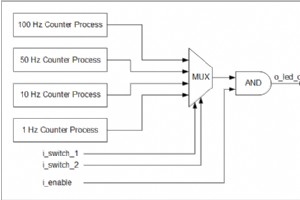
Building Your First FPGA: LED Blink Tutorial (VHDL & Verilog)
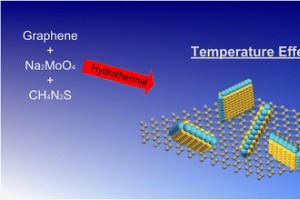
Optimizing MoS2‑Graphene Hybrid Crystallization for Enhanced Electrocatalysis

Understanding Failure Analysis: Key Insights for Manufacturing Excellence

