



Mastering Java SortedSet: A Practical Guide to TreeSet and Its Methods
Mastering Java SortedSet: A Practical Guide to TreeSet and Its Methods
Discover how Java’s SortedSet interface organizes data, the powerful methods it offers, and how to implement it with TreeSet for real‑world applications.
The SortedSet interface, part of the Java Collections Framework, represents a set that maintains its elements in ascending order. Unlike a regular Set, a SortedSet guarantees that its elements are sorted either by their natural ordering (for types that implement Comparable) or by a custom Comparator supplied at creation time.
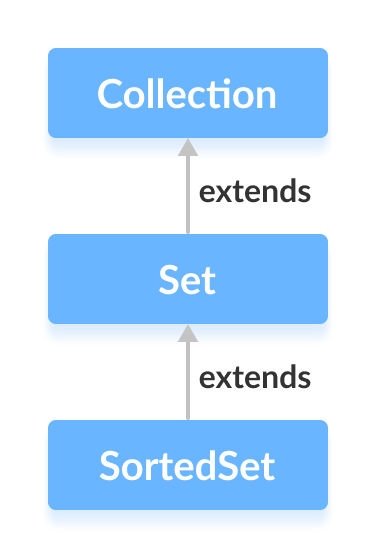
It extends the Set interface, inheriting all its standard operations while adding a suite of range‑query methods that are invaluable for ordered collections.
Classes that Implement SortedSet
The sole concrete implementation of SortedSet in the JDK is TreeSet. It uses a Red‑Black tree under the hood, guaranteeing O(log n) time for most operations.

How to Use SortedSet
To work with a SortedSet, import java.util.SortedSet and create an instance of TreeSet:
import java.util.SortedSet;
import java.util.TreeSet;

SortedSet<String> animals = new TreeSet<>();
By default, the set orders its elements naturally. If you need a custom order, provide a Comparator at construction.
Key Methods of SortedSet
- comparator() – Returns the
Comparatorused for ordering, ornullif natural ordering applies. - first() – Retrieves the lowest element.
- last() – Retrieves the highest element.
- headSet(E element) – All elements strictly less than the specified element.
- tailSet(E element) – All elements greater than or equal to the specified element.
- subSet(E fromElement, E toElement) – Elements ranging from
fromElement(inclusive) totoElement(exclusive).
These methods inherit from Set as well, providing standard collection operations like add, remove, and contains.
TreeSet in Action
import java.util.SortedSet;
import java.util.TreeSet;

public class Main {
    public static void main(String[] args) {
        // Create a SortedSet of integers
        SortedSet<Integer> numbers = new TreeSet<>();

        // Populate the set
        numbers.add(1);
        numbers.add(2);
        numbers.add(3);
        numbers.add(4);

        System.out.println("SortedSet: " + numbers);

        // Access boundary elements
        System.out.println("First Number: " + numbers.first());
        System.out.println("Last Number: " + numbers.last());

        // Remove an element
        boolean removed = numbers.remove(2);
        System.out.println("Is the number 2 removed? " + removed);
    }
}
Output
SortedSet: [1, 2, 3, 4]
First Number: 1
Last Number: 4
Is the number 2 removed? true
For a deeper dive into TreeSet, check the official Java documentation: TreeSet API.
With a solid understanding of SortedSet and TreeSet, you can now implement ordered collections that perform efficiently and reliably in your Java applications.
Java
- Mastering Java Interfaces: Concepts, Implementation, and Best Practices
- Java Collections Framework: Core Interfaces, Implementations, and Practical Usage
- Java Collection Interface: Core Concepts & Essential Methods
- Mastering Java’s Queue Interface: Methods, Implementations, and Practical Use
- Mastering Java's Deque Interface: Features, Methods, and Practical Examples
- Java Map Interface – Comprehensive Guide to Map, Its Implementations, and Key Methods
- Java SortedMap Interface: Overview, Methods, and TreeMap Implementation
- Mastering Java NavigableMap: Features, Methods, and TreeMap Implementation
- Mastering Java’s ConcurrentMap: Thread‑Safe Maps Explained
- Mastering Java’s Set Interface: Concepts, Methods, and Practical Examples