



Mastering Java’s Queue Interface: Methods, Implementations, and Practical Use
Mastering Java’s Queue Interface
Discover how the Java Queue interface powers FIFO data structures, its core methods, and the most common implementation classes.
Classes that Implement Queue
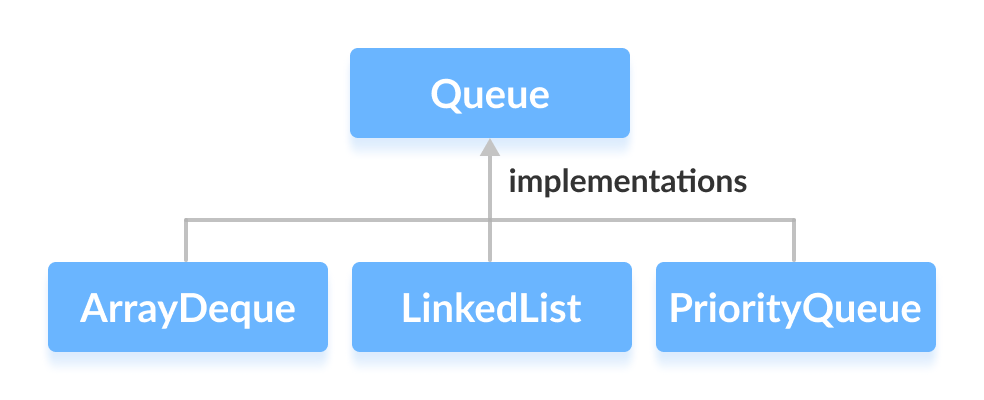
Because Queue is an interface, you’ll work with concrete classes that provide the actual functionality. The three most widely used implementations are:
ArrayDeque– a resizable double‑ended queue with fast add/remove operations.LinkedList– a doubly‑linked list that supports both queue and deque operations.PriorityQueue– a heap‑based queue that orders elements by natural ordering or a supplied comparator.
Subinterfaces Extending Queue
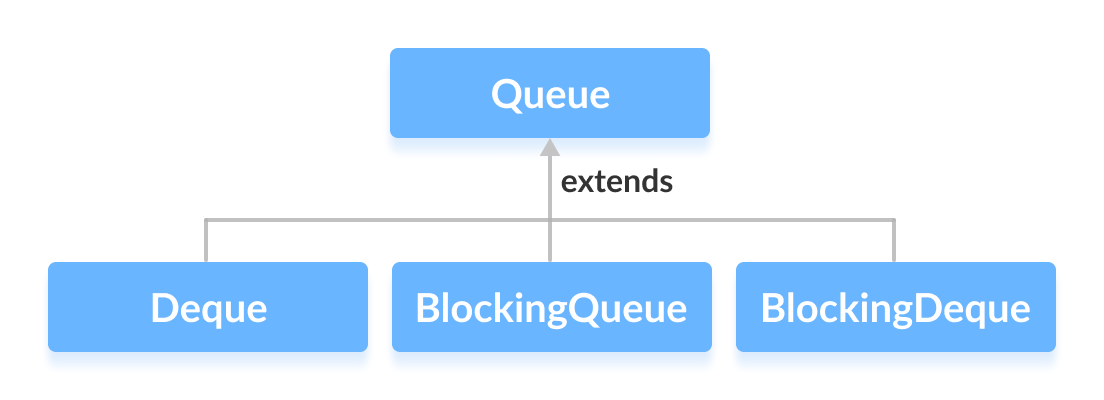
The Queue interface is extended by several subinterfaces that add blocking or double‑ended capabilities:
Deque– adds push/pop operations at both ends.BlockingQueue– introduces thread‑safe enqueue/dequeue with optional timeouts.BlockingDeque– combines blocking with double‑ended semantics.
Queue Data Structure in Action
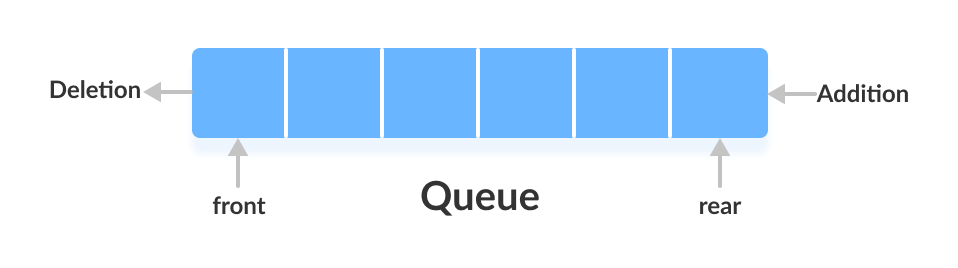
Queues operate on a First‑In, First‑Out (FIFO) principle: elements are added to the rear and removed from the front.
How to Use Queue in Java
Import the interface with java.util.Queue and instantiate it via a concrete class:
import java.util.Queue;
import java.util.LinkedList;
import java.util.ArrayDeque;
import java.util.PriorityQueue;

Queue<String> animal1 = new LinkedList<>();
Queue<String> animal2 = new ArrayDeque<>();
Queue<String> animal3 = new PriorityQueue<>();
Each object inherits the full set of Queue methods and the generic Collection API.
Core Methods of Queue
The interface extends Collection, so it includes all its methods. The most frequently used queue‑specific operations are:
- add(E e) – inserts the element; throws an exception on failure.
- offer(E e) – inserts the element; returns
falseon failure without throwing. - element() – retrieves, without removing, the head; throws if empty.
- peek() – retrieves, without removing, the head; returns
nullif empty. - remove() – removes and returns the head; throws if empty.
- poll() – removes and returns the head; returns
nullif empty.
LinkedList Implementation Example
import java.util.Queue;
import java.util.LinkedList;

public class Main {
    public static void main(String[] args) {
        Queue<Integer> numbers = new LinkedList<>();

        numbers.offer(1);
        numbers.offer(2);
        numbers.offer(3);
        System.out.println("Queue: " + numbers);

        int accessed = numbers.peek();
        System.out.println("Accessed Element: " + accessed);

        int removed = numbers.poll();
        System.out.println("Removed Element: " + removed);

        System.out.println("Updated Queue: " + numbers);
    }
}
Output
Queue: [1, 2, 3]
Accessed Element: 1
Removed Element: 1
Updated Queue: [2, 3]
For deeper insights, see Java LinkedList.
PriorityQueue Implementation Example
import java.util.Queue;
import java.util.PriorityQueue;

public class Main {
    public static void main(String[] args) {
        Queue<Integer> numbers = new PriorityQueue<>();

        numbers.offer(5);
        numbers.offer(1);
        numbers.offer(2);
        System.out.println("Queue: " + numbers);

        int accessed = numbers.peek();
        System.out.println("Accessed Element: " + accessed);

        int removed = numbers.poll();
        System.out.println("Removed Element: " + removed);

        System.out.println("Updated Queue: " + numbers);
    }
}
Output
Queue: [1, 5, 2]
Accessed Element: 1
Removed Element: 1
Updated Queue: [2, 5]
For deeper insights, see Java PriorityQueue.
Stay tuned for our upcoming tutorials that explore the Queue subinterfaces—Deque, BlockingQueue, and BlockingDeque—and how to use them in real‑world scenarios.
Java
- Mastering Java Interfaces: Concepts, Implementation, and Best Practices
- Java Collections Framework: Core Interfaces, Implementations, and Practical Usage
- Java Collection Interface: Core Concepts & Essential Methods
- Java PriorityQueue: Fundamentals, Operations, and Custom Sorting
- Mastering Java's Deque Interface: Features, Methods, and Practical Examples
- Java BlockingQueue: Thread‑Safe Queues with Blocking Operations
- Java ArrayBlockingQueue: Advanced Guide to Blocking Queues and Thread‑Safe Operations
- Mastering Java's LinkedBlockingQueue: Comprehensive Guide & Examples
- Java Map Interface – Comprehensive Guide to Map, Its Implementations, and Key Methods
- Mastering Java’s Set Interface: Concepts, Methods, and Practical Examples