



Python vs Ruby: A Comprehensive Comparison of Features, Advantages, and Use Cases
What Is Python?
Python is a high‑level, object‑oriented programming language celebrated for its readability and concise syntax. Its dynamic typing, built‑in data structures, and modular architecture enable rapid application development and code reuse across a wide range of domains, from web services to scientific computing.
Python’s emphasis on clarity makes it an ideal choice for beginners, while its extensive standard library and robust community support keep it relevant in enterprise and research settings.
In this guide you’ll discover:
- What Python is and where it excels
- What Ruby is and its niche strengths
- Key features of each language
- How they differ in design and application
- Pros and cons for developers
- Industry adoption and salary insights
What Is Ruby?
Ruby is a pure, open‑source, object‑oriented language designed by Yukihiro Matsumoto in 1995. It prioritizes developer happiness and natural syntax, encouraging code that is both expressive and maintainable.
Ruby’s platform independence (macOS, Windows, Unix, and others) and rich ecosystem of gems make it especially popular for web development and scripting tasks.
Key Differences at a Glance
- Inheritance: Python supports multiple inheritance; Ruby supports single inheritance.
- Paradigms: Python is widely used in academia, AI, and scientific computing; Ruby shines in web development and functional programming.
- Object‑oriented: Python offers both procedural and OO styles; Ruby is fully object‑oriented.
- Variable scope: Python variables cannot be unset once assigned; Ruby keeps variables in the symbol table as long as they remain in scope.
- Lambda syntax: Python allows multi‑line lambda expressions; Ruby’s lambdas are single‑line.
- Readability: Python is explicit and elegant; Ruby can be harder to debug in complex projects.
- Terminology: Python uses methods; Ruby typically refers to functions and methods interchangeably.
Features of Python
- Simple, readable syntax that reduces boilerplate.
- Cross‑platform compatibility (Windows, macOS, Linux, Unix).
- Extensible with C/C++ modules.
- Built‑in garbage collection and dynamic type checking.
- Interactive REPL for rapid testing.
- Rich standard library covering networking, web, data science, and more.
- High performance through optimized interpreters and optional JIT compilers.
- Interoperability with Java, C, and C++ via JNI, ctypes, and SWIG.
- Widely supported by third‑party packages on PyPI.
Features of Ruby
- General‑purpose, interpreted language with a clean syntax.
- True object‑oriented paradigm where even numbers and strings are objects.
- Excellent for server‑side scripting and web application development.
- Built‑in support for CGI and Rack interfaces.
- Scalable and maintainable for large codebases.
- Rich set of built‑in methods and a vibrant gem ecosystem.
- Suitable for both small scripts and large-scale web applications.
Detailed Comparison
Below is a side‑by‑side look at key aspects of Python and Ruby.
| Python | Ruby |
|---|---|
| Created in 1991 by Guido van Rossum | Created in 1995 by Yukihiro Matsumoto |
| Django framework launched in 2005 by Adrian Holovaty & Simon Willison | Ruby on Rails launched in 2005 by David Heinemeier Hansson |
| Explicit, readable syntax | Sometimes harder to debug in large projects |
| High‑level language | General‑purpose language |
| Supports both procedural and OO styles | Fully object‑oriented |
| Extensive standard library | Smaller core library, but rich gem ecosystem |
| Variables cannot be unset once assigned | Variables remain in symbol table while in scope |
| Multiple inheritance supported | Single inheritance only |
| Multi‑line lambdas possible | Single‑line lambdas only |
| Uses methods | Uses methods and functions interchangeably |
| Primarily used in academia and scientific computing | Primarily used for web development and functional programming |
| Innovative, web‑focused community | Stable community, slower innovation cycle |
| Steep learning curve for absolute beginners | Gentle learning curve |
| Key traits: conservative, readable, efficient, fast | Key traits: expressive, efficient, elegant, powerful |
#!/usr/bin/python
# Python count to 10
i = 0
num = 11
while i < num:
    print("Inside the loop i = " + str(i))
i = i + 1 | #!/usr/bin/ruby
# Ruby count to 10
$i = 0
$num = 11
while $i < $num do
puts("Inside the loop i = #$i")
$i += 1
end |
| Companies: YouTube, Instagram, Spotify, Reddit, Dropbox | Companies: Hulu, Basecamp, GitHub, Airbnb |
| TIBOE rating: 3 | TIBOE rating: 11 |
| Average U.S. salary: $120,255 | Average U.S. salary: $134,029 |
Industry Insights
Benefits of Python
- Powerful object‑oriented and procedural paradigms.
- Elegant syntax that simplifies complex logic.
- Massive standard library and third‑party packages.
- Runs on Windows, macOS, Linux, Unix, and more.
- Clear, minimal syntax compared to Java or C++.
- Automatic garbage collection and dynamic typing.
- Interactive REPL for debugging and experimentation.
- Robust database interfaces for all major commercial DBMS.
- Portability across platforms without code changes.
Benefits of Ruby
- Developer‑friendly syntax that accelerates learning.
- Open source with a thriving community.
- Designed to speed up web app development.
- Extensible with a rich gem ecosystem.
- Supports both small scripts and large, scalable applications.
Drawbacks of Python
- Dynamic typing can surface errors at runtime.
- Limited support for mobile app development.
- Relatively fewer platform‑specific optimizations.
- Database access layers can be less mature in some niches.
- Commercial support is often community‑driven.
Drawbacks of Ruby
- Debugging can be challenging in large codebases.
- Core language focus is mainly web development.
- Documentation and community resources are sometimes sparse.
- Finding high‑quality gems may require extra effort.
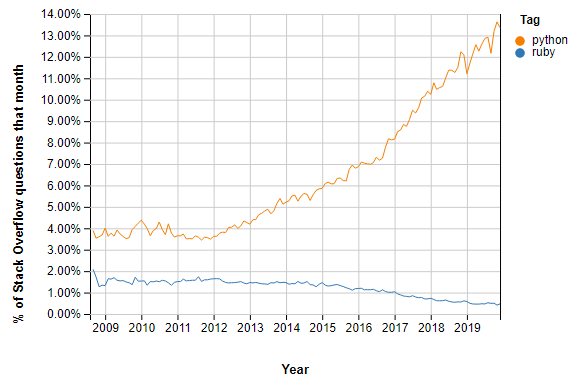
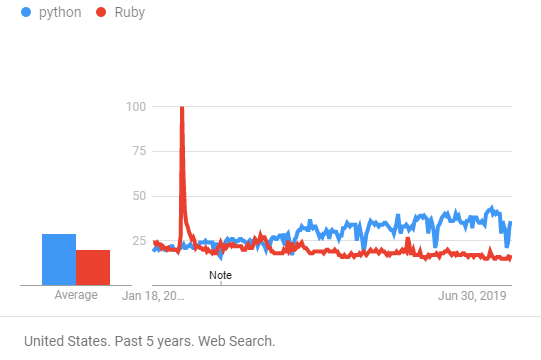
- Declining popularity relative to other languages.
Python
- Structures vs. Unions in C: A Practical Guide
- C vs. C++: Key Differences & When to Choose Each
- C vs Java: A Comprehensive Comparison of Features, History, and Applications
- Python vs PHP: Key Differences, Strengths, and Choosing the Right Language
- Python vs JavaScript: Key Differences, Features, and When to Choose Each
- Python 2 vs Python 3: Key Differences and Choosing the Right Version
- Joining vs Welding: Key Differences Explained
- Welding vs Brazing: Key Differences Explained for Better Metal Joining
- Up vs Down Milling: Key Differences Explained
- Soldering vs. Brazing: Understanding the Critical Differences