



Understanding Parabolic Dishes: Design, Function, and Applications

A parabolic dish is a reflective instrument with a circular, parabolic shape that can collect or project different types of energy. Using the geometric principles of the parabola, the dish can efficiently both receive and reflect energy from distant sources. The parabolic dish can be found in a wide variety of products, such as reflecting telescopes, satellite dishes, microphones, and various lighting instruments, like car headlights and flashlights. They can also be used for functions such as increasing the strength of wireless Internet signals and solar cooking. Parabolic dishes are sometimes called parabolic deflectors or parabolic mirrors.
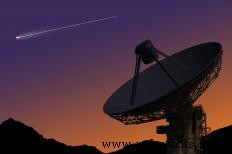
The parabolic dish works by either collecting or refracting energy. This process is facilitated by an antenna that is usually found in the center of the dish, otherwise known as the vertex. The geometric properties of the parabola are as follows: when the angle of incidence and the angle of reflection are equal, this allows for incoming rays that are parallel to the dish to be focused to the vertex. An antenna is usually found in the center of the dish, and this helps in the collection process. Energy sources such as sound, light, and radio waves are collected or reflected by parabolic dishes.
Humans have used parabolic dishes since the time of Archimedes. Newton's invention of the reflecting telescope relied on the usage of parabolic mirrors. Lighthouses also used parabolic dishes in order to focus and reflect light.
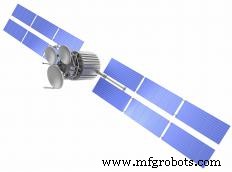
The satellite dish is one of the most common applications of a parabolic dish. It works by receiving microwaves that are projected from satellites in space. These satellites may transmit various types of data or broadcast television programs. Motor-driven satellite dishes have planned movement in order to change position to receive signals from the satellite.
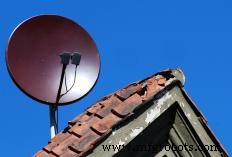
Parabolic dishes may be built by do-it-yourselfers for purposes such as collecting solar energy or increasing wireless Internet signal strength. These can usually be built from flat sheets of a flexible material, which are then molded into a parabolic shape. One of the common applications of the do-it-yourself parabolic dish is as a cooking device, which stores the sun's energy and functions like a solar barbeque. This can be ideal for campers.
Parabolic microphones use the dish concept for various tasks, such as recording nature sounds or for law enforcement surveillance. While these types of microphones are not used for standard recording because of poor sound quality, they can nevertheless pick up sounds from long distances away. In the past, the Olympic flame was also lit by a parabolic dish that collected sunlight.
Industrial equipment
- Diamond Turning: Precision Machining for Advanced Optics and Beyond
- Ultrasonic Machining Explained: Process, Benefits, and Limitations
- The Evolution and Future of Satellite Dish Technology
- Understanding the Oxygen (O2) Sensor: Role, Placement, and Failure Signs
- Understanding AS9100: The Aerospace Quality Management Standard
- What Is A2 Steel? A Versatile, Cost‑Effective Tool‑Steel Grade for Industrial and Woodworking Applications
- Understanding Metal Casting: Process, Benefits, and Applications
- Demystifying 3D Printing: A Clear Guide for Innovators
- Understanding Parabolic Dishes: Design, Function, and Applications
- Decoding 'N' in Pump Calculations: Its Role and Significance