



Bosch Sensortec Unveils AI‑Enabled BME688 Air Quality Sensor to Reduce Virus Transmission Risk
The COVID‑19 pandemic has highlighted the critical need for clean indoor air. Whether at home, in the office, or on public transport, ensuring the air we breathe is safe is more important than ever. Bosch Sensortec has responded with the BME688, an environmental MEMS sensor that couples advanced hardware with AI‑powered software to help reduce infection risk.
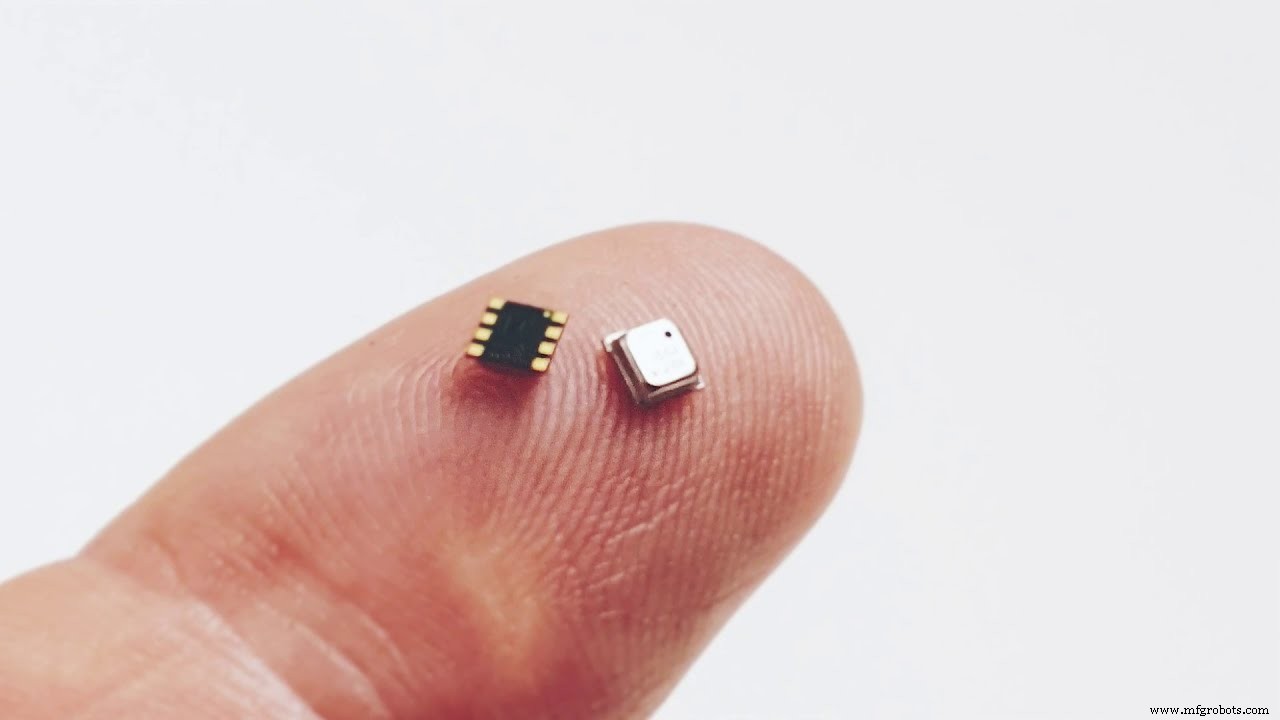
Bosch Sensortec’s BME688
MEMS sensors are already ubiquitous, but to keep delivering real value, Bosch Sensortec insists on a tighter hardware‑software co‑design that leverages sophisticated algorithms and embedded AI. According to Vice President and Head of MEMS Product Area, Ralf Schellin, sensor software will increasingly turn MEMS devices into accurate, secure, and personalized systems that adapt to any environment.
In his recent MWS 2021 MEMS Titans Webinar, Schellin highlighted that software adds value not only to the sensor itself but to the entire system.
4‑in‑1Every exhaled breath releases tiny droplets that, if infected, can transmit viruses through the air. Lower humidity and temperature prolong aerosol suspension, increasing transmission risk. The BME688 combines four sensing modalities—gas, humidity, temperature, and barometric pressure—alongside AI capabilities to address this challenge.
The gas sensor detects volatile organic compounds (VOCs), volatile sulfur compounds (VSCs), and trace gases such as carbon monoxide and hydrogen in the parts‑per‑billion range. While the BME688 does not directly detect the SARS‑CoV‑2 virus, Schellin says it can markedly reduce infection risk by monitoring VOCs, humidity, and temperature, enabling controlled ventilation or automated air‑cleaner activation.
AI‑based softwareDubbed a “digital nose,” the BME688 identifies gases through their unique electronic fingerprints and distinguishes complex mixtures. The sensor requires training via machine learning, which Bosch Sensortec provides through the BME AI‑Studio software. Users can collect custom gas data, train algorithms, and export a final model for integration with the BME library in their projects.
“You can investigate your own use cases and train the system for exactly that application,” Schellin explains.
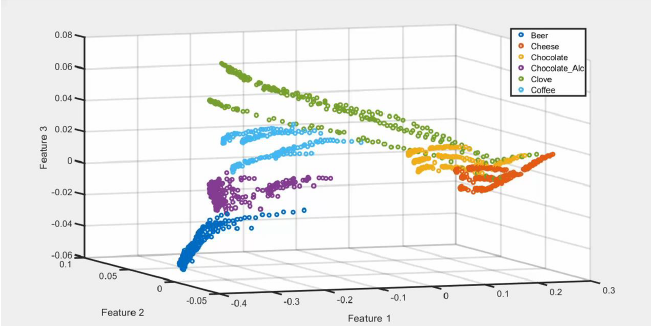
By temperature‑cycled operation of the BME688’s gas MEMS, different gas mixtures can be recognized and classified. (Image source: Bosch Sensortec)
Standard configurations detect VSCs as an indicator of bacterial growth. The gas scanner can be tuned for sensitivity, selectivity, data rate, and power consumption. BME AI‑Studio enables developers to tailor the BME688’s gas scanner for home appliances, IoT devices, or smart‑home ecosystems.
The software runs on an external application processor; Schellin notes that while the current architecture is separate, future iterations may integrate the AI directly onto the sensor. Bosch has already demonstrated on‑device AI with its BHI motion sensor, underscoring the company’s roadmap.
Bosch Sensortec also offers an Adafruit‑compatible development kit to accelerate adoption.
3.0 x 3.0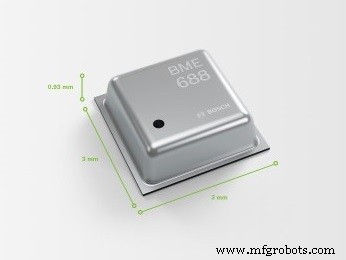
The BME688’s compact package measures just 3.0 × 3.0 × 0.9 mm. Schellin compares it to the BMM150 magnetometer (1.56 × 1.56 × 0.6 mm) and foresees further size reductions while adding smart features. “When we reach physical limits, we’ll focus on embedding more intelligence rather than shrinking dimensions,” he says.
From sensor design to embedded AI, Bosch Sensortec builds everything in‑house to maximize integration benefits. “If you need ultra‑low power but don’t know the hardware limits, we can’t tell you what’s achievable without building it ourselves,” Schellin explains, though collaboration with partners remains open.
>> This article was originally published on our sister site, EE Times Europe.Related Contents:
- Sensor fusion brings multiple benefits
- Medical sensor ASIC embeds ML accelerator
- Sensor-based solutions for vital signs measurements
- Choosing the most suitable predictive maintenance sensor
- Interfacing with modern sensors: Interface design
- Advanced sensor technologies enable personalized air quality monitoring
- Sensor could let smartphone measure vital signs
For more Embedded, subscribe to Embedded’s weekly email newsletter.
Embedded
- Tiny PM2.5 & VOC Sensors Deliver Real‑Time Personal Air‑Quality Monitoring
- EnSilica Unveils eSi‑MediSense: First Single‑Chip Medical Sensor with Integrated ML Accelerator
- Renesas Elevates Indoor Air Quality Sensor Platform with Embedded AI for Enhanced Odor Detection
- Helium-Based Solar‑Powered Air Quality Sensor: Design & Deployment Guide
- LoRa‑Based Smart City Air‑Quality Monitoring System
- Smart Indoor Air Quality & Waste Monitoring System
- Build a Precise Air Quality Monitor with the Sharp GP2Y1010AU0F Sensor
- Build an Arduino‑Based Air Quality Monitor Using the DSM501A Dust Sensor
- Arduino-Based Indoor Air Quality & Comfort Sensor Kit
- Advanced Carbon‑Based NO₂ Sensor Enhances Indoor Air Quality Monitoring