Industrial manufacturing
Composite material


Zoltek Companies Inc., a recognized leader in industrial‑grade carbon fiber, is scaling its Guadalajara, Mexico facility to meet soaring demand across energy and transportation sectors. In early 2023, the company will launch a new 6,000‑tonnes‑per‑year production line, complementing the 6,000‑tonne
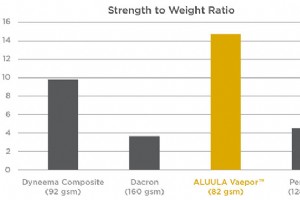
British Columbia‑based startup Aluula Composites has announced a breakthrough in soft composite technology, delivering materials that are up to 50 % lighter than competing products while matching or surpassing their strength. Aluula’s proprietary molecular‑level fusion process eliminates the need fo
Oribi Composites has announced the world’s first high‑performance off‑road UTV wheels crafted from advanced thermoplastic composites. The new rims are 50 % lighter than their aluminum counterparts while delivering the same strength and toughness required for the toughest terrains. “Our proprietary t
ExxonMobil Chemical Co. has acquired California‑based Materia Inc., the pioneer behind a Nobel Prize‑winning technology for producing high‑performance thermoset resins. These materials—suitable for wind turbine blades, electric‑vehicle (EV) components, sustainable construction, and anticorrosive coa
Toray Advanced Composites, together with a coalition of industry and academic partners, has secured funding from the Dutch Ministry of Economic Affairs and Climate Policy’s Research and Development for Mobility to develop a durable, all‑composite liquid hydrogen tank for civil aircraft. The European
Solvay and Avio SpA have signed a long‑term agreement to supply composite and adhesive materials for a range of projects, including the European Space Agency’s Vega launch vehicles that deliver payloads into low Earth orbit. Under the deal, Solvay will provide Avio with ablative material, RTM resins
Overview Introduction Natural Fiber Polymer Composites Natural Fibers Polymers: Thermoset and Thermoplastics Basic Characteristics Parameters Affecting NFPCs NFPC Applications Forcing Function for Adoption Conclusion Introduction Growing consumer awareness and stricter environmental regulations ha
What is AFPnext? AFPnext is a turnkey solution that brings advanced automation and connectivity to small‑ and medium‑sized enterprises. By combining the scalability of 3‑D printers with the affordability of a technician‑level system, it delivers rapid deployment—often within weeks—so you can start p
At our Finland facility, we have expanded our manufacturing portfolio with state‑of‑the‑art tape‑winding technology. This new capability empowers designers and manufacturers to validate innovative concepts and create cutting‑edge prototypes for presentations, stakeholder demos, or early‑stage produc
Why Production Trials Matter Designers and manufacturers invest heavily in creating parts that can be produced efficiently. Nonetheless, hands‑on trials are indispensable for confirming manufacturability, fine‑tuning designs, boosting production rates, and optimizing material logistics. Confirm man
Before selecting materials and process parameters for ATL/AFP composite parts, it’s essential to grasp the physics that governs their strength. This section outlines three core concepts that form the foundation for robust composite design. Beam Bending Fundamentals ATL/AFP components are rarely 100

Thermoset composites are indispensable across commercial, industrial, and residential sectors. At the recent Automotive Composites Conference and Exhibition (ACCE), Martin Starkey, director of Gurit Automotive, highlighted that the wide array of resins and reinforcements makes composites “infinitely

Although it may appear a recent trend, the quiet competition between thermoset composites and thermoplastics has been unfolding since the late 1980s. Engineers weigh the advantages and disadvantages of each material as intensely as tech enthusiasts debate Microsoft versus Linux. The debate continues

Choosing the right molding process for composite parts is critical. Thermoset injection molding offers unique advantages and challenges that can impact cost, quality, and production speed. Below we break down the key pros and cons to help you determine if this method suits your project.CompressionIn

Thermoset composites—engineered from epoxy or polyester resins and reinforced with glass fibers—combine chemical resilience with mechanical strength. Polyester systems can be tailored to yield softer, flexible structures or hard, rigid ones, depending on the application. These materials are found i
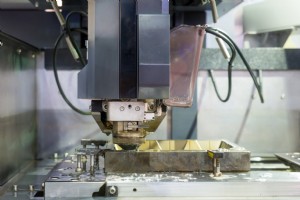
Thermoset plastics are prized for their superior mechanical, thermal, and chemical resistance. Leveraging their unique chemistry, manufacturers can shape these materials into high‑performance parts through several proven processing routes. Below, we break down five industry‑standard techniques tha

In the HVAC sector, evolving industry standards demand longer product lifespans and higher customer satisfaction. Thermoset composites offer a proven solution—extending durability while simplifying maintenance throughout a system’s life. Before selecting a new material, consider these key questions

Noise propagates as pressure waves generated by vibrating sources. To mitigate unwanted sound, engineers typically adopt three proven strategies: damp the source itself, absorb or redirect the waves, or increase the distance from the source so that the energy falls below audible thresholds. SMC (Sh

As consumer expectations evolve, manufacturers must deliver products that combine performance, durability, and cost-effectiveness. Thermoset composites offer a proven solution that meets these demands without altering the core design of your product. By replacing traditional materials with thermose
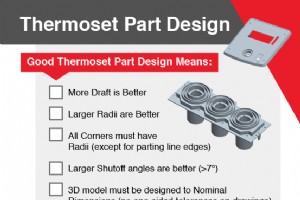
Quality begins with the design stage, regardless of the manufacturing route. A part engineered for machining, thermoplastic molding, or metal casting may not translate directly to a thermoset process. Whether you’re crafting a 5‑ounce thin disc or a 35‑pound industrial switchgear, the design criteri
Composite material