



The Unexpected Purple: How Indirubin Reveals Natural Indigo’s Hidden Story
Why does a white plastic button suddenly turn purple in an indigo dye bath?
Indirubin is one of the most intriguing compounds found only in natural indigo. Often called the “red” of indigo, it does not appear in synthetic pigments and is prized for its medicinal properties.
Some dyers have successfully tweaked extraction and pH to bring indirubin’s subtle purple‑red hue to textiles. Although I haven’t personally mastered that technique, I have learned to identify indirubin in a pigment sample, which confirms whether a dye is plant‑derived rather than factory‑made.
All of my indigo comes from Stony Creek Colors, a company that guarantees 100 % plant‑based dye, ensuring a consistent amount of indirubin.
In my studio I maintain several large “active” indigo vats, occasionally dyeing ready‑made garments. A white linen blouse is not ideal for dyeing in a studio setting, but a piece already dyed a deep indigo blue works perfectly.
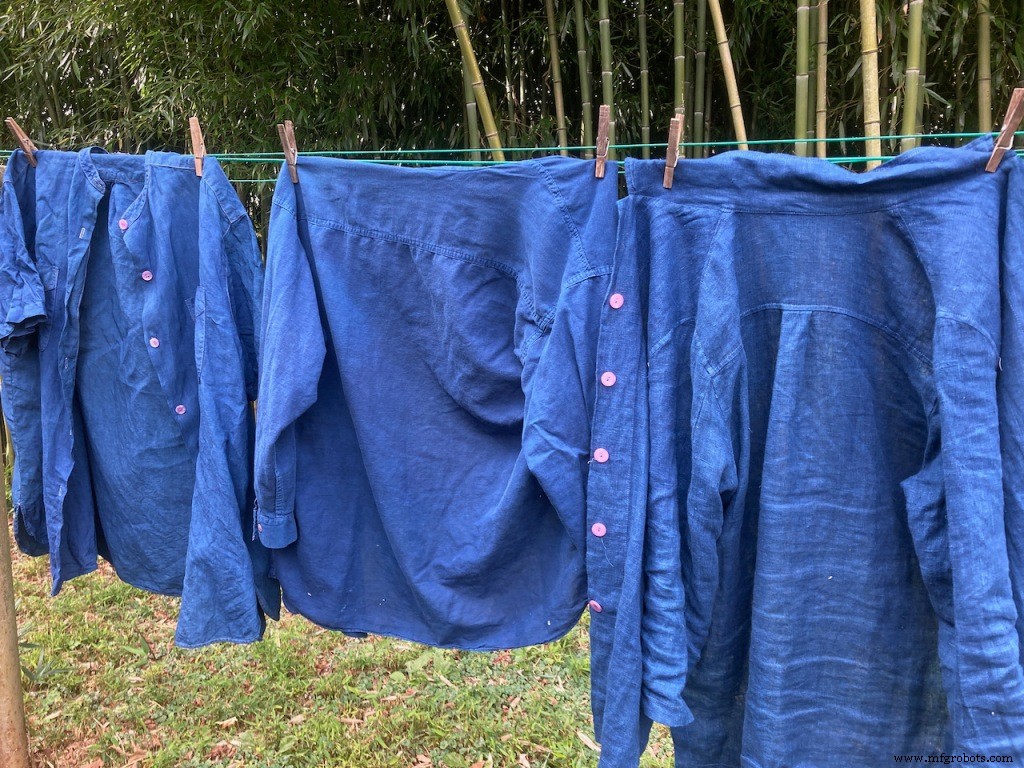
After dyeing, I always boil the textile just before the final rinse to remove any unbound dye. For cellulose fabrics, I add a small amount of neutral detergent and boil vigorously for about ten minutes. Wool and silk are brought to a near‑simmer and held for the same duration.
When I started using Stony Creek indigo, the water from the final boil consistently turned a faint purple. I assumed this was indirubin leaching from the fabric. Interestingly, the purple fades as the bath cools, indicating the pigment’s temperature‑dependent solubility.
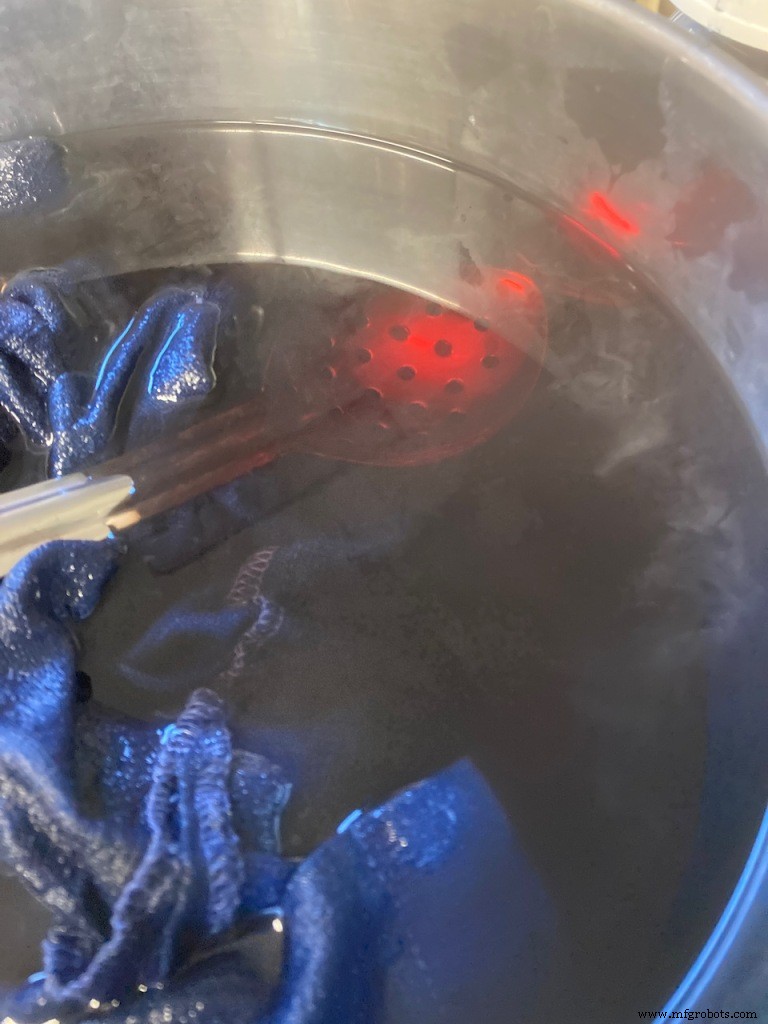
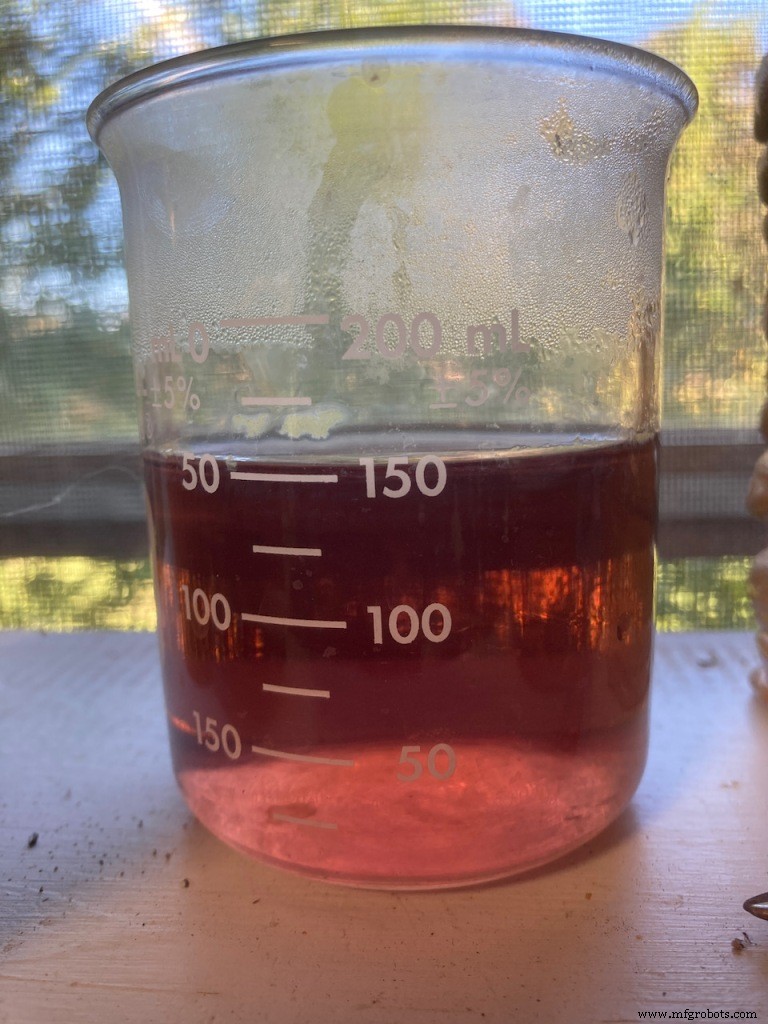
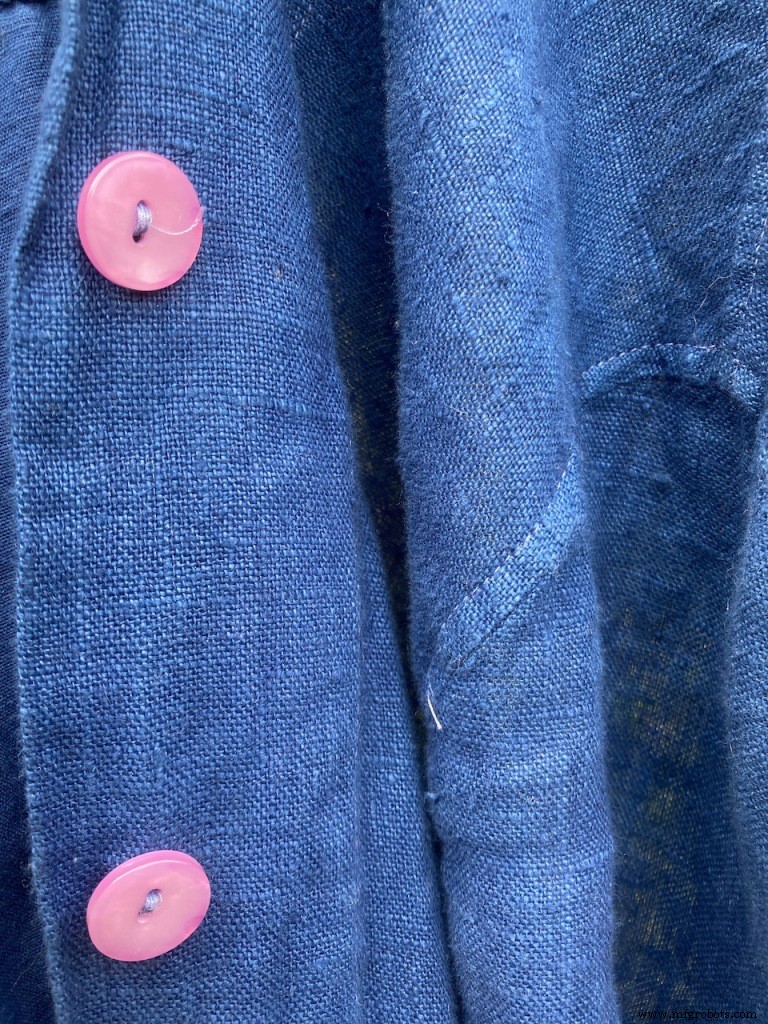
Recently I dyed linen shirts with plastic buttons. The buttons stayed white until the final boil, after which they turned purple. This occurs because indirubin is less easily reduced; the undissolved pigment stains petroleum‑derived materials like plastic and some polyester threads.
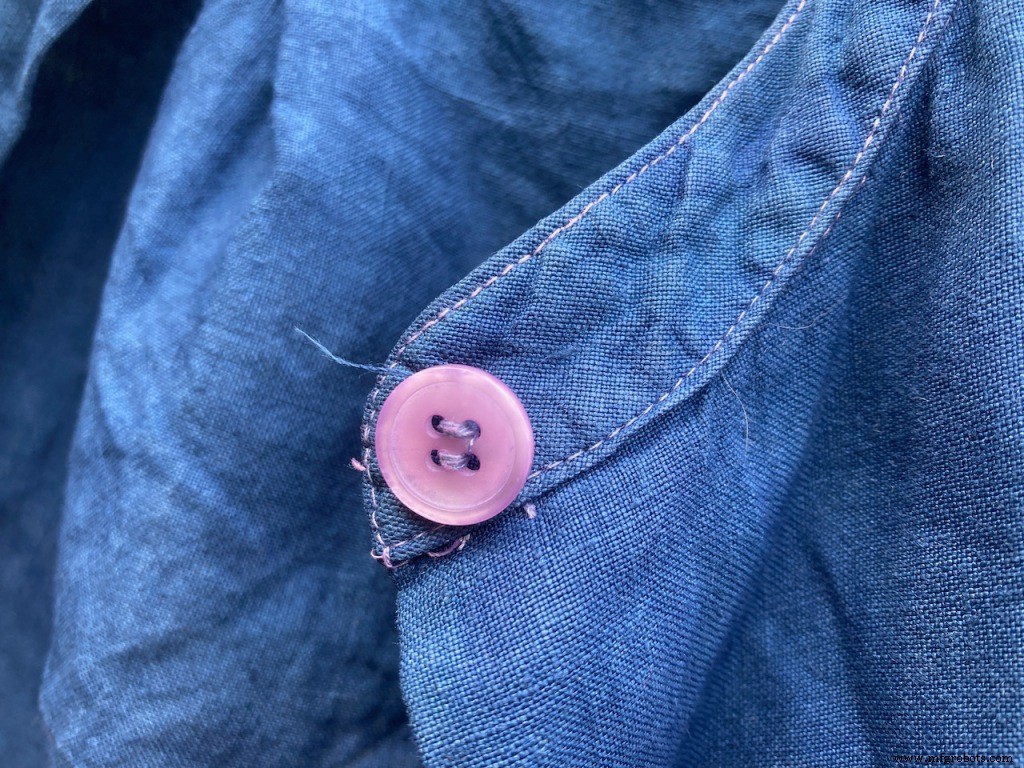
Summer Arrowood, the chemist at Stony Creek Colors, notes that every plastic vessel in her lab turns purple from indirubin exposure.
Will these buttons remain purple after multiple washes? That’s a question for future experimentation. Every batch of natural indigo offers new insights into the chemistry of dyeing.
Dye
- How Live TV Will Transform: The Computing‑Driven Future of Broadcast
- The 555 Integrated Circuit: A Timeless Benchmark in Analog Design
- The Quadratic Formula: A Reliable Tool for Solving Second‑Degree Equations
- Mastering the D Latch: A Clean 1‑Bit Memory Circuit
- Common‑Base Transistor Amplifiers: Design, Analysis, and Applications
- DIAC: The Bidirectional Trigger for AC Thyristors
- Understanding TRIACs: Bidirectional Power Control in AC Applications
- Indigo Dye: History, Production, and Future Trends
- From Mark One to Next‑Day Metal: Markforged’s Metal X Journey
- Mastering Indigo Fermentation: Lessons from a Five‑Year‑Old Vat