


Industrial manufacturing
Metal

Malleable iron is a cast iron in which the graphite is present as temper carbon nodules, instead of flakes as gray iron or spherulites as in ductile iron.PropertiesGeneralPropertyTemperatureValueCommentDensity23.0 °C7.2 - 7.34 g/cm³Typical for Malleable Cast IronMechanicalPropertyTemperatureValueCom
Malleable iron is a cast iron in which the graphite is present as temper carbon nodules, instead of flakes as gray iron or spherulites as in ductile iron. M5503 is used where better machinability and/or improved response to induction hardening than M5003 are necessary for parts requiring moderate st
Malleable iron is a cast iron in which the graphite is present as temper carbon nodules, instead of flakes as gray iron or spherulites as in ductile iron. M5003 is used where moderate strength and/or selective hardening are required.PropertiesGeneralPropertyTemperatureValueCommentDensity23.0 °C7.2 -
Malleable iron is a cast iron in which the graphite is present as temper carbon nodules, instead of flakes as gray iron or spherulites as in ductile iron. M4505 is used where slightly higher strength and hardness than M3210 is needed.PropertiesGeneralPropertyTemperatureValueCommentDensity23.0 °C7.2
PropertiesGeneralPropertyValueConditionRelated StandardsDensity2.72 g/cm³T4AA StandardsMechanicalPropertyValueConditionRelated StandardsCommentElastic modulus70.0 - 73.0 GPaTypical for Wrought 2000 Series AluminiumPlane-Strain Fracture Toughnes22.0 - 35.0 MPa·√mTypical for Wrought 2000 Series Alumin
PropertiesGeneralPropertyValueConditionRelated StandardsDensity2.73 g/cm³T4AA StandardsMechanicalPropertyValueConditionRelated StandardsCommentElastic modulus70.0 - 73.0 GPaTypical for Wrought 2000 Series AluminiumPlane-Strain Fracture Toughnes22.0 - 35.0 MPa·√mTypical for Wrought 2000 Series Alumin
PropertiesGeneralPropertyValueConditionRelated StandardsDensity2.71 g/cm³OAA Standards, ASTM B483MechanicalPropertyValueConditionRelated StandardsCommentElastic modulus68.0 - 70.0 GPaTypical for Wrought 1000 Series AluminiumPlane-Strain Fracture Toughnes22.0 - 35.0 MPa·√mTypical for Wrought 1000 Ser
PropertiesGeneralPropertyValueConditionRelated StandardsDensity2.71 g/cm³H18AA Standards, ASTM B483MechanicalPropertyValueConditionRelated StandardsCommentElastic modulus68.0 - 70.0 GPaTypical for Wrought 1000 Series AluminiumPlane-Strain Fracture Toughnes22.0 - 35.0 MPa·√mTypical for Wrought 1000 S
PropertiesGeneralPropertyValueConditionRelated StandardsDensity2.71 g/cm³H16AA Standards, ASTM B483MechanicalPropertyValueConditionRelated StandardsCommentElastic modulus68.0 - 70.0 GPaTypical for Wrought 1000 Series AluminiumPlane-Strain Fracture Toughnes22.0 - 35.0 MPa·√mTypical for Wrought 1000 S
PropertiesGeneralPropertyValueConditionRelated StandardsDensity2.71 g/cm³H14AA Standards, ASTM B483MechanicalPropertyValueConditionRelated StandardsCommentElastic modulus68.0 - 70.0 GPaTypical for Wrought 1000 Series AluminiumPlane-Strain Fracture Toughnes22.0 - 35.0 MPa·√mTypical for Wrought 1000 S
PropertiesGeneralPropertyValueConditionRelated StandardsDensity2.71 g/cm³H12AA Standards, ASTM B483MechanicalPropertyValueConditionRelated StandardsCommentElastic modulus68.0 - 70.0 GPaTypical for Wrought 1000 Series AluminiumPlane-Strain Fracture Toughnes22.0 - 35.0 MPa·√mTypical for Wrought 1000 S
The following is valid for the material ZP8 with the material number ZP0810: according to DIN EN 12844, the alternating stress fatigue strength (time strength) is 100 N/mm² with 100 million reversals of stress the creep life (0.5 per cent, 3000 h) is 160 N/mm². The temperature coefficient of the l
The following is valid for the material ZP27 with the material number ZP2720: according to DIN EN 12844, the alternating stress fatigue strength (time strength) is 145 N/mm² with 100 million reversals of stress the creep life (0.5 per cent, 3000 h) is 100 N/mm². The temperature coefficient of the
The material ZP2 with the material number ZP0430 is applied for sand and gravity die-castings of any kind, sheet-metal-forming tools as well as for moulds for injection-molding, deep-drawing and blowing of plastics. The alloy ZP2 is a possible alternative for the material ZP5 (ZP0410) if the strengt
The silver-white, hard precious metal material rhodium (Rh) belongs to the light platinum metals (density around 12 g/cm³). Rh is resistant to acids in a compact form such as iridium, but it dissolves finely distributed in aqua regia and concentrated sulfuric acid. It reacts with oxygen at high surf
The platinum-iridium material PtIr10, also Pt10Ir, Pt90Ir10, for jewelery alloys Pt / Ir900 or Pt900 / Ir100 shows a very good corrosion behavior as well as good wear properties. He will u. a. for mains electrodes in gravimetry as well as for sliding contacts and switching contacts as well as for la
Precision rolled plate UNIDAL® made form alloy EN AW 7019 (AlZn4Mg2), finely milled on both sides and covered with protective film, is characterized by a narrow tolerance of flatness and thickness and has only relatively low residual stresses. The good anodizing and welding capability opens up a wid
High-strength rolled plate EN AW 7075 (AlZn5.5MgCu) is probably the most famous (high-strength) rolled plate and is used regardless of the individual requirements in nearly all sectors of the capital goods industry. In material state T7351, it is also suitable for applications where there is a risk
High-strength rolled plate CERTAL® is based on alloy EN AW 7022 (AlZn5Mg3Cu). Compared with other high-strength rolled plates, CERTAL® has a significantly lower strength and hardness decrease from plate edge to center and is therefore much more dimensionally stable than, for example, rolled plates m
Alloy EN AW 6082 (AlSi1MgMn), situated in the upper segment of medium-strength rolled plates, has very good resistance to stress corrosion cracking (SCC) in addition to high thermal conductivity.PropertiesGeneralPropertyTemperatureValueDensity23.0 °C2.7 g/cm³DimensionPropertyValueDimensionsStandard
Metal

Root Cause Failure Analysis: A Proven Approach for Manufacturing Excellence
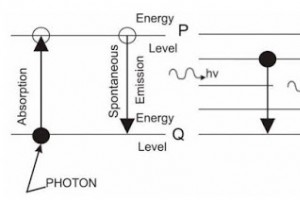
Laser Beam Machining: Principles, Process, Equipment, Applications, Advantages, and Disadvantages

Harnessing Connected Product Data: How IoT Analytics Drive Innovation and Trust
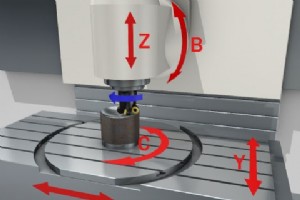
Unlock Precision: How 4‑Axis & 5‑Axis CNC Machines Craft Complex Parts

