


Industrial manufacturing
Metal

1.4888 (X10NiCrSiLa 38-22) is a cost effective alloy for heating elements which shows the following features and superior properties: Sagging behavior similar to Cronifer® II Excellent corrosion resistance at high temperatures Excellent life time Ease of working and processing Reduced nickel conten
Phosphor bronze is a ternary alloy produced by adding tin to copper and deoxidizing with phosphorus. It has good workability, fatigue-endurance and corrosion-resistance. While phosphur bronze with higher tin content shows high strength and excellent elasticity, phosphor bronze with lower tin content
Phosphor bronze is a ternary alloy produced by adding tin to copper and deoxidizing with phosphorus. It has good workability, fatigue-endurance and corrosion-resistance. While phosphur bronze with higher tin content shows high strength and excellent elasticity, phosphor bronze with lower tin content
Phosphor bronze is a ternary alloy produced by adding tin to copper and deoxidizing with phosphorus. It has good workability, fatigue-endurance and corrosion-resistance. While phosphur bronze with higher tin content shows high strength and excellent elasticity, phosphor bronze with lower tin content
Phosphor bronze is a ternary alloy produced by adding tin to copper and deoxidizing with phosphorus. It has good workability, fatigue-endurance and corrosion-resistance. While phosphur bronze with higher tin content shows high strength and excellent elasticity, phosphor bronze with lower tin content
Phosphor bronze is a ternary alloy produced by adding tin to copper and deoxidizing with phosphorus. It has good workability, fatigue-endurance and corrosion-resistance. While phosphur bronze with higher tin content shows high strength and excellent elasticity, phosphor bronze with lower tin content
Extra High Strength SteelPropertiesGeneralPropertyValueCommentCarbon equivalent (CET)0.36 [-]TM0.4 [-]QTCarbon equivalent (CEV)0.56 [-]for t ≤ 50 mm plate thickness0.64 [-]for t ≤ 50 mm plate thickness condition QT0.66 [-]for 50 < t ≤100 mm plate thickness condition QT0.68 [-]for t ≤ 65 mm tabula
The increase in the Al and Fe content results in a material in which the hard gamma 2 phase (about 400 HB) is present. By proper metallurgical control this hard constituent is uniformly distributed giving this alloy its ability to resist wear.PropertiesGeneralPropertyTemperatureValueDensity23.0 °C7.
DC01 Steel grade cold rolled according to EN 10139 - C590 with improved hardness. Suitable for Automotive componentes, Domestic Appliances, Tubes, Radiators and others. Mechanical properties should be garanteed for up to three months after manufacturing. Condition C590 should be suitable for weldin
DC01 Steel grade cold rolled according to EN 10139 - C490 with improved hardness. Suitable for Automotive componentes, Domestic Appliances, Tubes, Radiators and others. Mechanical properties should be garanteed for up to three months after manufacturing. Condition C490 should be suitable for weldin
DC01 Steel grade cold rolled according to EN 10139 - C390 with improved hardness. Suitable for Automotive componentes, Domestic Appliances, Tubes, Radiators and others. Mechanical properties should be garanteed for up to three months after manufacturing. Condition C390 should be suitable for weldin
DC01 Steel grade cold rolled according to EN 10139 - C290 with improved hardness. Suitable for Automotive componentes, Domestic Appliances, Tubes, Radiators and others. Mechanical properties should be garanteed for up to three months after manufacturing. Condition C290 should be suitable for weldin
BS 4360 Grade 43A was withdrawn and superceded by BS EN 10025 S275. This grade is a popular low carbon steeel grade and is suitable for a large number of engineering applications. Its low price make it suitable for different applications such as building and machinery constructions when wear-resista
Materion Performance Alloys’ Alloy 25 wire provides the highest strength of any copper alloy, with electrical conductivity considerably greater than other high strength copper alloys. This alloy features good stress relaxation resistance and high fatigue strength.PropertiesGeneralPropertyTemperature
Materion Performance Alloys’ Alloy 25 wire provides the highest strength of any copper alloy, with electrical conductivity considerably greater than other high strength copper alloys. This alloy features good stress relaxation resistance and high fatigue strength.PropertiesGeneralPropertyTemperature
Materion Performance Alloys’ Alloy 25 wire provides the highest strength of any copper alloy, with electrical conductivity considerably greater than other high strength copper alloys. This alloy features good stress relaxation resistance and high fatigue strength.PropertiesGeneralPropertyTemperature
DI-MC 500 is a thermomechanically rolled, fine grained structural steel with minimum yield strength of 500 MPa in its delivery condition ex works (referring to the lowest thickness range). It fulfils the requirements of EN 10025-4. Due to its chemical composition, this material has a low carbon equi
DI-MC 500 is a thermomechanically rolled, fine grained structural steel with minimum yield strength of 500 MPa in its delivery condition ex works (referring to the lowest thickness range). It fulfils the requirements of EN 10025-4. Due to its chemical composition, this material has a low carbon equi
DI-MC 460 is a thermomechanically rolled, fine grained structural steel with minimum yield strength of 460 MPa in its delivery condition ex works (referring to the lowest thickness range). It fulfils the requirements of EN 10025-4. Due to its chemical composition, this material has a low carbon equi
DI-MC 460 is a thermomechanically rolled, fine grained structural steel with minimum yield strength of 460 MPa in its delivery condition ex works (referring to the lowest thickness range). It fulfils the requirements of EN 10025-4. Due to its chemical composition, this material has a low carbon equi
Metal
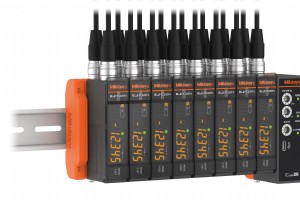
Mitutoyo Unveils Cutting‑Edge Linear Gauges, Setting New Standards in Precision Measurement

Is Carbon Steel Better Than Mild Steel? Clarifying the Differences

Laser vs MIG Welding: Expert Comparison for Optimal Manufacturing

SCARA Robots: The Ultimate Guide to Versatile, High-Speed Industrial Automation

