


Industrial manufacturing
Metal

Properties: - modification of 1.4401 - high resistance to not-oxidising chloride containing media - high polishable - able very well for cold forming - elevated corrosion properties, because of its decreased carbon content Application: - for construction in chemical industry, cellulose, textile and
Material CuZn39Pb0,5, mat. No. CW610N, is an unhardenable wrought alloy. to the comparable make CuZn39Pb0,5, mat. No. 2.0372 acc. to DIN 17660 : 1983-12 applies: High hardness and strength parameter are achievable by cold forming only. Thermal and electrical conductivity are lower than for the unlea
= 99,9% and a high residual copper-content. Tensile strength and Brinell hardness are increasable by cold forming. SF-Cu (Cu-DHP) is hydrogen resistant and shows the lowest thermal and electrical conductivity of the pure copper materials. Processing properties: hot forming: very good cold forming:
The austenitic steel grade X2CrNiMo17-12-3 acc. to DIN EN 10272 : 2001-01is used for hot and cold formed rods for pressure vessels. The material is resistant to intercrystalline corrosion also in sensitized condition.PropertiesGeneralPropertyTemperatureValueDensity20.0 °C8 g/cm³MechanicalPropertyTem
The austenitic steel grade X2CrNi18-9 acc. to DIN EN 10272 : 2001-01is used for hot and cold formed rods for pressure vessels. The material is resistant to intercrystalline corrosion also in sensitized condition.PropertiesGeneralPropertyTemperatureValueDensity20.0 °C7.9 g/cm³MechanicalPropertyTemper
The for pressure vessels approved steel X2CrNiMo18-15-4, mat. no. 1.4438, shows very good resistance to not oxidising media and halogenated media because of the high amount of Mo, is high polishable and good cold formable is resistant to intercrystalline corrosion in the delivery condition up to 6 m
The full austenitic steel X2CrNiNoN17-11-2, mat. no. 1.4406, has an higher yield strength and structure stability also at higher temperatures and a better resistance to oxidising media because of the added N. The steel is resistant to intercrystalline and selective corrosion, both in the delivery co
The heat resistant austenitic steel X8NiCrAlTi32-21 is optimized concerning high creep rupture strength at 700 to 1000 °C. The material is resistant to intercrystalline corrosion, not in the sensitized condition. Application: in pressure vessel and steam-boiler construction as well as in chemical an
The austenitic steel X8CrNiNb16-13 is available in solution annealed condition as hot rolled sheet. It is a high temperature resistant special steel for application up to 800 °C. No scaling up to 800 °C. The material is resistant to embrittlement and resistant to intercrystalline corrosion, also in
The austenitic steel X6CrNiNb18-10 is comparable to 1.4541 regarding the corrosion behaviour. The steel is resistant to intercrystalline corrosion even in sensitized condition. It shows a tendency to hot shortness for certain welding conditions. Permitted for pressure vessel construction up to 300 °
The austenitic steel X6CrNiMoTi17-12-2 is the sensitized by Ti variant of 1.4401. Increased corrosion resistance especially to nonoxidizing acids and halogenated media due to the high Mo-cotent. Increased resistance to intercrystalline corrosion even in sensitized condition due to the Ti-content. Ma
The austenitic steel X6CrNiMoNb17-12-2 is comparable to 1.4571 regarding corrosion properties. Increased corrosion resistance to nonoxidizing acids and halogenated media. The material is resistant to intercrystalline corrosion even in sensitized condition. The steel is not mirror-polishable. It is p
The austenitic steel X6CrNi18-10 shows favorable high-temperature strength up to 650 °C. The material is not resistant to intercrystalline corrosion. The steel is according to DIN EN 10095 usable as heat resistant steel. Application: reactor engineering (natrium cooling circuit for fast breeder) as
The austenitic steel X5CrNiMo17-12-2 shows an increased resistance to unoxidizing acids and halogenated media, to intercrystalline corrosion in delivery condition. It is usable for mirror-polishing and well cold formable. Application: for acid resistant instruments of chemical and pharmaceutical ind
The nitrogen-alloyed austenitic steel X3CrNiMoBN17-13-3 is applicated for superheater and hot steam tubes, collectors, heat-exchanger and other high loaded parts in power plant engineering as well as for pressure vessel and steam boiler construction in chemical industry. The material is resistant to
The austenitic steel X3CrNiMo17-13-3 shows a corrosion behavior similar to 1.4401. Due to its higher Mo-content slightly enhanced resistance to selective attack. The material is resistant to intercrystalline corrosion in delivery condition. Application: for acid resistant instruments and welded part
The austenitic steel X2CrNiN18-7 is a high-strength stainless ELC-steel (extra low carbon) for special applications. The corrosion resistance is comparable to 1.4311. Resistance to intercrystalline corrosion also in sensitized resp. welded condition. The material is well formable. Application: sprin
PropertiesGeneralPropertyValueConditionRelated StandardsDensity2.7 g/cm³H111EN 573-3, EN 485MechanicalPropertyValueConditionRelated StandardsCommentBending angle 180°0.5 °/tH111EN 573-3, EN 485Bending angle 90°0.5 °/tH111EN 573-3, EN 485Elastic modulus70.0 GPaH111EN 573-3, EN 485Hardness, Brinell18.
Quantity: One truck load – Specialty products on request.Additional services: Via Cindal (the Aludium R&D department): R&D services, benchmarking, chemical audits, material specification, process optimisation, quality monitoring, sample analysis, prototyping, trainingPropertiesGeneralPropert
Quantity: One truck load – Specialty products on request.Additional services: Via Cindal (the Aludium R&D department): R&D services, benchmarking, chemical audits, material specification, process optimisation, quality monitoring, sample analysis, prototyping, trainingPropertiesGeneralPropert
Metal

Boost Production Efficiency: 5 Key Advantages of CNC Machine Centers
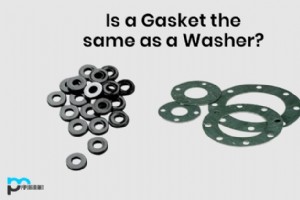
Gaskets vs. Washers: Understanding Their Distinct Roles
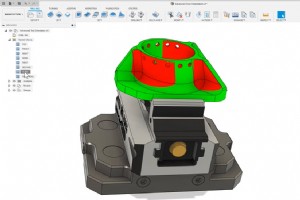
Master Tool Orientation in Fusion 360: Advanced Controls & Accessibility Analysis
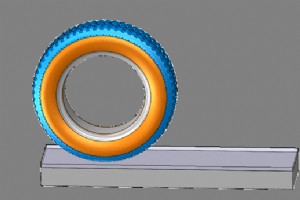
Mastering Tire‑Soil Interaction Modeling in Abaqus: CEL Techniques for Industrial & Off‑Road Applications

