



Hybrid Transistor Design: IGFET‑BJT Combo for High Gain and Low Drop
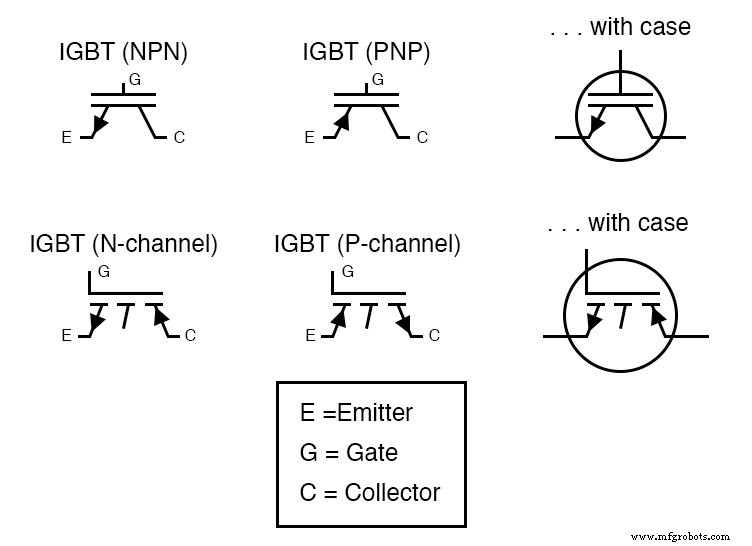
The hybrid configuration couples an insulated‑gate field‑effect transistor (IGFET) to a bipolar junction transistor (BJT). The IGFET, acting as a high‑impedance gate, drives the base of the BJT without drawing current from the control circuitry. Consequently, the system delivers a very high current‑gain (β), while the BJT still provides the low collector‑to‑emitter voltage drop characteristic of a conventional transistor during full conduction.
This arrangement is favored in power‑management and RF amplification stages where both high efficiency and fast switching are required. The IGFET's negligible gate leakage (<1 pA) ensures that the overall power consumption remains minimal, and the BJT's low saturation voltage (~0.2 V) keeps the output voltage drop low.
Industrial Technology
- Hands‑On Guide to Current Dividers: Build, Measure, and Simulate with a 6 V Battery
- Build a Reliable Current Mirror Circuit: Step‑by‑Step Guide
- Transistors: IGFET (MOSFET) – Depletion & Enhancement Modes Explained
- Bipolar Junction Transistors (BJT): Core Principles and Practical Applications
- Common-Emitter Amplifier Limitations: Distortion, Temperature, and High‑Frequency Challenges
- Understanding Junction Field‑Effect Transistors (JFET): Fundamentals and Applications
- Understanding Active-Mode Operation in IGFETs: Design, Performance, and Applications
- Expert Guide to Biasing Techniques for IGFETs
- Common IGFET Quirks & How to Mitigate Them
- Mastering Parallel Transistors: A Comprehensive Guide to Safe and Efficient Circuit Design