


Industrial manufacturing
Industrial Technology

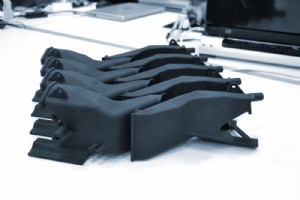
Additive manufacturing involves more than just sending your design off to the printer. Because 3D-printed parts often have visible layer lines or rough surfaces, post-processing can be used to ensure your parts look and feel finished — especially if you’re creating an end-use product.
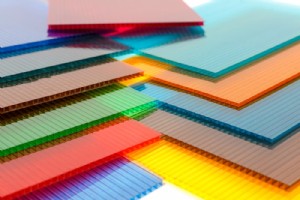
Since its development in the mid-20th century, polycarbonate (PC) has been an increasingly popular material in manufacturing. Today, around 2.7 million tons of polycarbonates are produced each year globally. Over the years, various companies have created different formulas for polycarbon

Stress concentrations are points in a part design that are prone to cracking, but you can reduce the potential for these types of failures with the right design choices. In our latest Fast Minute video, Senior Research and Development Engineer Tristan Antonsen discusses stress concentrat
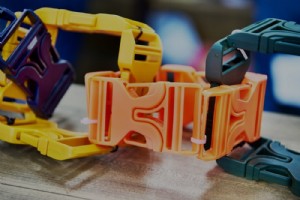
If you need to connect two pieces of a product or part, you don’t need to rely on an adhesive or add metal hinges or other fasteners during post-production. Instead, you can use snap-fit joints. Simply put, snap-fit joints connect two pieces using small protrusions (or joints) such as be

Injection molding involves melting and injecting plastic into a mold, cooling it, and ejecting the finished product. Injection molding is used across various industries, but it’s particularly instrumental in the medical supply and device industry, as it can produce large quanti
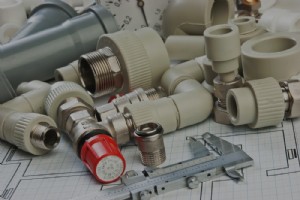
Injection molding involves creating a precise mold consisting of a core and a cavity and injecting molten plastic into the tooling. Once it has cooled, the injection molding machine’s ejector plate will engage, releasing the part from your mold. Injection molding offers high prec

The popularity of electric vehicles (EVs) began with the Toyota Prius, a hybrid vehicle powered by the combination of an internal combustion engine and a nickel-metal hydride battery. Since the introduction of the Prius, many hybrid and battery electric vehicles (BEVs) have entered the m
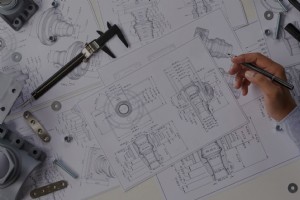
Correct tolerancing for your parts will help save time, money, and resources during the manufacturing process. As you design new parts, it’s important to consider not just overall geometric dimensioning and tolerancing best practices but also the impact of tolerance stacking on
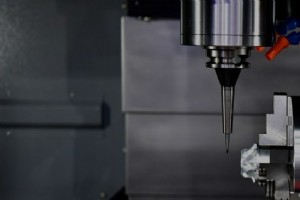
To complete your production run on time and on budget, it’s best to have a clear picture of your expected project costs from the very beginning. However, predicting accurate CNC machining project costs is easier said than done for many product teams. You’ll need to consider&nbs

Lattice structures are repeating patterns that, when connected, form three dimensional shapes. In an additive manufacturing context, compliant lattice structures open up exciting product design possibilities as designers harness 3D printing technologies to create previously ‘unmakeable’

At Fast Radius, our team strives every day to fulfill our purpose to make new things possible. Hear from Co-founder and Chief Executive Officer, Lou Rassey, about why this purpose is important and what motivates us to continue innovating on behalf of our customers. Transcript:
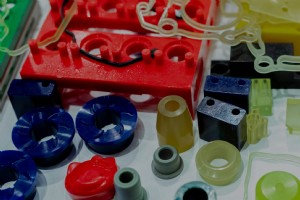
During the beginning stages of any project, engineers and product teams should take the time to understand the mechanical specifications of each prospective material. This includes not only the physical, chemical, and mechanical properties that can be found in any data sheet, but also ot
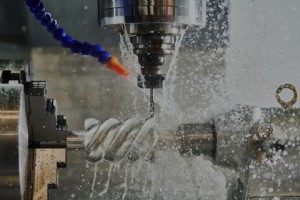
Part geometry, target cost-per-part, and other factors contribute to decisions about how to best make your part. In our latest Fast Minute video, Digital Sales Manager Gabe Smith runs through the differences between 3-axis and 5-axis machining and when to use each type of CNC machining.
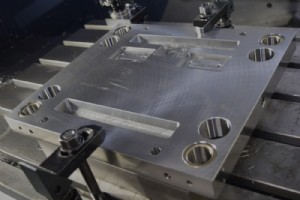
Injection molding is the most popular mass production method when creating large volumes of identical plastic parts — and for good reason. While you may need to invest a significant amount of money upfront to manufacture injection mold tooling, your price per unit will be extremely low i

People often turn to compatibility comparisons to understand how their product’s material will react to certain chemicals and withstand its future environment. To help guide you in the material selection process, we’ve compiled data from our additive manufacturing partners, including Car
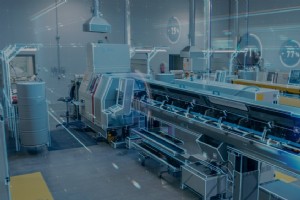
Big data offers a new future for manufacturers. While the industry has been slow to harness the possibilities of data-driven manufacturing, the opportunities for new efficiencies, smoother supply chains, and accelerated product development cycles are forcing forward-thinking manufacturers to

Making the manufacturing industry greener requires implementing sustainability best practices from end to end, and the importance of supply chain sustainability can’t be understated. Manufacturing and transporting goods are energy-intensive processes, and the majority of most companies’

Sustainability is a key to the future of the manufacturing industry. As consumers and businesses alike consider the carbon footprint of their products, innovative manufacturers are seeking new ways to track, evaluate, and reduce the emissions created during the manufacturing process. Learn m
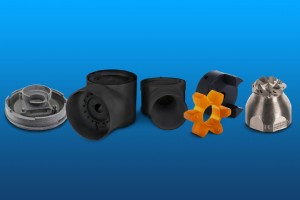
Additive technology has advanced rapidly over the past decade, promising new, exciting manufacturing possibilities for businesses across the industrial landscape. When people think of additive manufacturing (AM), however, one of the applications that immediately springs to mind is pro
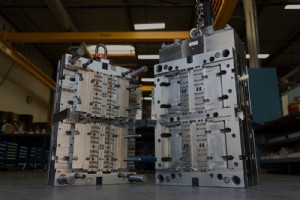
If you need to produce plastic parts, there’s a good chance you’ll end up using injection molding. Since this precise manufacturing process is a cost-effective way to produce medium and high volumes of identical plastic parts, it’s often a better choice than production methods like CNC m
Industrial Technology
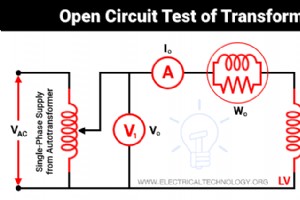
Transformer Testing: Short-Circuit and Open-Circuit Procedures Explained
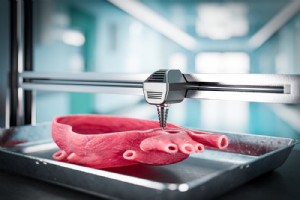
3D Bioprinting Explained: Definition, History, Mechanisms, and Key Types

Top 5 Must-Have Features for Preventive Maintenance Software

Python for Electrical Engineers: Practical Applications Across Design, Testing, and Production
