


Industrial manufacturing
Industrial Technology

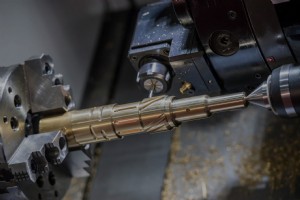
Computer Numerical Control (CNC) machining is a family of subtractive manufacturing processes that uses computer-controlled machining stations to shape parts from a larger block of material through a combination of cutting, boring, milling, and other operations. A key advantage of the
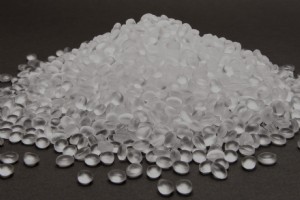
Polyethylene (PE) is a variable crystalline thermoplastic well known for its versatility. German chemist Hans von Pechmann discovered polyethylene by accident in 1898 when attempting to create a more stable version of diazomethane. Eric Fawcett and Reginald Gibson first synthesized polye

Transparency, determined by how much light passes through an object, is often a desirable property in 3D printed parts. Transparency is essential for many consumer goods, such as cosmetics packaging and kitchen products, while clear surgical guides and medical models help healthcare prof
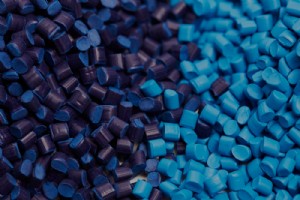
Even though polypropylene is only 70 years old — very young by manufacturing’s standards — it’s the second most popular and the most profitable material in the manufacturing industry. The global market for polypropylene was worth roughly $126.03 billion in 2019, and the current demand fo
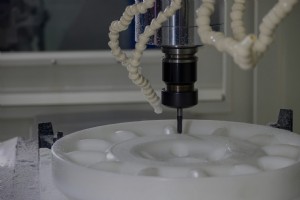
Plastics are integral to the modern manufacturing industry — they’re widely available, most are affordable, and they’re compatible with popular manufacturing processes like injection molding, 3D printing, and CNC machining. CNC machining is a subtractive manufacturing process that use
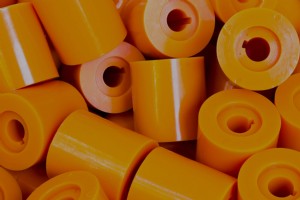
Polyurethanes are incredibly versatile plastic materials that have come to play a major role in the products people use every day. Polyurethanes were invented in 1937 by Dr. Otto Bayer and primarily used as replacements for rubber during World War II. By the 1950s and 60s, polyurethanes
Two-shot injection molding is a dual-step manufacturing process that enables the rapid production of complex, functional parts from different materials in a highly efficient way. The first step of the two-shot injection molding process is similar enough to traditional injection moldin

Dimensional tolerances are a crucial part of the design and manufacturing process. A tolerance is a numerical range of measurements assigned to a part’s dimensions indicating how much a manufacturing team can drift from the nominal measurement. Spending time on proper tolerancing pre-man

Fused deposition modeling (FDM), sometimes called fused filament fabrication (FFF), is a manufacturing process that has been around since the advent of additive technology. S. Scott Crump developed and commercialized this process in the late 1980s and early 90s after he founded Stratasys

Dimensional tolerance design is crucial to creating components that fit together well and function properly. Overly “loose” tolerances yield too much manufacturing allowance, leading to mismeasured (and therefore often unusable parts — however, needlessly “tight” tolerances demand precis
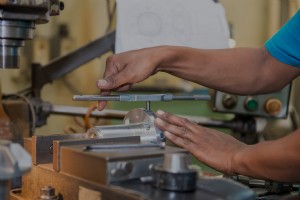
Along with material selection, design is among the most critical factors in determining the quality and functionality of a final part. Regardless of the chosen manufacturing method, product teams should adhere to design for manufacturability (DFM) principles during the design and prototy

When developing 3D printed parts, engineers and product teams assess potential 3D printing materials by carefully considering their project requirements and the qualities that the finished part must possess. This process of elimination helps teams whittle down a sea of material options a

Lightweighting is the process of reducing a part’s weight for environmental and/or economic reasons. Engineers achieve lightweight parts at the design level by removing unnecessary material, either by coring parts out, employing lattices in their designs, or taking advantage of topology

Injection molding is a tried-and-true method for rapidly producing plastic parts in high volumes, including common everyday items like bottle caps and storage containers. The process is ideal for jobs involving repeatable components, specific chemical resistances, and strict mechanical a

Engineers and product teams have many options for metal fabrication. Depending on the part design and the use-case, cutting, folding, shearing, or stamping — just to name a few — may be appropriate. Among the most widely employed metal manufacturing methods are Computer Numerica
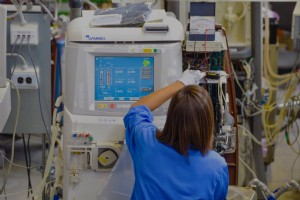
Modern medicine relies on a variety of different tools and instruments. Ranging from flexible tubing to gauze to durable metal clamps and prosthetic limbs, these devices take many shapes. Just as the FDA regulates which materials can be used in our food and drug supply chains, they also
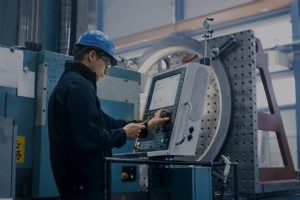
CNC machining is a traditional manufacturing process that employs cutting tools and drills to systematically remove material from a workpiece to create a finished part. The machine receives toolpaths to cut the piece, typically in G code. The code for the machine can either be manually w

Plastics are the most commonly-used materials in manufacturing today, offering impressive versatility and cost-effectiveness. Accordingly, there are numerous methods by which to manufacture plastic parts, including 3D printing, CNC machining, polymer casting, and extrusion. Among the
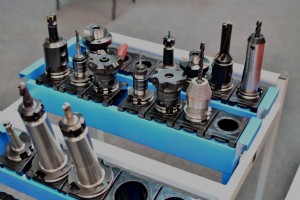
A fixture is a workholding device, or a tool that holds a part in place while it’s being CNC machined. When the part is simple, workholding is also simple; sometimes, the part can even be held in the machinist’s hand. But when a part is very large or has detailed features on more than on
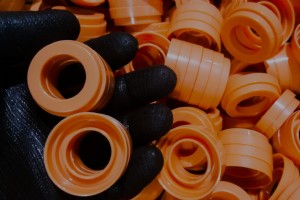
Injection molding is a manufacturing process that uses a pressurized nozzle to inject molten material into a durable metal mold, eject the part once it has set, and refill the mold in quick succession. This enables the economic production of identical parts with repeatable tolerances in
Industrial Technology

Essential Guide to Buying Inventory Barcode Labels
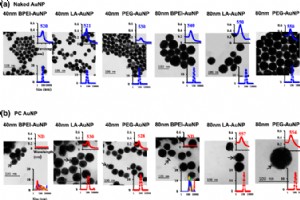
Gold Nanoparticles Modulate Testosterone Metabolism in Human Liver Microsomes: Size, Surface Chemistry, and Protein Corona Effects

6LoWPAN Wireless Range – Practical Calculations for Obstacle Course Applications

Airtel & Intel Partner to Accelerate 5G vRAN Innovation in India
