Industrial manufacturing
Industrial Technology


By Izzy de la Guardia, Application Engineer, Fast Radius This article originally appeared on nTopology’s blog. As an application engineer at Fast Radius, I work with customers across industries — from consumer goods to aerospace — looking to embrace production-grade additive manufactur
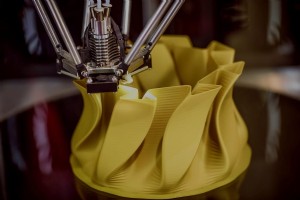
Additive manufacturing processes operate on scales that are far more complex and intricate than human machine operators are able to control unassisted. Layer-based methods like fused deposition modeling (FDM) can be configured according to a wide range of variables, including pixel scale
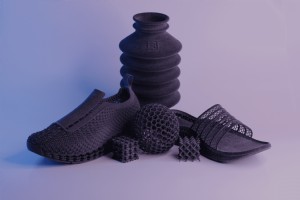
Fast Radius now offers HP 3D High Reusability TPA enabled by Evonik. Made specifically for HP Multi Jet Fusion technology, this thermoplastic polyamide powder is extremely lightweight and flexible with enhanced rebound resilience. We were one of the first of HP’s partners to access th

Topology optimization (TO or TopOp) is a mathematical method that optimizes material layout within a given space, taking into account given load or boundary restrictions. Topology optimization allows designers to optimize a mechanical component or part, typically through material reducti
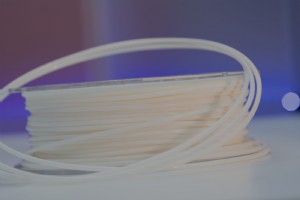
When product designers and engineers want a part to have certain properties like shock absorption or high impact strength, they often turn to polymers made out of thermoplastic elastomers. Thermoplastic elastomers are a class of polymers that have both thermoplastic and elastomeric pr

By Tristan Antonsen, Application Engineer, Fast Radius This article originally appeared on nTopology’s blog. As an application engineer at Fast Radius, I work to bring manufacturing solutions to customers from all industries across a wide range of traditional and additive manufac
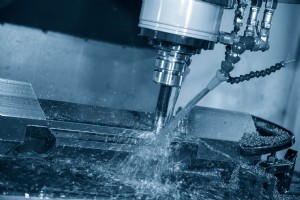
Computer Numerical Control (CNC) machining is a versatile, high-precision traditional manufacturing process that’s ideal for medium to high-volume production runs of complex parts. CNC machining is a subtractive process, meaning the machine whittles away at a solid block of material to c
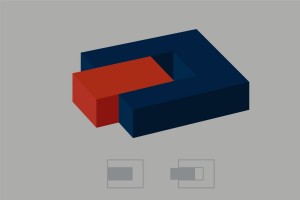
Draft, or the application of a slight taper to every surface in the direction of pull on an injection-molded part, is a small and even tedious design element — but one that’s vital to the success of a project. To visualize draft, envision an ice cube tray: the slight taper allows ice cub

As environmental concerns become increasingly important to consumers, many market sectors are shifting toward greater energy consciousness and sustainability. While solutions like renewable energy sources, electric vehicles, and sustainable materials tend to receive significant media att
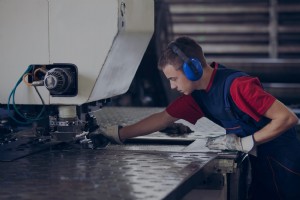
What do RF shields, airplane wings, automobile bodies, roofs, and ductwork have in common? They’re all made from sheet metal. Chiefly defined by its alloy and thickness, sheet metal ranges from 0.006 to 0.25 inches. Beyond these lower and upper bounds, metal is defined respectively as fo
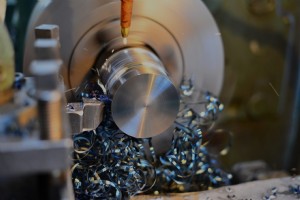
Computer Numerical Control (CNC) Machining is a subtractive manufacturing process that allows manufacturers to make precise parts from almost any material, including metals, plastics, composites, and foams. Unlike additive manufacturing, in which parts are built by adding layer upon laye

Semiconductor devices feature electronic circuit components made from materials like silicon, that aren’t good insulators or conductors. These devices are compact, reliable, cost-effective to produce and play a key role in powering many of the cutting-edge digital devices in use today.
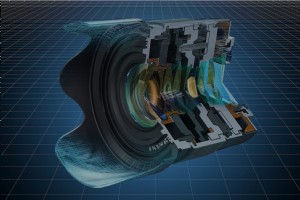
Computer-aided design, or CAD, modeling refers to the process of using virtual models to test and refine part design before physical production begins. 3D CAD models are identical to the final product in both dimensions and details, which can help engineers optimize parts for design and
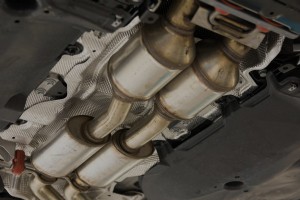
Most consumers don’t think about the surface finishes of their favorite products, but post-processing is top of mind for engineers and product teams. The difference between an inferior product and a superior one often comes down to finishing, and engineers treat parts after manufacturing

By Charlie Wood, Director of Application Engineering and Design, Fast Radius Though it may seem obvious, well-planned design is as important to the manufacturing process as any step of the process itself. This idea is known as Design for Manufacturing (DFM), and it’s the key to more strea

Injection-molded parts can go through numerous iterations before they’re ready to go to market, but perhaps none are as important as the T1 sample. While the T0 sample is usually put together just to ensure the mold works as it’s expected to, the T1 sample refers to the first instance in

Stereolithography (SLA) is an additive manufacturing process that uses photopolymerization to build plastic parts with complex geometries, fine details, and smooth surface finishes. This process is applicable to a wide variety of industries thanks to the wide variety of SLA-compatible re

The pros and cons of remote work have long been debated. While some studies have found that remote workers enjoy greater productivity and a healthier work-life balance, the challenges of remote work are substantial. Buffer’s 2019 State of Remote Work report reveals that remote workers st

Thermoplastics are plastic polymers with low melting points that will melt when heated, solidify when cooled, and can be re-melted after curing without damaging the physical integrity of the material. Thermoplastics are strong yet flexible, shrink-resistant and shock-absorbent, and easy
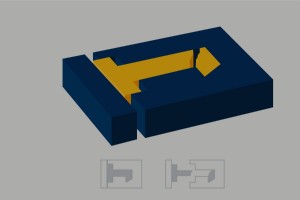
In manufacturing, an undercut refers to a recessed surface, groove, or overhanging feature that inhibits a part from being removed from an injection mold without damage, as seen below. To understand why undercuts occur, it’s necessary to understand what an injection mold is and ho
Industrial Technology