Industrial manufacturing
Industrial Technology


Epoxy 82 (EPX 82) is an additive material developed by Carbon ® for its digital light synthesis (DLS) process. By blending functional toughness, stiffness, and temperature resistance, this high-strength engineering material is ideal for automotive, industrial, and consumer appl

Cyanate Ester (CE 221) is an additive material developed by Carbon ®. Designed for their digital light synthesis (DLS) process, CE 221 is known for its high temperature resistance and rigidness. Because of its high heat-deflection it can be used in applications with extreme thermal requi

While 3D printing from a CAD file for a non-functional prototype is a relatively straightforward manufacturing process, embarking on an entirely new product development project – from concept to production – may be more challenging, especially if you’re using an unfamiliar ad

Multi-purpose Polyurethane (formerly Medical Polyurethane, known as MPU 100) is an additive material developed for Carbon’s ® digital light synthesis (DLS) process. This material’s characteristics include biocompatibility, sterilizability, and durability. Beyond medical applications, MPU

A recent study conducted by a team of researchers at the University of Illinois Urbana-Champaign shows that the success of an additively manufactured part is reliant on the success of the build. With recent advancements, additive manufacturing (AM) has enabled rapid production speeds,

HP Multi Jet Fusion is changing how parts get made. Are you ready for it? Companies across industries are using HP Multi Jet Fusion (MJF) in place of traditional processes to make new parts and products possible. See how you could be leveraging this 3D printing technology to your adv

Mechanical assemblies are common in both consumer products and industrial products. Even relatively inexpensive products can have dozens of individual components, and in complex machinery there can easily be hundreds or thousands of components. Additive manufacturing (AM) allows for high

By Lou Rassey, CEO, Fast Radius A new suite of tools is creating a transformational impact on how to bring new products to the world. Manufacturing companies at the vanguard of Industry 4.0 aren’t just making revolutionary products and getting to market faster. They’re also crea

The ability to customize and tailor products to consumers has brought immense value to the market, and with additive manufacturing (AM), the ability to mass customize has been elevated to an entirely new level. According to McKinsey, research is showing that sales conversions i
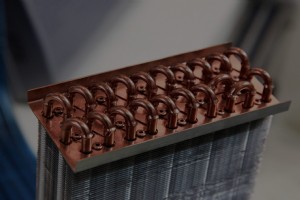
Advances in additive manufacturing are suddenly making new part designs possible that we’ve always taken for granted had to be done a certain way. Take the heat exchanger, a common industrial component in machines of all types that’s been around since the industrial revolution. The es
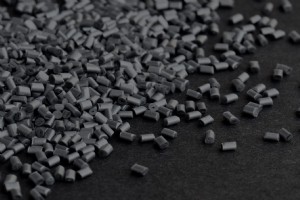
Chances are you’re within arm’s reach of something manufactured with plastic injection molding. Highly reliable and efficient, plastic injection molding is one of the most cost-effective methods for producing large numbers of precise, consistent components. From the cover of remote contr
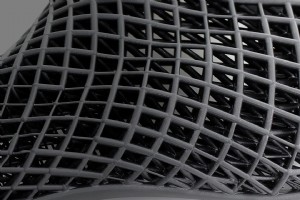
Most are well-acquainted with additive manufacturing (AM) — as a rapid prototyping tool, at least. And while many companies believe and perpetuate the myth that AM is only a prototyping tool, innovators in a range of markets (e.g., aerospace, healthcare, consumer goods and more) are alre
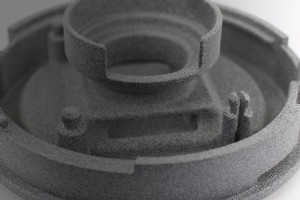
Nylons are a common class of plastics that have been around since the 1930s. They are a polyamide polymer traditionally used in a number of common plastic manufacturing processes for plastic films, metal coatings and tubing for oil and gas – among other things. In general, nylons are imm
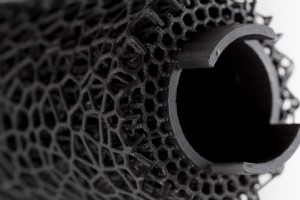
Elastomeric polyurethane (EPU) is a family of rubber-like materials developed by Carbon for Digital Light Synthesis™ (DLS) process. Similar to other elastomeric materials, EPU has a non-linear material response with a very high elongation to failure. This highly elastic materia
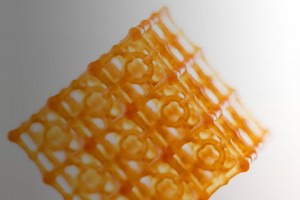
Additive manufacturing (AM) processes allow engineers to unlock the capabilities of lattice structures to enhance the performance of their products. Lattices are two or three-dimensional micro-architectures comprised of a network of nodes and beams, or struts, that dramatically redu

Stereolithography (SLA) is an additive manufacturing process that uses a light source to cure photosensitive liquid resins into solid shapes. SLA is capable of producing highly accurate isotropic parts with smooth surface finishes and excellent design feature resolution, making it ideal

While participation in team sports decreased in 2020, many people began participating in individual forms of exercise to stay active. Bicycle makers and sportswear companies that catered to individual sports like running, biking, and yoga did particularly well. In fact, the sporting good

The aerospace industry has some of the strictest functional and regulatory requirements of any industry, and for good reason. Many parts engineered for aerospace are “mission-critical,” meaning failure could result in extreme damage to equipment and harm to people. For this reason, aeros

If you ask a 3D printing manufacturer, “how much does it cost to 3D print a part?” the answer will most likely be “it depends.” The manufacturer isn’t trying to be mysterious — there are many different factors that go into generating an accurate quote. This arti

The aerospace parts manufacturing industry maintains high quality standards, rigorous testing practices, and strict regulatory requirements in order to ensure the function, fit, and reliability of every part. The aerospace industry uses many specialized parts and, given the nature of fli
Industrial Technology