


Industrial manufacturing
Industrial Technology


If you need a durable, high-performing part that can withstand heavy impacts and repetitive use, you’ll want to print with the best of the best materials. But which filament should you use? There are countless materials options available, but each one offers different characteristi
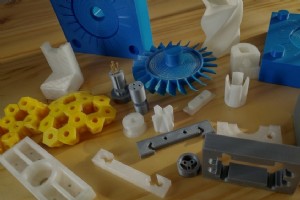
During the Fused Deposition Modeling (FDM) 3D-printing process, the 3D printer reads the digital file, divides the object into slices, and extrudes molten plastic material through a nozzle layer by layer to form the final part. The process seems straightforward, but there are many factor
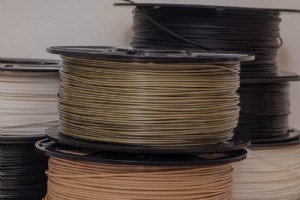
Fused deposition modeling (FDM), a common form of 3D printing that offers low cost per part, short lead times, and the ability to create larger parts than most other additive technologies. Ideal for creating prototypes, final products, and anything in between, FDM uses a heated nozzle to

CNC machining is a subtractive manufacturing process that uses cutting tools to remove material from a solid block, revealing the shape of the final part. To make the machining process easier and create a superior final part, the metals used must be workable. Also, the material propertie
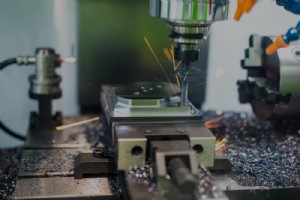
Computer Numerical Control (CNC) machining is a subtractive manufacturing process that enables manufacturers to accurately and cost-effectively create high-precision parts. CNC machining removes excess raw material from workpieces with cutting tools to create a precise finished product f

You may have heard a lot of buzz about distributed or decentralized manufacturing lately, but what exactly is it? With a traditional manufacturing model, manufacturers produce large batches of products at a single facility before distributing them or storing them in warehouses. With a di
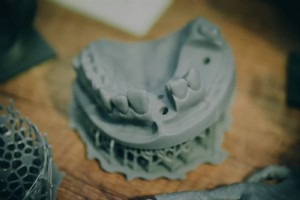
Stereolithography (SLA) is a method of additive manufacturing also commonly known as resin 3D printing. SLA is a vat photopolymerization technology comprising three core components — a build platform, a light source, and a resin tank. SLA machines operate by using a laser or other light

Injection molding is a versatile manufacturing process that generally involves injecting molten plastic resin into durable metal molds, which enables the production of high volumes of identical parts. While injection molding can be incredibly cost effective at scale, plastic parts usuall
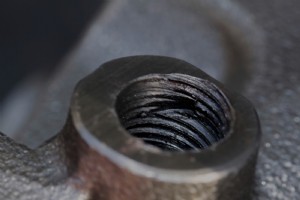
Product development is a constantly evolving process, and you might not get it right on the first try. Don’t worry — some amount of this is to be expected. If and when a part fails or doesn’t perform as anticipated, you want to find out as much as you can about the failure so you c
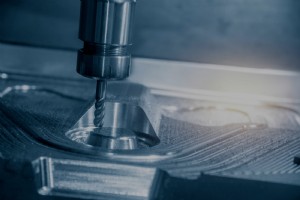
Surface finish is a measurement of the overall texture of a surface, consisting of three key elements: lay, waviness, and roughness. Lay refers to the dominant pattern on the surface, often produced by the manufacturing process itself, waviness measures the periodic variation in surface

Urethane casting is a useful manufacturing method that involves creating a silicone mold from a master pattern, which is essentially a replica of the final part. The mold is then filled with a shot of urethane casting resin and allowed to cure. Once the part has cooled, it can be ejected
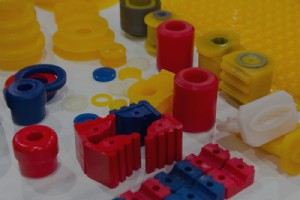
As a production method, urethane casting sits in stark contrast to the hard tooling of injection molding. Whereas injection molding requires expensive, laborious tooling, urethane casting makes use of flexible silicone molds, which allows manufacturers to produce high-quality, end-use pa
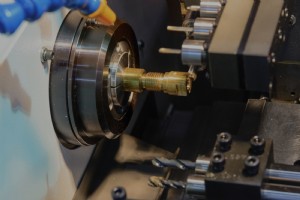
Some degree of variation is inevitable in manufacturing, both between jobs and between individual units. With this in mind, product teams need a method of ensuring that components function as intended, regardless of the small variations between individual parts. The ranges of acceptab
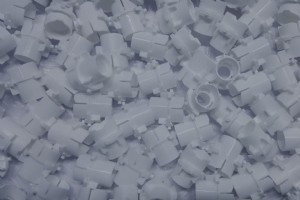
When product teams need large numbers of plastic parts produced cost-effectively, they will likely consider whether injection molding is a viable option. Injection mold tooling requires a significant initial investment, but the durability and lifespan of the molds can dramatically lower

Design for manufacturability (DFM) is the general practice of designing parts so that they are also efficient to produce. While specific best practices vary by manufacturing technology, the ultimate goal of DFM in general is to optimize part design so as to minimize the manufacturing cos

The core mission of Supply Chain 4.0 is to improve business performance in substantial and lasting ways. This will be accomplished through a complementary combination of digital applications and operational adjustments. Adopting these new technologies and embracing digitization offers busine

Possibility Makers is an interview series hosted by John Nanry, co-founder and Chief Fulfillment Officer at Fast Radius. Each episode, he’ll talk to inspiring people who are doing interesting things to advance industry 4.0 practices and technologies. In this episode, he sits down wi
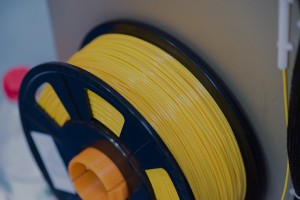
3D printing filaments are the raw material, or feedstock, specifically used in conjunction with fused deposition modeling (FDM), one of the most commonly used additive manufacturing methods. Filaments are thermoplastics that become liquid when heated — allowing them to be shaped and mold
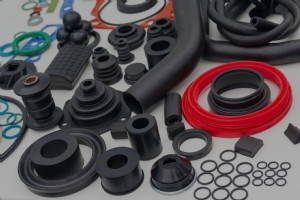
What do car tires, watertight gaskets, shoe soles, rubber bands, and pencil erasers all have in common? Many of these objects are things we interact with on a daily basis, but they’re also made using elastomers, or “elastic polymers.” Elastomeric materials are pliable synthetic polyme
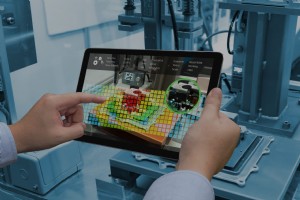
By John Nanry, Co-Founder and Chief Fulfillment Officer, Fast Radius Traditional manufacturing methods can be risky: prototyping is time consuming and costly, tooling and set up costs are high, and it’s often necessary to make products in high volume before understanding demand. Fortunate
Industrial Technology
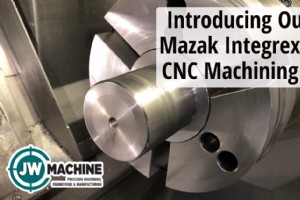
Discover the Precision of Our New Mazak Integrex 100-4S CNC Machining Center

Transformerless Power Supplies: Fundamentals, Operation, and Design Requirements

Complete Subpanel Wiring Guide: Installing a Main Lug for 120V & 240V
Additive Manufacturing Podcast: Exploring 3D Printed Electronics & Industry Innovations
