


Industrial manufacturing
Industrial Technology

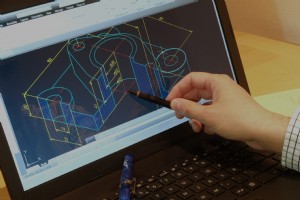
Injection molding is a popular manufacturing process for the mass production of identical plastic parts with good tolerances. During this process, thermoplastic flakes or pellets are melted down and injected into a mold. Once the thermoplastic material cools and hardens, ejector pins pop

Manufacturers who work with aerospace customers know that parts produced for aerospace applications are held to strict functional and regulatory requirements. Aerospace parts not only tend to be more specialized than parts created for applications in other industries; they are also more

The circular economy is an alternative to the linear economy, in which resources are extracted, used, and promptly discarded. The circular economy, on the other hand, disassociates economic growth from finite resource constraints and value creation from consumption, instead finding value

By 2026, the additive manufacturing market is expected to skyrocket at a compound annual growth rate of 14.4%, totaling $23.33 billion. As industries continue to devote more funds to this growing field and technology evolves, it’s easy to see the promise of additive manufacturing.
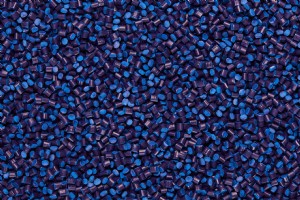
Polypropylene is very young, but its history is characterized by explosive growth. J. Paul Hogan and Robert Banks first polymerized this plastic in 1951, and three years later Giulio Natta and Karl Rehn polymerized this material into a crystalline isotactic polymer. This pioneering disco

The term photopolymer refers to a class of light-sensitive resins that solidify when exposed to ultraviolet (UV) light. When the liquid photopolymer resin comes into contact with a UV light source — typically a lamp, laser, or projector — photoinitiators transform that light energy
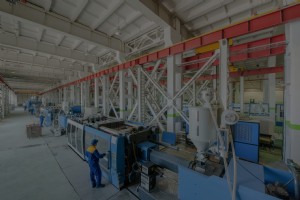
One of the most popular methods for plastic parts manufacturing, injection molding is favored for its ability to facilitate large production runs of identical parts. The injection molding process isn’t overly complicated — in its simplest form, it requires only two steps: obtaining the m
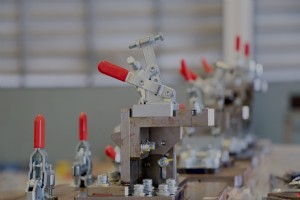
Jigs are tools that hold a manufacturing tool in place as it performs a repetitive task like drilling or tapping holes. Fixtures, on the other hand, don’t guide a manufacturing tool but hold a workpiece steady in a fixed position, orientation, or location. A standard vise is a common hou

Two key trends are driving the need for global manufacturing networks: the rise of the on-demand economy and a cross-industry paradigm shift toward global markets. The on-demand economy necessitates that companies optimize their supply chains for rapid fulfillment and delivery. It’s no l
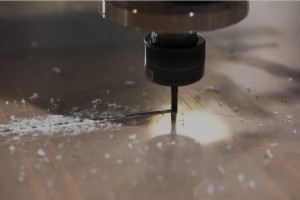
CNC machining is a subtractive manufacturing process that forms a completed part by steadily drilling, turning, or milling away thin layers from a solid block of metal or plastic. A Computer Aided Design (CAD) file guides the computer-controlled cutting tool down a set tool path to shape
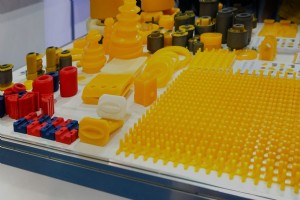
Plastics are a family of highly versatile manufacturing materials — some are soft and flexible; others are stiff and impact resistant. This wide range of physical properties guarantees that, regardless of application, the manufacturing of plastic parts is generally time- and cost-efficie

Plastic injection molding offers many benefits to engineers. This manufacturing process is fast, versatile, and ideal for producing large quantities of complex parts with a high level of precision. What’s more, injection molding is compatible with recyclable materials and produces minima

The rise of on-demand manufacturing The on-demand economy is officially here. From Amazon’s two-day and next-day delivery services to media streaming platforms and grocery delivery subscriptions, what seemed unthinkable just a few short decades ago has now become the norm. This new eco

Since 1950, the world has produced 8 billion tons of plastic, and recycled only 9% of it. About 12% has been incinerated, while the rest — around 79% — has accumulated in landfills, dumps or the natural environment. As it stands, just 2% of the world’s plastic packaging comes from recycl
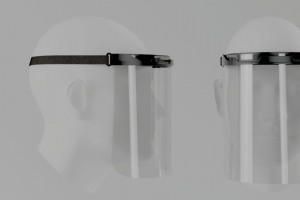
As the COVID-19 pandemic hit the United States, our team at Fast Radius quickly pivoted a significant portion of our additive manufacturing capabilities to producing face shields. To date, we’ve made and shipped thousands of additively manufactured face shields to protect frontline worke

While it may seem like common sense, it’s important that parts are designed in a way that streamlines production. This principle — known as Design for Manufacturability or Design for Manufacturing (DFM) — not only helps to reduce the overall cost of production, but the time and energy re
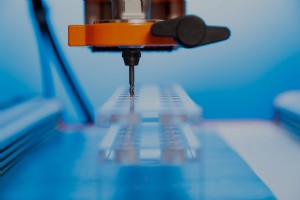
Plastic parts are a ubiquitous part of daily life. From food packaging and gardening tools to laptops and sports equipment, it’s hard to go a day without interacting with manufactured plastic parts. One of the reasons that plastics are so prevalent is that they’re a malleable and adap

The additive manufacturing industry, though still maturing, is worth $15.8 billion today and is projected to grow to $35.6 billion in 2024. Additive manufacturing enables agile product development; a process that once took months — from design and prototyping to manufacturing and testing
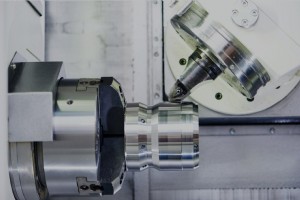
Computer Numerical Controlled (CNC) machining is a subtractive manufacturing process that produces a part by systematically removing layers of material from a single block of metal or plastic. Since CNC machining is largely computerized, it’s known for producing highly precise and comple
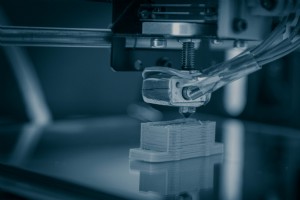
3D printing has received a lot of buzz over the past decade, but it’s hardly a new invention. Hideo Kadama pioneered what’s now known as additive manufacturing in 1981 when he described a rapid prototyping system that could build models using multiple layers of solidified photopolymers.
Industrial Technology
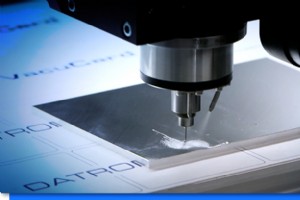
Compact CNC Prototyping: Mastering Space Constraints for Fast, Independent Manufacturing

Optimizing Infrastructure Investment: Spatial Systems in Transportation Asset Management
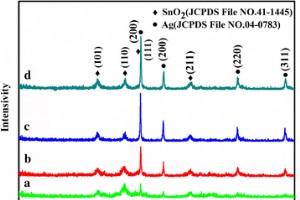
Green One‑Pot Synthesis of Ag‑Decorated SnO₂ Microspheres: A Highly Reusable Catalyst for 4‑Nitrophenol Reduction
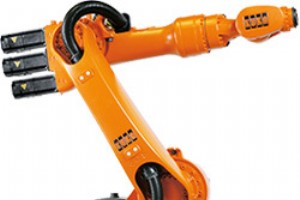
Precision Painting with KUKA Robots: Unmatched Accuracy and Reliability
