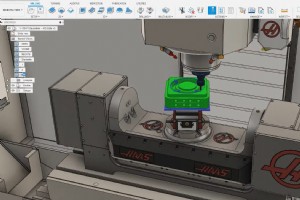
Industrial manufacturing
Industrial Technology

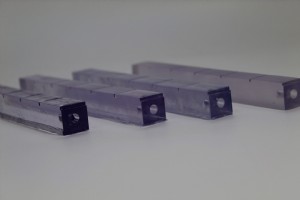
The additive manufacturing landscape is evolving constantly, particularly in the material space – where providers must improve, and adapt their outputs to meet manufacturer needs. Modern 3D printing technology has an array of additive materials with which to create opaque, plastic-
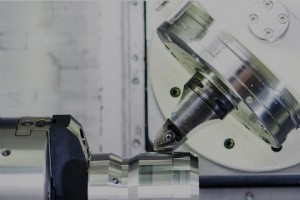
Computer Numerical Control (CNC) machining is a modern, efficient, and automated subtractive manufacturing process that allows manufacturers to make repeatable parts of consistent quality from a wide range of materials, including plastics, metals, and composites. Today, CNC-machined part

Nylon is a strong engineering plastic known for its resistance to heat, abrasion, friction, and chemicals. Nylon’s semi-crystalline microstructure provides an excellent rigidity to flexibility ratio, and it can be combined with or reinforced by other materials to improve its performance

The new year brings a fresh opportunity to reflect upon what factors influenced the current environment and consider the forces that are shaping the manufacturing industry. Supply chain was once a topic for industry insiders and experts. However, nearly two years into a pandemic, supply

Microfactories are enabling new production strategies, using cutting-edge technology to manufacture parts in optimized locations to create shorter, streamlined, more sustainable supply chains. Recently, Fast Radius Chief Scientist Bill King and Chief Executive Officer Lou Rassey sat down tog

Multi Jet Fusion enables the efficient production of end-use nylon parts using additive technologies. Here’s a checklist for design teams. Introduction What is Multi Jet Fusion? Multi Jet Fusion (MJF) is an industrial form of 3D printing that can be used to produce functional
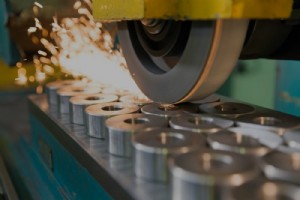
Traditional metal surface finishing is the process of using an abrasive paste, wool berets, and polishing sponges to finish the surface of a metal part or component after it has been machined. The goal of polishing is to remove scratches, nicks, and other surface defects created during t
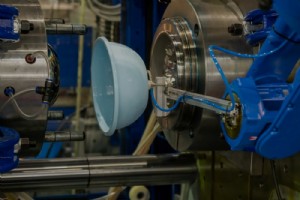
Multi-material injection molding is an umbrella term referring to any injection molding process in which two or more different materials are bonded to form a single plastic part. The most common types of multi-material injection molding are overmolding and two-shot injection molding.

Polyethylene is a thermoplastic with a variable crystalline structure. This popular material is used in everything from shopping bags, to pipes, to prostheses and other medical devices. With several grades, types, and formulations of polyethylene available, it’s essential to learn about

It’s never been more important to pursue sustainability in the manufacturing industry. According to NASA, 2016 and 2020 are tied for the warmest year on record, and May 2020 showed the highest levels of carbon dioxide (CO2) in the atmosphere ever in human history. In August 2021, the U.N

The automotive industry is changing. Around the globe, manufacturers are forming strategic partnerships to optimize asset deployment, making their supply chains more resilient, and shifting to recurring revenue streams. As a result, manufacturers have begun to incorporate cutting-edge te

You’ve probably experienced frustrating shipping delays and dramatically increased shipping costs in the last year, especially when shipping parts from the Asia-Pacific region. In fact, compared to this time last year, shipping prices are five to six times higher. So, why are th

We recently added Carbon’s new L1 large format 3D printers to our fleet in our Carbon Digital Light Synthesis (DLS) microfactory. Join Staff Application & Design Engineer Alex Pille for a peek under the hood of this new machine. Video transcript Fast Radius is a full ser

Surface finishing is the final step in the CNC machining process, and it’s very important for creating a functional and beautiful CNC machined part. Applying a finish to a CNC machined surface can improve a component’s appearance, remove flaws and excess material, provide additional resi

Research is an inevitable part of the material selection process — to find out whether or not a particular material is a good fit for your application, you need to do your due diligence. General material descriptions can give you enough information to point you in the right direction, su

Polystyrene, abbreviated as PS, most commonly comes in two forms — foam, also known as expanded or extruded polystyrene, and rigid, solid plastic. These two forms of PS do not exhibit the same physical properties and have different applications as a result. This article will focus on two

Deciding to make your part out of plastic is often simple, but determining the best type of manufacturing for your plastic part can be more complicated. Popular and versatile plastics are often able to be manufactured through a number of different processes, opening up opportunities to c
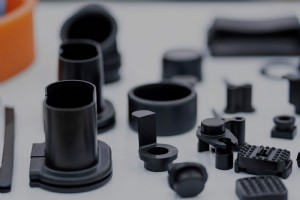
If you take apart a well-made plastic component, you’ll notice the walls are uniform all around. Maintaining a uniform wall thickness is one of the most important rules of injection molding design, and it can determine the success or failure of a part. What is uniform wall thickness, and
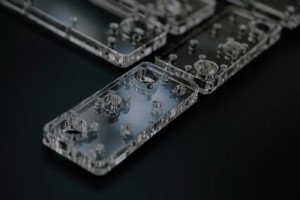
Polymethyl methacrylate (PMMA) is a commonly used manufacturing plastic. Because of its high transparency, PMMA is also known as “acrylic glass” or “plexiglass.” The material characteristics of PMMA are noteworthy for a few reasons: it is a highly translucent, glass-like material that of

An engineering requirements document (ERD) is a statement describing the goal and purpose of a new component. Unlike a product requirements document (PRD), which tells engineers what they need to build, an ERD specifies why a part is being built and how its design fuels its purpose. By f
Industrial Technology