



Canals & Locks: Engineering, History, and the Future of U.S. Water Transport
Background
Canals are engineered waterways designed for a range of functions—irrigation, drainage, power generation, and, most critically, commercial navigation. They can be shallow passages for barges or deep channels that accommodate ocean‑sized vessels.
To conserve water and allow two‑way traffic, canals are built on a level course. When elevation differences exist, a series of level sections is linked by locks. A lock is a rectangular chamber with gates at both ends; by controlling the water level inside, a vessel can be raised or lowered to match the next section of the canal.
In the United States, about 15% of intercity freight—measured in distance‑by‑weight—is moved by water on artificial canals or navigable rivers. In 1997, 1.2 billion tons of cargo traversed U.S. waterways; by 2020 the volume is projected to double. Barge transport costs roughly half the price of rail and one‑eighth of trucking.
The U.S. Army Corps of Engineers manages roughly 25,000 mi (40,234 km) of commercial waterways and about 240 lock chambers. Half of those locks are over 50 years old, and many are too small for modern barge fleets. With freight traffic expected to rise, extensive lock refurbishment, replacement, and enlargement are underway, alongside continued canal construction for both transportation and environmental purposes.
History
Canals
Canals date back over 6,000 years to ancient Egypt. The first seaworthy canal, built by Pharaoh Sesostris I around 4,000 years ago, linked the Red Sea to the Nile and, by extension, the Mediterranean. Remains suggest a width of 150 ft (46 m), a depth of 16 ft (5 m), and a length of 60 mi (97 km).
China’s earliest canal, begun in the 4th century B.C. for grain transport and troop movement, evolved into the Grand Canal. After rebuilding in the 6th century A.D., its length reached 1,114 mi (1,795 km) by the 13th century—still the longest navigable canal worldwide.
Early canal construction relied on hand tools. The Canal du Midi (1665‑1681) was the first major European canal to use gunpowder for blasting a tunnel. Steam‑powered machinery in the late 17th century accelerated canal building across Europe and North America. Full mechanization arrived in 1946 when an American firm introduced the first canal trimming and lining machines.
Locks
Flash locks—single‑gate systems used on rivers—first appeared in the 3rd century B.C. They were hazardous and water‑intensive. The first double‑gate pound lock emerged in 984 A.D. on China’s Grand Canal, setting the stage for modern locks. A 1373 Dutch lock introduced vertical‑lift gates controlled partially by the water level. In 1485, an Italian lock refined the design with valve‑controlled gate openings.
Leonardo da Vinci invented the miter gate in 1480. These gates swing on vertical hinges, meeting in a V to create a tight seal against upstream pressure.
In the 17th century, France solved the turbulence problem in deep locks by routing water through valve‑controlled channels into the lower chamber wall.
Until the early 19th century, lock gates and chambers were built from wood, stone, brick, or turf. In 1827, Cheshire, England, produced the first cast‑iron lock and gates. The Bessemer process later enabled steel use for locks and reinforcing bars in concrete.
Raw Materials
Waterproof linings prevent seepage. Historically, puddle—a sand‑clay‑water mix—was standard. Modern linings use concrete, fly ash, bentonite, bitumen, and plastic sheeting.
Locks are typically concrete, sometimes steel‑lined. Gate construction involves welding steel plates and reinforcing beams; vertical edges are sealed with durable materials like white oak. In 1999, a French company introduced glass‑fiber‑reinforced plastic gates mounted in stainless‑steel frames.
Design
Early canals followed the flattest available routes due to limited earth‑moving capacity. Today, improved excavation equipment and lock technology allow more direct, shorter routes. Geographic obstacles are addressed with tunnels or aqueducts.
Efficient lock operation minimizes turbulence. Modern designs incorporate sluices in gate sills, chamber walls, or floors. Submerged bubblers release air below gate closures to keep the area debris‑free and facilitate sealing.
Gate options include miter gates, Tainter (curved) gates that rotate vertically under pressure, flat sliding gates, hinged flat gates, and curved horizontal gates. Different types may be used on upstream and downstream sides of the same lock.
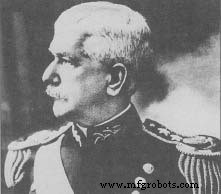
William Crawford Gorgas (1854‑1920).
William C. Gorgas, born October 3 1854 near Mobile, Alabama, earned a BA from the University of the South and a medical degree from Bellevue Medical College. He served in the Army Medical Corps from 1880, with postings in Texas, North Dakota, and Florida. After Havana’s occupation in 1898, he eliminated yellow fever in the city by destroying mosquito breeding grounds.
In 1904, Gorgas took charge of sanitation for the Panama Canal Zone, becoming a world‑renowned expert. His book, Sanitation in Panama, remains a classic. He served as Surgeon General of the Army (1914‑1918) and died on July 3 1920; he is buried in Arlington National Cemetery.
The Manufacturing Process
Canal
- 1. Conduct a detailed survey for accurate alignment, cuts, and fills.
- 2. Perform primary excavation with bulldozers and excavators.
- 3. Trim the final 12‑18 in (30‑46 cm) of soil with a crawler‑track trimming machine to achieve desired slopes and a flat bed. Excavated soil is conveyed and trucked away.
- 4. Spread a highly permeable layer on walls and floor to drain groundwater.
- 5. Install reinforcing steel grids on walls and floor; concrete blocks hold them above the surface to allow flow.
- 6. Mix, vibrate, and slip‑form concrete over the grids, incorporating expansion joints before slip‑forming.
Lock
- 7. Build a temporary cofferdam around the site, driving steel sheet piles to form vertical cells, filling them with sand, and pumping out water to create a dry work area. Piles may support the lock if needed.
- 8. Construct wooden forms for floor, walls, culverts, valve chambers, gate hinges, and recesses for open gates.
- 9. Pour concrete over reinforced steel cages; once cured, remove the forms.
- 10. Install control valves and hydraulic/mechanical equipment for filling, emptying, and gate operation.
- 11. Prefabricate gates and transport them in sections if large; weld on site.
- 12. Add guardrails, mooring posts, and escape ladders to the lock walls.
Byproducts / Waste
Managing excavated material is a major challenge. It can be used for embankments or landscaped as erosion control. The 29‑mi (46 km) Divide Cut on the Tennessee‑Tombigbee Waterway in the 1980s required disposal of 150 million cubic yards (115 million cubic meters) of earth.
During lock construction, excavated material may fill cofferdam cells or, after cofferdam removal, backfill the riverbank side of the lock wall.
Lock operation consumes large volumes of water. For example, filling a 600‑ft (180 m) long, 110‑ft (34 m) wide lock with a 7‑ft (2.1 m) lift requires 3.5 million gallons (13 million liters). In water‑scarce regions, excess water is often diverted to a side pond for reuse in subsequent lock cycles.
The Future
Because of the urgent need to refurbish, replace, and expand locks, the U.S. Army Corps of Engineers actively researches new construction methods. Scale models of proposed designs are tested at its Waterways Experiment Station. The Innovations for Navigation Projects (INP) Research Program supports advances such as underwater concrete placement, low‑density high‑strength concrete for modular lock sections, and cofferdam‑free installation techniques.
Current research focuses on protective devices for lock walls and gates, improved intake and discharge designs, advanced gate control systems, and methods to enlarge existing locks without full replacement.
Manufacturing process
- Inside Bank Vaults: History, Design, and Future of Security
- The Evolution and Craftsmanship of Bows & Arrows: From Ancient Hunting to Modern Engineering
- The Evolution and Manufacturing of Modern Pin‑Tumbler Locks
- Scratch & Sniff: The Science and Craft of Micro-Encapsulated Scent Printing
- Butter vs. Margarine: History, Production, and Health Insights
- Combination Lock: Design, Manufacturing, and Historical Evolution
- Create a Secure Arduino RFID Lock – Step‑by‑Step Guide
- Smart Keyless Door Lock – Arduino & Android Bluetooth‑Controlled Password System
- Secure Arduino‑Based Keyless Door Lock with LCD Display and 4×4 Keypad
- Build an Arduino RFID Door Lock – Master RFID Technology with a Step‑by‑Step Guide