


Industrial manufacturing
Equipment Maintenance and Repair


Manufacturing waste manifests in many forms—physical scrap, lost time, and squandered talent. Addressing each through improved reliability yields measurable gains. Physical Waste Physical waste refers to materials that must be discarded, recycled, or sold after production. While a baseline amount of
Electrivert Inc., a trusted partner of the Minowitz Manufacturing Group in Roseville, Michigan, has unveiled its cutting‑edge Cabling and Termination (C.A.T.) scan. This four‑phase assessment delivers in‑depth insights into a company’s machinery, systems, and workflows, pinpointing concrete opportun
Observing TSA agents at airports—always performing under an impatient, critical eye—highlights a universal truth: people thrive when they feel respected and purposeful. That lesson carries over to plant operations, where the same principles of intensity and respect determine performance. After years
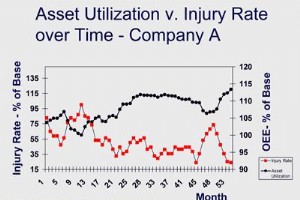
Zero Failures and Zero Injuries: How Disciplined Practices Drive Plant Safety and Reliability In his book Making Common Sense Common Practice, Ron Moore of the RM Group argues that plant safety and reliability are inseparable. While traditional safety measures—such as personal protective equipment (
Toyota’s Columbus, Indiana manufacturing facility—Toyota Industrial Equipment Manufacturing (TIEM)—was recently honored with the prestigious Company of the Year award by the Columbus Area Chamber of Commerce. The accolade was presented at the chamber’s annual meeting. “Toyota is deeply honored by t
In his inaugural address to the United States on Jan. 21, 1961, President John F. Kennedy famously urged, “And so, my fellow Americans, ask not what your country can do for you, but what you can do for your country.” This powerful statement challenged every citizen to move beyond the sidelines and t
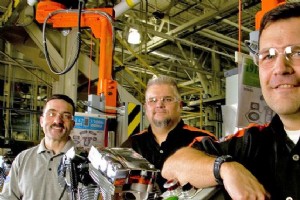
Many professionals are drawn to the maintenance and reliability field by a passion for working with machinery. With an engineering background, I’ve spent decades studying how machines operate and why they fail, and I’ve seen firsthand how understanding the mechanical and electrical laws that govern
Mobius Institute announces iLearnBalancing, a computer‑based training solution that equips maintenance professionals with the knowledge and skills to perform precise in‑place dynamic balancing of industrial machinery. The course is available via DVD or online through the iLearn‑online portal and run
When I first stepped into maintenance, I was captivated by tool catalogs and imagined owning a massive, all‑in‑one set. Like many newcomers, I couldn’t afford the dream collection and had to make do with a modest toolbox. Over time, I learned to add tools only when I truly needed them and understood
The traditional OEE formula—speed, quality, and uptime—treated all three factors as equal, assuming a 24‑hour performance window. In practice, companies adjust the calculation to match the actual required window, whether that’s a single shift or peak race‑car performance, as Robert Williamson illust
LumaSense Technologies Inc. has unveiled a new SmartDGA platform that empowers electric utilities to proactively reduce outages stemming from faulty load tap changers (LTCs) and transformers. Leveraging non‑dispersive infrared (NDIR) gas‑sensing technology, the SmartDGA monitors feature a streamline
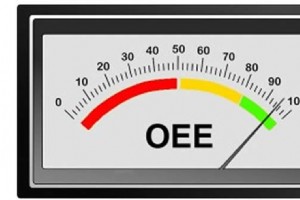
Overall Equipment Effectiveness (OEE) has long been a staple for measuring machine performance, defined as the product of speed, quality, and uptime. While it provides a clear snapshot of output, it falls short of accounting for the resources—time, money, and labor—required to achieve that output.
In maintenance, the value of clear signage and precise labeling is frequently overlooked. As visual creatures, our workplace thrives on immediate, unambiguous cues—so dedicating time to enhance these elements can dramatically improve reliability, safety, and operational efficiency. Why Signage Matt

In the past year, many plants have cut maintenance budgets without fully grasping the long‑term cost of reduced reliability. At a recent industry conference, this dilemma surfaced repeatedly. When senior leaders ask how to trim reliability spend, the most effective response is to ask: How much are

Traditionally, many manufacturing plants separate operations and maintenance into distinct departments, each led by its own supervisors and staffed by specialized craftspeople. A major European postal service broke this mold in the late 1990s by merging the supervisory functions of operations and m
In many plants, technicians often climb on machinery or unstable surfaces to reach high spots because a proper stepladder isn’t nearby. This practice poses a serious slip‑and‑fall risk and can lead to costly injuries. Investing in a sufficient number of ladders—strategically placed at frequent inte
\nOEM maintenance procedures consistently emphasize the importance of proper torque values for fasteners. Standard work manuals—covering tasks such as gasket replacements, motor alignments, bearing installations, and gearbox rebuilds—typically specify exact torque ranges. Yet, in practice, many tech

During a recent Maintenance Excellence Roundtable on the West Coast, industry leaders gathered to review achievements and set future goals. Robert Williamson’s presentation, known as the “White Glove Story,” highlighted a powerful yet troubling example of workforce empowerment that has since become
In 2008, the United States added more wind‑turbine capacity than coal‑fired capacity, marking a turning point for renewable energy. While wind‑turbine costs continue to fall, engineers agree the overall design still lags behind optimal performance. Recent breakthroughs were showcased at the American
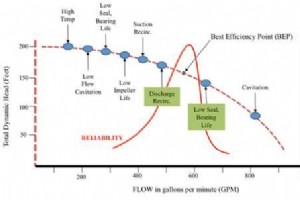
According to the PAS‑551 standard from the British Standards Institute, asset management is defined as: "systematic and coordinated activities and practices through which an organization optimally and sustainably manages its assets and asset systems, their associated performance, risks and expe
Equipment Maintenance and Repair
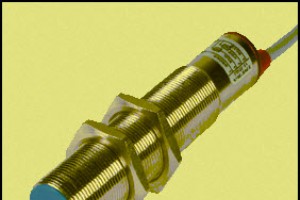
Inductive Proximity Sensor: Circuit Design, Functionality, and Practical Applications
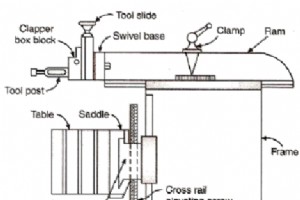
Understanding How a Shaper Machine Operates: A Practical Guide
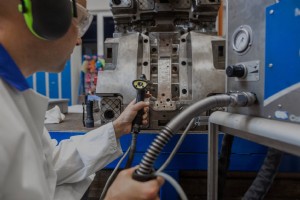
Avoid Common Injection Molding Defects: 7 Proven Strategies for Quality Parts

From Sports Glory to Factory Excellence: How Team Chemistry Fuels Industrie 4.0
