



Fleet Mechanic: Role, Duties, and Career Path
Companies that depend on cars, heavy trucks, buses, or large equipment—such as cranes and bulldozers—must keep their vehicles in peak condition. That collective is known as a company fleet. A fleet mechanic, or fleet technician, specializes in maintaining and repairing the engines and systems that power these assets, ensuring businesses run smoothly with minimal downtime.
For enthusiasts who enjoy working on vehicles but prefer a corporate setting over a dealership or independent shop, a career as a fleet technician can be a rewarding fit. This guide explains what a fleet mechanic does, outlines typical responsibilities and workplace dynamics, and provides a clear path to entry into the profession.
Fleet Mechanic Job Description
Fleet technicians serve corporations and organizations that operate a range of vehicles— from long‑haul trucks and delivery vans to construction equipment and municipal service vehicles. Typical fleet categories include:
- Delivery and logistics fleets transporting goods to customers
- Rental, taxi, and chauffeur services
- Trucking and commercial transport fleets
- Utility fleets for maintenance and repair (electricians, plumbers, etc.)
- Construction equipment fleets (cranes, bulldozers, excavators)
- Public safety fleets (police, fire, ambulance)
Fleet mechanics are responsible for preventive maintenance, diagnostics, and repair work that keep every vehicle safe, reliable, and ready for service. Their goal is to prevent breakdowns that could disrupt operations or compromise employee safety.
Typical Duties of Fleet Mechanics
While the core skill set mirrors that of a shop or dealership mechanic, fleet technicians work exclusively for a single employer, often enjoying corporate benefits and career progression opportunities. A typical day may involve:
- Diagnosing and repairing engine, transmission, and electrical issues on fleet vehicles
- Conducting routine inspections and preventive maintenance
- Creating detailed scopes of work and estimating repair costs
- Communicating with fleet managers to schedule repairs and track progress
- Traveling to remote sites to perform onsite repairs when towing isn’t feasible
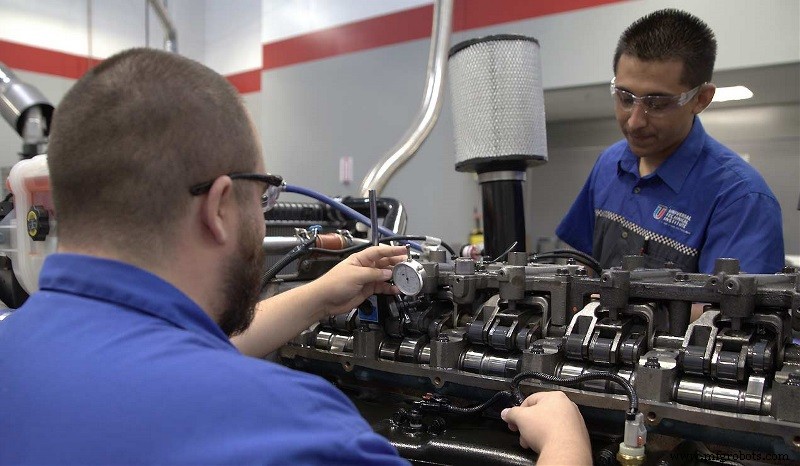
Fleet mechanics may work in a company’s dedicated garage or mobile units, and typically collaborate with other technicians. Reporting lines usually point to a fleet manager who oversees overall vehicle health and logistics.
Career Outlook & Salary for Fleet Mechanics
Demand for fleet mechanics remains strong across industries, driven by the need to keep transportation and equipment operational. According to the U.S. Bureau of Labor Statistics (BLS), the median annual wage for bus and truck mechanics and diesel engine specialists was $50,200 in May 2020, while automotive service technicians earned a median of $44,050 in the same period. Salaries vary based on experience, employer size, geographic location, and vehicle type.
Because vehicles and trucks will continue to populate roads and job sites, the profession offers long‑term stability. Moreover, the skill set is highly transferable, opening doors to roles such as fleet manager, service supervisor, or independent repair specialist.
How to Become a Fleet Mechanic
Employers favor candidates who have completed formal automotive or diesel technology programs. Certification from the National Institute for Automotive Service Excellence (ASE) is a standard credential that demonstrates expertise and enhances employability. Many technicians earn ASE certification after two years of work experience, but industry‑specific training can accelerate the path.
Programs at institutions like Universal Technical Institute (UTI) provide structured fleet‑mechanic curricula and grant a year’s work experience toward ASE certification, enabling graduates to enter the workforce ready for certification and immediate impact.
Career advancement often leads to fleet management, where a seasoned mechanic supervises a team, coordinates maintenance schedules, and manages budgets.
Learn More About Auto & Diesel Technician Training
If you’re serious about a fleet technician career, pursuing formal training that aligns with ASE standards will set you apart. UTI’s fleet program equips you with the knowledge and hands‑on experience needed to start an entry‑level position promptly—saving both you and your future employer time and resources.
Want to explore further? Call us at 1‑800‑834‑7308 or visit our website to request additional information.
Industrial equipment
- Diamond Turning: Precision Machining for Advanced Optics and Beyond
- Ultrasonic Machining Explained: Process, Benefits, and Limitations
- Rotational Molding: The Complete Guide to Creating Hollow Plastic Parts
- Chrome Plating Explained: Process, Steps, and Applications
- Understanding the Oxygen (O2) Sensor: Role, Placement, and Failure Signs
- Understanding AS9100: The Aerospace Quality Management Standard
- What Is A2 Steel? A Versatile, Cost‑Effective Tool‑Steel Grade for Industrial and Woodworking Applications
- Understanding Metal Casting: Process, Benefits, and Applications
- Demystifying 3D Printing: A Clear Guide for Innovators
- Decoding 'N' in Pump Calculations: Its Role and Significance