



Bent Hitch Pins Explained: How They Work, When to Use Them, and How to Choose the Right One
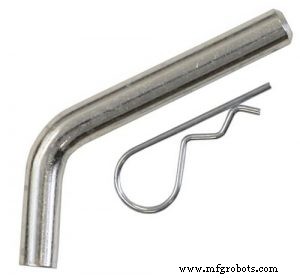
Bent hitch pins, commonly called R-clips, are versatile metal connectors used to temporarily join components. Unlike threaded fasteners that can be cumbersome to remove, bent hitch pins offer a quick, reliable snap‑fit solution—ideal for assemblies that need frequent assembly and disassembly.
The Basics of Bent Hitch Pins
These single‑piece metal clips feature two arms: one straight and one bent, giving them their characteristic “R” shape. Typically manufactured from metal wire—such as carbon steel or stainless steel—they can be tailored to meet specific mechanical or environmental requirements.
How Bent Hitch Pins Work
The straight arm is inserted into a hole on one part, while the bent arm slides into an adjacent hole on a second part. Once the arms are aligned, the clip “snaps” into place, locking the two pieces together until the pin is removed. The design is especially effective for round shafts, where the bent arm can wrap around the curvature, providing a secure temporary fit.
Tips for Selecting the Right Bent Hitch Pin
When choosing a bent hitch pin, consider:
- Material – Options include carbon steel for general use and stainless steel for corrosion‑prone environments.
- Size – Pin diameter, hole diameter, and overall length must match the parts being joined.
- Finish – Zinc plating or vinyl coatings protect against oxidation and extend service life.
By aligning material, size, and finish with your application’s demands, you can ensure reliable performance and easy maintenance.
Industrial equipment
- Diamond Turning: Precision Machining for Advanced Optics and Beyond
- Ultrasonic Machining Explained: Process, Benefits, and Limitations
- Rotational Molding: The Complete Guide to Creating Hollow Plastic Parts
- Chrome Plating Explained: Process, Steps, and Applications
- Cotter Pins Explained: How They Secure Bolts and Keep Machinery Stable
- Understanding the Oxygen (O2) Sensor: Role, Placement, and Failure Signs
- Understanding Pin Joints in Mechanical Engineering
- What Is a Gudgeon Pin? The Essential Wrist Pin in Engine Design
- Automatic Water Pumps: How They Operate & Why They Matter
- Decoding 'N' in Pump Calculations: Its Role and Significance