



CEVA Launches SensPro2: Seven DSP Cores & Custom ISAs Boost AI and Sensor Performance
After debuting the SensPro DSP architecture last year, CEVA unveiled the second‑generation SensPro2 family, now featuring seven vector DSP cores and a suite of application‑specific instruction set architectures (ISAs). The result is a sensor hub that delivers unprecedented performance and efficiency across AI and digital signal processing workloads.
The SensPro2 is engineered to handle a broad spectrum of sensor data—cameras, radar, lidar, time‑of‑flight, microphones, and inertial measurement units (IMUs). Compared to its predecessor, the new platform offers:
- 6× more DSP throughput for computer vision.
- 8× greater DSP performance for radar processing.
- 2× faster AI inference.
- 20% better power efficiency—all on the same process node.
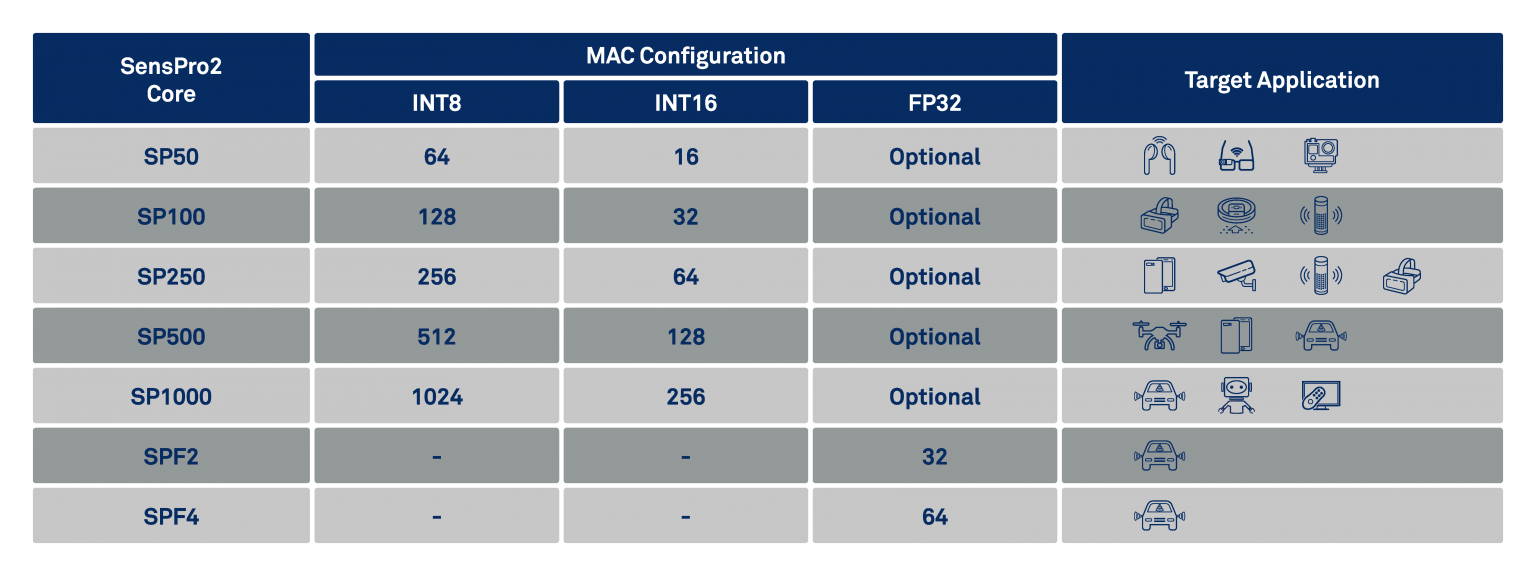
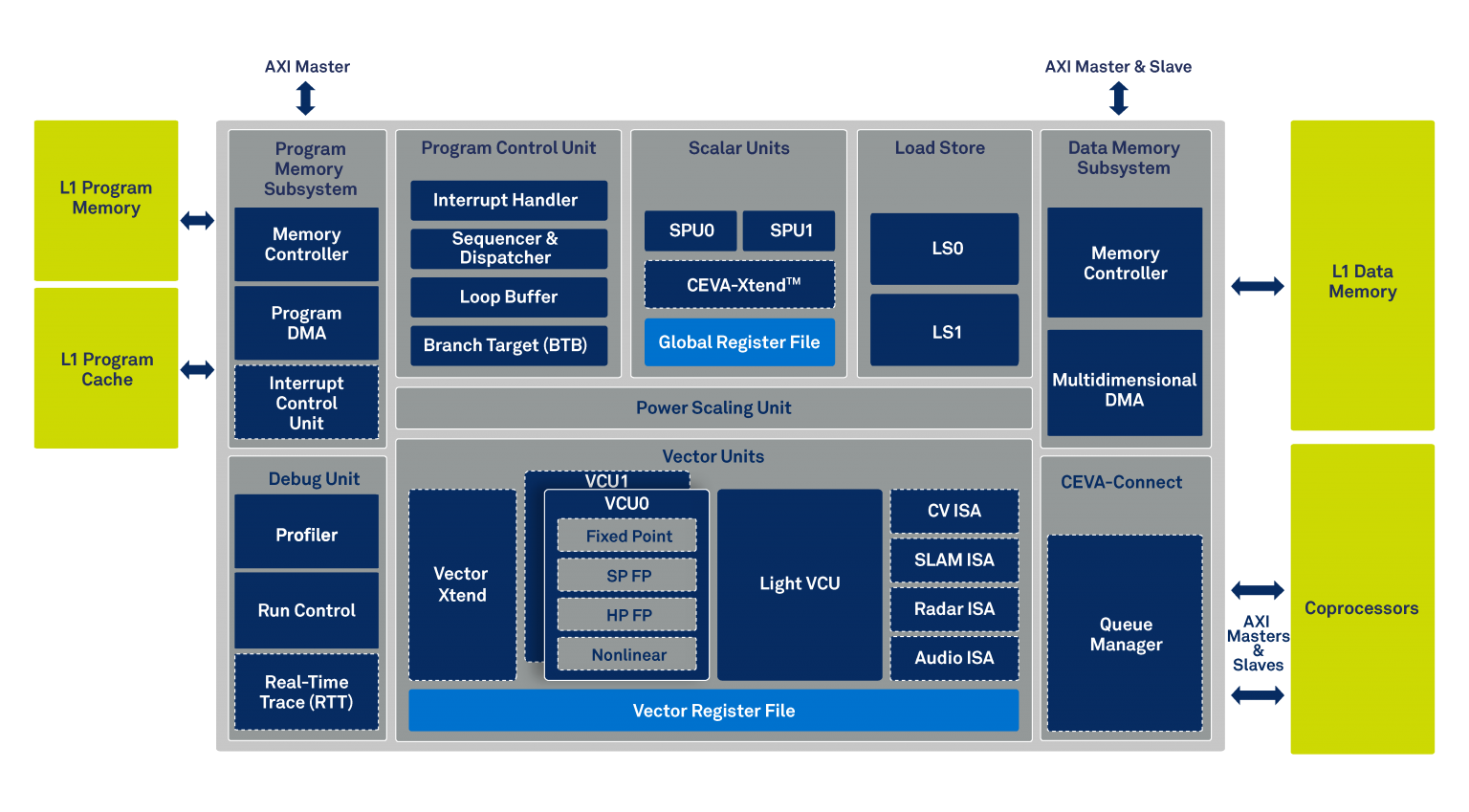
Scalable from entry‑level to high‑end, the SensPro2 family includes low‑power cores that support up to 1 TOPS of AI performance, while the premium cores reach 3.2 TOPS. Each member can be tuned with ISAs for radar, audio, computer vision, and SLAM, plus parallel vector compute options for both floating‑point and integer data types. This configurability ensures an optimum balance of speed, precision, and energy use for any specific use case.
Key architectural advances include a low‑power vector DSP design, high‑precision floating‑point engines for automotive powertrain applications, and automotive‑ready fault certification (ASIL B hardware random faults and ASIL D systematic faults). SensPro2 can deliver up to 3.2 TOPS for 8×8 neural networks at 1.6 GHz, doubling memory bandwidth from generation one to better support data‑intensive fully‑connected layers.
“This is a self‑contained DSP capable of AI workloads, and its configurability and scalability are unique,” said Moshe Sheier, VP of Marketing at CEVA, in a briefing with embedded.com. He noted that the first‑generation SensPro is already in silicon for automotive markets and that SensPro2 will target radar, IoT, audio, and, especially, computer vision.
The SensPro2 lineup includes:
- SP100 and SP50 – 128 and 64 INT8 MACs, respectively. These small‑die solutions deliver a 10× performance boost for DeepSpeech2 speech‑recognition neural networks and are ideal for audio AI workloads such as conversational assistants, sound analytics, and natural language processing.
- SP1000, SP500 and SP250 – 1024, 512, and 256 INT8 MACs, respectively. These high‑performance cores offer optimal configurability for computer vision, SLAM, radar, and general AI workloads.
- SPF4 and SPF2 – 64 and 32 single‑precision floating‑point MACs. Designed for electric‑vehicle powertrain control and battery management, they include a full suite of Eigen linear‑algebra libraries, MATLAB vector libraries, and support for the Glow graph compiler.
To accelerate system integration, SensPro2 comes with a robust software stack: an LLVM C/C++ compiler, Eclipse‑based IDE, OpenVX API, OpenCL libraries, CEVA Deep Neural Network (CDNN) graph compiler (including CDNN‑Invite for custom AI engines), CEVA‑CV imaging functions, CEVA‑SLAM SDK, radar SDK, ClearVox noise reduction, WhisPro speech recognition, MotionEngine sensor fusion, TensorFlow Lite Micro support, and the SenslinQ software framework.
Sensor
- Sensor Calibration Explained: Definition, Methods, and Key Applications
- Blood Pressure Sensor: How It Works & Key Applications
- Voltage Sensors: How They Work & Key Applications in Modern Power Systems
- Arduino Sensors: Types, Applications, and Real‑World Projects
- Fingerprint Sensor Technology: Working Principles, Applications, and Arduino Integration
- Vibration Sensors: Principles, Types, and Industrial Applications
- How Oxygen Sensors Work and Their Key Applications in Automotive and Industrial Systems
- Heartbeat Sensor: How It Works & Practical Applications
- CEVA Unveils SensPro: Configurable DSP Architecture for Multi‑Sensor Fusion and AI Acceleration
- DHT22 Pinout Explained: Functionality, Wiring, and Practical Uses