



Advances in High‑Strength, High‑Elasticity Titanium Alloys for Aerospace and Beyond

High‑Strength & High‑Elasticity Titanium Alloys: Current Development Landscape
Titanium alloys are prized for their exceptional combination of high tensile strength and low elastic modulus, which enables superior elastic deformation. These properties have made them indispensable in aerospace as both structural and functional components.
Historical Milestones
In the 1950s, the United States pioneered the use of Ti‑6Al‑4V bolts on B‑52 bombers, marking the first application of titanium fasteners in aviation. Over subsequent decades, the relentless push for lighter, stronger aircraft led to the widespread adoption of high‑strength, high‑elasticity titanium alloys, gradually displacing conventional 30CrMoSiA steel fasteners and enhancing safety and reliability.
Key Alloy Families and Applications
Common α+β and β titanium alloys such as Ti‑6Al‑4V, Ti‑3Al‑5Mo‑4.5V, Ti‑5Mo‑5V‑8Cr‑3Al, and Ti‑15Mo‑3Al‑2.7Nb‑0.3Si (β 21S) typically achieve tensile strengths around 1,000 MPa.
Since the 1970s, aircraft manufacturers have employed β‑type alloys for critical spring components. For instance, Ti‑15V‑3Cr‑3Al‑3Sn and Ti‑3Al‑8V‑6Cr‑4Mo‑4Zr (β‑C) exhibit elastic moduli near 104 GPa and tensile strengths of 1,300–1,450 MPa, enabling a 70% weight reduction in landing‑gear and hydraulic return springs.
Medical‑Grade Low‑Modulus Alloys
To lower the elastic modulus for orthopedic implants, metastable β alloys such as Ti‑29Nb‑13Ta‑4.6Zr and Ti‑35Nb‑5Ta‑7Zr were developed in the 1990s. While they offer superior elasticity, their lower strength limits their use in high‑performance fasteners and springs.
Recent Breakthroughs: Rubber Metal and Ti‑2448
In 2003, Toyota’s Central Research Institute introduced Rubber Metal (Ti‑23Nb‑0.7Ta‑2Zr‑1.2O). After 90% cold rolling, it delivers 1,200 MPa strength, a 55 GPa modulus, and ~2.5% elastic limit—excellent for high‑strength, high‑elasticity applications across a wide temperature range.
The Chinese Academy of Sciences’ Ti‑24Nb‑4Zr‑8Sn (Ti‑2448) alloy further pushes the envelope, with a 42 GPa modulus, 3.3% elastic strain, and robust high‑strength performance after solution‑age treatment.
These two alloys exemplify how precise composition design and processing can achieve the coveted balance of strength and elasticity in titanium.
Conclusion
High‑strength, high‑elasticity titanium alloys are transforming aerospace, medical, and industrial sectors. For more insights into titanium and other refractory materials, visit Advanced Refractory Metals (ARM), headquartered in Lake Forest, California.
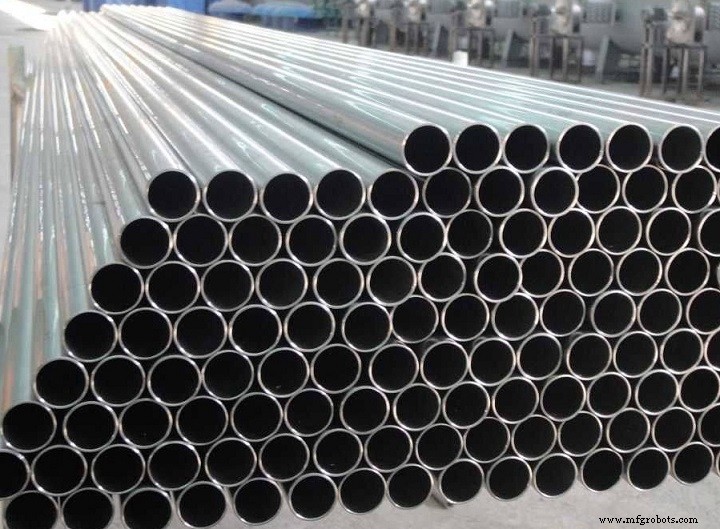
High‑strength & High‑elasticity Titanium Alloy
Metal
- Titanium Alloys: Evolution, Applications, and Industry Impact
- Titanium Alloy Heat Treatment: Optimizing Strength, Stability, and Process Control
- Titanium‑Alloy Carabiners: Superior Strength and Lightweight for Serious Climbers
- Titanium Alloy Investment Casting: Precision, Efficiency, and Material Selection
- Chemical Milling of Titanium Alloys: Process, Benefits, and Best Practices
- Titanium Alloy Forging: Advanced Techniques for Aerospace & Power Generation
- How Titanium Alloys Transform Golf Club Performance
- Titanium Alloy Springs vs. Steel Springs: Performance, Advantages, and Applications
- Titanium Alloy 3D Printing: Applications, Benefits, and Industry Use Cases
- Titanium Alloys 101: Strength, Grades, and Key Benefits for Engineers