



Titanium Alloy Forging: Advanced Techniques for Aerospace & Power Generation
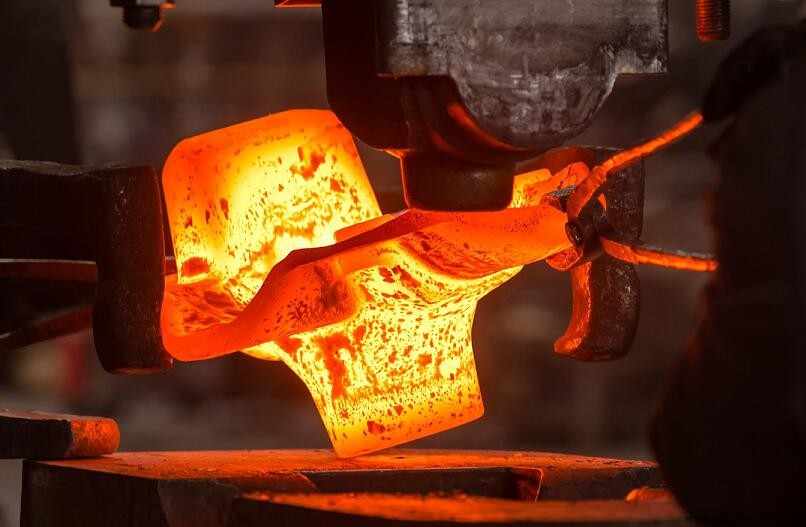
Titanium Alloy Forging: Advanced Techniques for Aerospace & Power Generation
Titanium alloys are prized for their exceptional strength‑to‑weight ratio, corrosion resistance, and non‑magnetic properties, making them indispensable in high‑performance sectors such as aerospace, defense, marine, and petrochemicals. Forged components—particularly turbine discs and medical implants—require not only dimensional accuracy but also microstructural stability and fatigue resistance. This article delves into the state‑of‑the‑art forging methods that deliver these attributes.
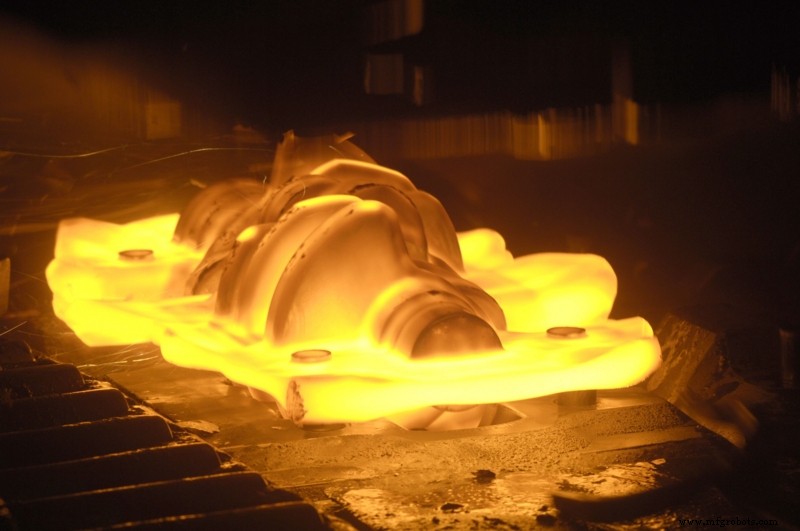
Forging Technology of Titanium alloy
Before we explore the manufacturing process, let’s review the key applications of titanium alloy forgings.
Applications of Titanium Alloy Forgings
1. Aerospace
Half of all titanium produced worldwide is consumed by the aerospace industry. Military aircraft contain approximately 30% titanium in their airframes, while commercial airliners are progressively adopting the alloy to reduce weight and improve fuel efficiency. For instance, the Boeing 787 Dreamliner incorporates over 15% titanium by weight, primarily the Ti‑6Al‑4V alloy, which is the benchmark for structural safety. In this domain, titanium forgings are critical for components such as rocket and satellite fuel tanks, turbopump blades, and high‑speed suction‑pump inlets.
2. Turbine Blades for Power Generation
Extending the length of steam‑turbine blades enhances power output, but the increased load can compromise rotor integrity. Titanium alloy forgings, notably 1‑meter‑long Ti‑6Al‑4V blades, were successfully introduced in 1991 and have since become standard for high‑speed steam turbines, offering reduced weight and superior thermal fatigue performance.
The Forging Technology of Titanium Alloy
Precise control of temperature and deformation is paramount when working with titanium. Low temperatures raise flow stress and raise the likelihood of cracking, while the speed of deformation influences the resulting microstructure. In precision hot‑die forging, the die temperature is typically matched or exceeded to the forging temperature, mitigating temperature gradients that could lead to defects.
1. Forging of Engine Disk Parts
Aircraft engine discs demand exceptional fatigue strength and fracture toughness. For the 700 K service temperature range, the Ti‑6Al‑2Sn‑4Zr‑6Mo alloy is commonly used. Traditional α‑β forging produces a β‑phase matrix with equiaxed α grains and fine needle‑like α‑two‑phase structures, which unfortunately results in low fracture toughness. The beta‑forge process, performed above the β‑phase transition temperature, promotes recrystallization and yields a uniform needle‑shaped microstructure that substantially improves toughness. The optimal forging window for this alloy lies between 1073 K and 1323 K, with sufficient deformation to eliminate coarse grains.
2. Turbine Blade Forging
Turbine blades are ultra‑thin, causing rapid temperature loss during forging. Advanced tooling designs now harness controlled blow‑energy to shape the blade surface. The sequence typically begins with planar forging, followed by bend forming, and culminates in precision forging to achieve the final geometry.
3. Ring Manufacturing
Fan and compressor shells are usually fabricated from Ti‑6Al‑4V via a rolling process. Near‑net‑shape techniques can reduce material waste by over 55%, significantly lowering cost. When forging thick rings, maintaining high pressure and carefully managing the temperature drop are essential to avoid cracking.
In summary, achieving high‑quality titanium forgings hinges on meticulous temperature regulation and controlled deformation to unlock the alloy’s inherent strengths.
Conclusion
We hope this overview enhances your understanding of titanium alloy forging. For deeper insights into titanium and its alloys, we recommend visiting Advanced Refractory Metals (ARM), a global leader in refractory metal supply.
Headquartered in Lake Forest, California, ARM supplies high‑quality titanium, tungsten, molybdenum, tantalum, rhenium, and zirconium at competitive prices.
Metal
- Titanium Alloy Heat Treatment: Optimizing Strength, Stability, and Process Control
- Titanium‑Alloy Carabiners: Superior Strength and Lightweight for Serious Climbers
- Titanium Alloy Investment Casting: Precision, Efficiency, and Material Selection
- Chemical Milling of Titanium Alloys: Process, Benefits, and Best Practices
- How Titanium Alloys Transform Golf Club Performance
- Titanium Alloy Springs vs. Steel Springs: Performance, Advantages, and Applications
- Titanium Alloy 3D Printing: Applications, Benefits, and Industry Use Cases
- Titanium‑Aluminum Alloys: Advanced Preparation Techniques and Key Industrial Applications
- Titanium Rods Manufacturing: Techniques, Benefits, and Industry Applications
- Titanium Alloys 101: Strength, Grades, and Key Benefits for Engineers