



How Molybdenum Wire Cuts Metal: The Science Behind Wire EDM
How Molybdenum Wire Cuts Metal: The Science Behind Wire EDM
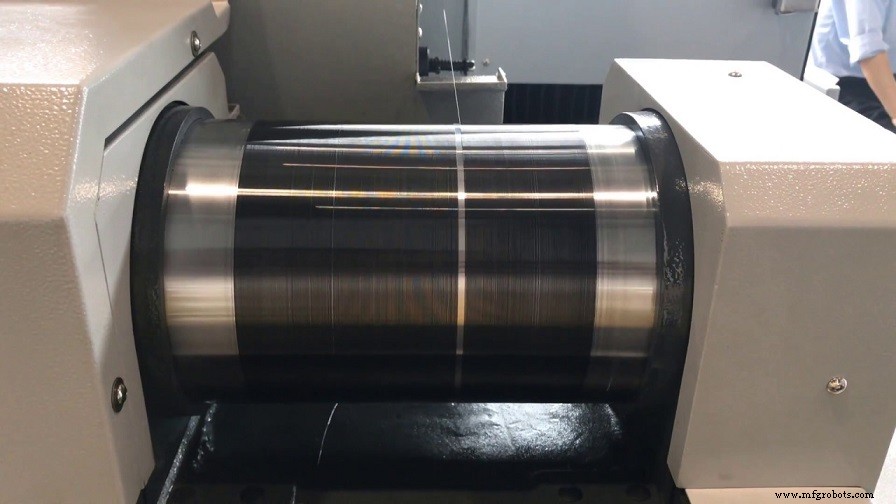
While most people think of wire cutting as a simple mechanical operation, molybdenum wire cutting is a sophisticated electrical discharge machining (EDM) technique. The process relies on the unique properties of molybdenum and the physics of spark erosion, not on mechanical abrasion.
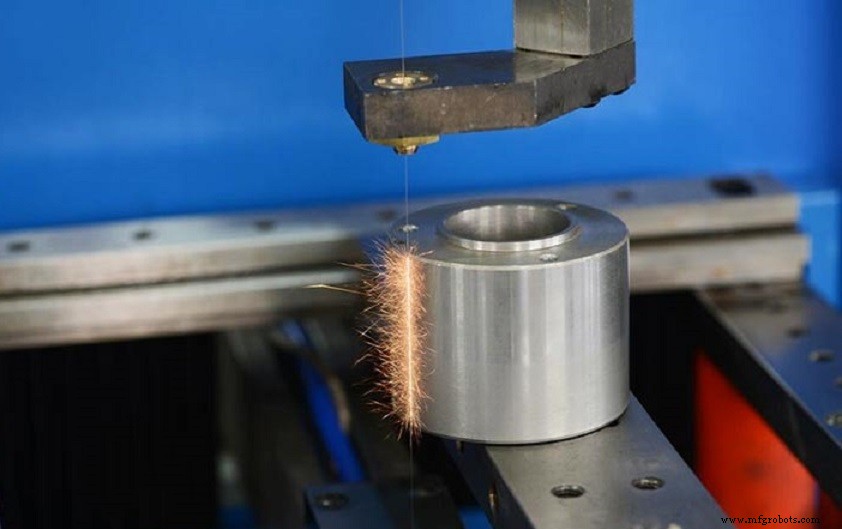
Illustration of molybdenum wire cutting
What Is Molybdenum and Molybdenum Wire?
Molybdenum is a silver‑white, high‑temperature refractory metal. It shares a similar appearance with tungsten, but its density is roughly half that of tungsten, making it easier to work with while maintaining exceptional strength at both room and elevated temperatures.
As a strategic material, molybdenum finds applications in defense, aerospace, and as a critical alloying element in high‑strength steels. It also serves as an essential micronutrient for plants and animals.
Molybdenum wire is a near‑pure metal wire (≥99% molybdenum) with diameters ranging from 0.02 mm to 0.2 mm. Its high tensile strength, low breakage rate, and excellent dimensional stability make it ideal for precision EDM tasks. Beyond metal cutting, molybdenum wire is used in lead‑wire production, heating elements, and other specialized industrial processes.
The Principle Behind Molybdenum Wire EDM
Unlike a saw, molybdenum wire does not wear against the workpiece. Instead, the wire is energized and pulsed at high voltage, creating micro‑sparks that instantaneously melt or vaporize small volumes of the target material.
The process takes place in an insulating liquid bath—commonly a deionized water or oil solution. Each pulse ruptures the liquid’s dielectric barrier, forming a transient discharge channel between the wire and the workpiece. After the spark, the liquid refills the gap, removing molten debris, cooling the electrodes, and preventing corrosion.
This cycle repeats millions of times per second, allowing for ultra‑precise cuts with tolerances in the micrometer range and the ability to machine complex geometries that would be impossible with conventional tools.
Why Molybdenum Wire Is Ideal for EDM
- High Electrical Conductivity – Enables efficient spark generation.
- Thermal Stability – Maintains shape under extreme temperatures.
- Low Melting Point (2,623 °C) – Allows the wire to be effectively melted without compromising its integrity.
- Chemical Inertness – Reduces corrosion in the electrolyte bath.
Conclusion
Understanding the physics behind molybdenum wire EDM clarifies why this technology excels in precision metal machining. Whether you’re manufacturing aerospace components, medical devices, or complex tooling, molybdenum wire offers unmatched accuracy and reliability.
For deeper insights into molybdenum and related refractory metals, we recommend visiting Advanced Refractory Metals (ARM), a leading global supplier headquartered in Lake Forest, California.
ARM supplies high‑quality refractory metals—tungsten, molybdenum, tantalum, rhenium, titanium, and zirconium—at competitive prices.
Metal
- Molybdenum Wire: Types, Properties, and Industrial Applications
- Why Molybdenum Is a Strategic Metal: Applications, History, and Global Significance
- Molybdenum Powder: Types, Properties, and Industrial Applications
- Common Causes of Molybdenum Wire Breakage During Wire Cutting
- Beryllium Metal: Key Properties Driving Its Use in Missile Gyroscopes
- Why Zirconium Is Classified as a Transition Metal
- Why Vanadium Is Classified as a Transition Metal
- High-Performance Molybdenum Wire: Annealed & Electropolished for Superior Thermal and Mechanical Properties
- Premium Molybdenum Annealed & Pickled Wire – Superior Thermal & Mechanical Performance
- Why Wire EDM Cutting Machines Deliver Precision and Cost Savings