



5 Expert-Backed Insights About Fasteners You Must Know
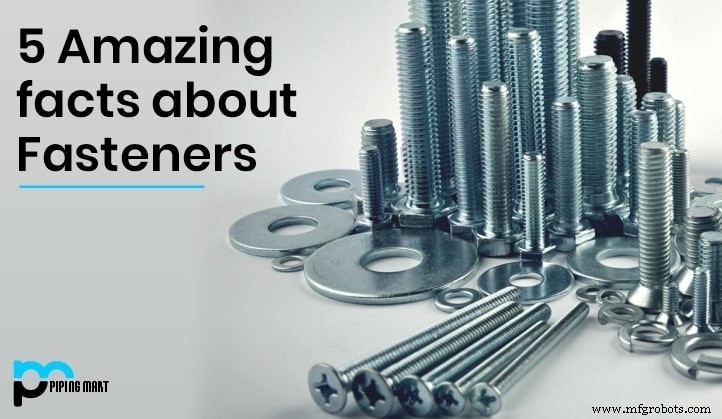
Even seasoned engineers can be surprised by the nuanced science behind fasteners. Below are five key insights that highlight the technical depth of these everyday components.
Insight 1 – Thread Load Distribution
When you tap a hole, the number of threads that effectively carry the load is limited. In practice, only the first six threads in a threaded connection contribute significantly to the clamping force. Each subsequent thread shares progressively less load due to the expansion of the bolt under tension. This principle explains why oversizing the thread count does not increase joint strength.
Insight 2 – Misconceptions About SHCS Grade
Many people mistakenly label socket head cap screws (SHCS) as “Grade 8.” However, true Grade 8 fasteners must meet strict standards for tensile strength, stiffness, and labeling. SHCS are typically equivalent to or better than Grade 9, with superior mechanical properties. When selecting a fastener, always verify the manufacturer’s certification rather than relying on informal “grade” labels.
Insight 3 – Fatigue Loading and Torque Selection
In cyclic or fatigue conditions, a properly torqued bolt prevents the joint from experiencing excess load. If the tightening torque exceeds the joint’s compressive capacity, the bolt can shift, leading to loosening. Always refer to the manufacturer’s torque table for the specific fastener geometry, and apply the torque to the bolt head, not the nut, to ensure accurate preload.
Insight 4 – Thread Class Designations
The letter‑number system (e.g., 2A, 3B) identifies thread fit and clearance. 2A/2B are the most common, balancing cost and performance, while 3A/3B offer tighter tolerances for precision assemblies. Classes 1A/1B are rarely used but are valuable for assemblies that require quick disassembly.
Insight 5 – Coarse vs. Fine Threads
Fine‑threaded bolts provide a larger thread‑bearing area, yielding higher strength for a given diameter and better performance in thin‑walled parts. They also allow more incremental adjustments due to the higher thread count. Coarse threads, on the other hand, are less susceptible to cross‑threading and are preferable when rapid assembly or exposure to harsh environments is a concern.
Metal
- 6 Key Insights Into Vanadium
- Tantalum: 5 Fascinating Facts About the High‑Temperature Refractory Metal
- Molybdenum Uncovered: 7 Key Facts About the Versatile Refractory Metal
- 8 Fascinating Facts About Zirconium
- 6 Fascinating Facts About Nickel – History, Properties, and Global Impact
- 7 Fascinating Insights About Chromium: From Discovery to Health Impacts
- 7 Expert-Backed Facts About Hafnium: Discovery, Properties, and Modern Applications
- 7 Fascinating Facts About Tungsten: From Discovery to Modern Applications
- Rhenium: 6 Fascinating Facts About This Rare, High‑Melting Metal
- Titanium Unveiled: 10 Key Facts About the World’s Most Versatile Metal