


Industrial manufacturing
Metal

Seamless and welded tantalum tubes with excellent corrosion resistance.PropertiesGeneralPropertyTemperatureValueDensity20.0 °C16.65 g/cm³MechanicalPropertyTemperatureValueCommentElastic modulus20.0 °C186 GPaElongation A2520.0 °C25 %Elongation A5020.0 °C25 %Poisson's ratio20.0 °C0.34 [-]Shear mo
Tantalum rod and wire with excellent corrosion resistance.Application: electronics, chemical plant construction, aerospace, implants, superconductorsPropertiesGeneralPropertyTemperatureValueDensity20.0 °C16.65 g/cm³MechanicalPropertyTemperatureValueCommentElastic modulus20.0 °C186 GPaElongation20.0
Tantalum rod and wire with excellent corrosion resistance.Application: electronics, chemical plant construction, aerospace, implants, superconductorsPropertiesGeneralPropertyTemperatureValueDensity20.0 °C16.65 g/cm³MechanicalPropertyTemperatureValueCommentElastic modulus20.0 °C186 GPaElongation20.0
The material G-TiAl6V4 with the material number 3.7161 is comparable with G-TiAl6V4, material number 3.7264, according to the Werkstoffleistungsblatt der Deutschen Luftfahrt WL 3.7264, part 1 and part 100, editions 11.92. It is preferably applied as construction material where weight-saving construc
Castings made from G-Ti2 with the material number 3.7031 are preferably applied in the apparatus construction as well as for application purposes with demands on the corrosion-resistance, e.g. in the chemical industry, paper, cellulose, textile and food industry, in the energy extraction and maritim
PropertiesGeneralPropertyTemperatureValueCommentDensity23.0 °C7.8 - 7.9 g/cm³Typical for Low Carbon SteelMechanicalPropertyTemperatureValueCommentElastic modulus23.0 °C200 - 215 GPaTypical for Low Carbon SteelElongation A5023.0 °C16 %Poisson's ratio23.0 °C0.29 [-]Typical for Low Carbon SteelShe
PropertiesGeneralPropertyTemperatureValueCommentDensity23.0 °C7.8 - 7.9 g/cm³Typical for Low Carbon SteelMechanicalPropertyTemperatureValueCommentElastic modulus23.0 °C200 - 215 GPaTypical for Low Carbon SteelElongation A5023.0 °C9 %Poisson's ratio23.0 °C0.29 [-]Typical for Low Carbon SteelShea
PropertiesGeneralPropertyTemperatureValueCommentDensity23.0 °C7.8 - 7.9 g/cm³Typical for Low Carbon SteelMechanicalPropertyTemperatureValueCommentElastic modulus23.0 °C200 - 215 GPaTypical for Low Carbon SteelElongation A5023.0 °C20 %Poisson's ratio23.0 °C0.29 [-]Typical for Low Carbon SteelShe
Material X90CrMoV18 is comparable to X 90 CrMoV 18 acc. to SEW 400 : 1991-02. This material is a hardenable corrosion resistant steel with high abrasion resistance and excellent cutting hardness. Application for cutting tools, such as butchers knives, surgical instruments (scalpels), breaker plates,
Material X12CrS13 is comparable to X 12 CrS 13 acc. to Key to Steel 1995 resp. steel-iron-list 1994. This material is a martensitic free cutting steel showing favorable machinability but lower ductility and corrosion resistance than the usual 13 per cent Cr-steels. Application for all kinds of turni
Cold rolled uncoated low carbon steel narrow strip for cold forming.,The non-alloy steel DC04 acc. to DIN EN 10130 is as a deep-draw quality suitable for cold forming of complexest profile forms and components, especially at high deformation speeds (e.g. transfer presses). To freedom of stretcher st
Cold rolled uncoated low carbon steel narrow strip for cold forming.,The non-alloy steel DC03 acc. to DIN EN 10130 is suitable for cold forming of simple profile forms and components. Mechanical foldings are possible for thicknesses of up to 1,5 mm. To freedom of stretcher strains applies a period o
Cold rolled uncoated low carbon steel narrow strip for cold forming.,The non-alloy steel DC01 acc. to DIN EN 10130 is suitable for cold forming of simple profile forms and components. Mechanical foldings are possible for thicknesses of up to 1,5 mm. To freedom of stretcher strains applies a period o
The platinum-iridium material PtIr30 (in the literature also: Pt30Ir or Pt70Ir30) is used as contact material for switching contacts (switches and relays for higher alternating current loads with a long service life) as well as for laboratory devices or structural components such as satellite contro
The platinum-iridium material PtIr20 (in the literature also: Pt20Ir, Pt80Ir20, Pt / Ir80 / 20) is used for switch contacts as well as for laboratory devices or structural components such as eg. B. satellite control nozzles that are mechanically stressed, thermally and corrosively heavily used. The
The platinum-iridium material PtIr20 (in the literature also: Pt20Ir, Pt80Ir20, Pt / Ir80 / 20) is used for switch contacts as well as for laboratory devices or structural components such as eg. B. satellite control nozzles that are mechanically stressed, thermally and corrosively heavily used. The
The platinum-gold material PtAu5 (in the literature also Pt5Au, Pt95Au5, PtAu 95/5, etc.) is used for laboratory crucibles for melt digestion of minerals and ferroalloys, and for laboratory shells in X-ray fluorescence analysis also in fine grain stabilized state. Further use for crucibles, casings
The group of platinum metals includes the elements ruthenium (Ru), rhodium (Rh), palladium (Pd) (light platinum metals with densities around 12 g/cm³) as well as osmium (Os), iridium (Ir) and platinum (Pt) ( heavy platinum metals with densities up to 22 g/cm³). Platinum is a gray-white malleable met
The palladium-tungsten alloy PdW10, also Pd90W10 or 90Pd10W, is used as contact material (tapping contacts) as well as potentiometer alloy.The material is ductile, corrosion-resistant and abrasion-resistant. It is machinable, conditionally deductible from the gas phase.PropertiesGeneralPropertyTempe
The palladium-tungsten alloy PdW10, also Pd90W10 or 90Pd10W, is used as contact material (tapping contacts) as well as potentiometer alloy.The material is ductile, corrosion-resistant and abrasion-resistant. It is machinable, conditionally deductible from the gas phase.PropertiesGeneralPropertyTempe
Metal

Secure Your IoT Infrastructure: 3 Proven Best Practices

Mastering Process Planning, Estimating & Costing for Competitive Manufacturing
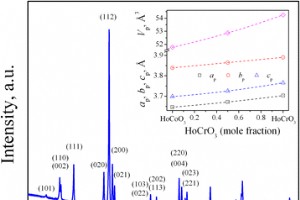
Unraveling Anomalous Thermal Expansion in HoCo0.5Cr0.5O3 via High‑Resolution Synchrotron Diffraction
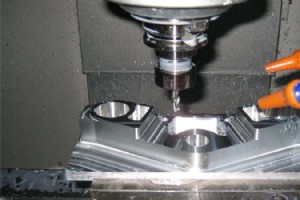
High-Speed Machining Explained: Techniques, History, and Applications

