


Industrial manufacturing
Metal

UGIMA® 4542 is the first UGIMA® steel product from the family of improved machinability, precipitation hardened stainless steels. It is manufactured only by UGITECH. Its properties are identical to those of UGI 4542 except for its machinability which is significantly better than that of UGI 4542: UG
UGIMA® 4542 is the first UGIMA® steel product from the family of improved machinability, precipitation hardened stainless steels. It is manufactured only by UGITECH. Its properties are identical to those of UGI 4542 except for its machinability which is significantly better than that of UGI 4542: UG
UGIMA® 4542 is the first UGIMA® steel product from the family of improved machinability, precipitation hardened stainless steels. It is manufactured only by UGITECH. Its properties are identical to those of UGI 4542 except for its machinability which is significantly better than that of UGI 4542: UG
UGICHROM® is the result of combining the high efficiency of micro-fissuring chromium plating with the technology of the most advanced stainless steel bars. The UGICHROM® product range is recommended for hydraulic and pneumatic mechanisms. General properties - choice for performance: Low friction co
UGICHROM® is the result of combining the high efficiency of micro-fissuring chromium plating with the technology of the most advanced stainless steel bars. The UGICHROM® product range is recommended for hydraulic and pneumatic mechanisms. General properties - choice for performance: Low friction co
UGICHROM® is the result of combining the high efficiency of micro-fissuring chromium plating with the technology of the most advanced stainless steel bars. The UGICHROM® product range is recommended for hydraulic and pneumatic mechanisms. General properties - choice for performance: Low friction co
UGICHROM® is the result of combining the high efficiency of micro-fissuring chromium plating with the technology of the most advanced stainless steel bars. The UGICHROM® product range is recommended for hydraulic and pneumatic mechanisms. General properties - choice for performance: Low friction co
As a bright steel product it is used in the form of bars, bright, straight, in various conditions (see DIN EN 10277 : 1999-10).PropertiesGeneralPropertyTemperatureValueCommentDensity23.0 °C7.8 - 7.9 g/cm³Typical for Low Carbon SteelMechanicalPropertyTemperatureValueCommentElastic modulus23.0 °C200 -
As a bright steel product it is used in the form of bars, bright, straight, in various conditions (see DIN EN 10277 : 1999-10).PropertiesGeneralPropertyTemperatureValueCommentDensity23.0 °C7.8 - 7.9 g/cm³Typical for Low Carbon SteelMechanicalPropertyTemperatureValueCommentElastic modulus23.0 °C200 -
As a bright steel product it is used in the form of bars, bright, straight, in various conditions (see DIN EN 10277 : 1999-10).PropertiesGeneralPropertyTemperatureValueCommentDensity23.0 °C7.8 - 7.9 g/cm³Typical for Low Carbon SteelMechanicalPropertyTemperatureValueCommentElastic modulus23.0 °C200 -
The stainless steel X7CrNiAl17-7 is usually used cold drawn as wire up to 10 mm diameter for springs or spring parts. It has a high fatigue strength and a raised high-temperature strength, but a reduced corrosion resistance and is applicable up to 300°C.PropertiesGeneralPropertyTemperatureValueDensi
The stainless steel X7CrNiAl17-7 is usually used cold drawn as wire up to 10 mm diameter for springs or spring parts. It has a high fatigue strength and a raised high-temperature strength, but a reduced corrosion resistance and is applicable up to 300°C.PropertiesGeneralPropertyTemperatureValueDensi
The balanced high performance machining steel 9 SMnPb 36 shows an excellent cutting behaviour. Because of the S content a lower toughness and a increased crack danger. Application: mass components in the automotive engineering, toolbuilding, apparatus engineeringPropertiesGeneralPropertyTemperatureV
The balanced machining steel 9 SMnPb 28 is used for higher demands on the cutting capacity and surface condition. The steel shows a lower crack sensitivity. Application: automotive engineering, toolbuilding, apparatus engineeringPropertiesGeneralPropertyTemperatureValueDensity20.0 °C7.85 g/cm³Mechan
The fully killed machining steel 10 SPb 20 shows a better machinability because of the Pb and S additions. Application in the case hardened condition for thin-walled parts in the automotive engineering, toolbuilding, apparatus engineering.PropertiesGeneralPropertyTemperatureValueDensity20.0 °C7.85 g
The steel 67 SiCr 5 is used as cold rolled steel strip for springs with high dimensional accuracy and surface condition up to 3.0 mm thicknesses.PropertiesGeneralPropertyTemperatureValueDensity20.0 °C7.83 g/cm³MechanicalPropertyTemperatureValueElastic modulus-100.0 °C217 GPa20.0 °C206 - 212 GPa100.0
The steel 50 CrV 4 is used as cold rolled steel strip for springs with high dimensional accuracy and surface condition up to 3.0 mm thicknesses.PropertiesGeneralPropertyTemperatureValueDensity20.0 °C7.83 g/cm³MechanicalPropertyTemperatureValueElastic modulus-100.0 °C217 GPa20.0 °C206 - 212.6 GPa100.
The cold-upsettable steel Cq 22 can be cold-formed with medium to high rate of forming according to the usual forming methods on single-stage and multi-stage presses. It is used, for example, for spacer nuts, piston bolts, 5.6 screws and nuts of strength class 8.PropertiesGeneralPropertyTemperatureV
The cold-upsettable steel 28 B 2 can be cold-formed with a medium to high rate of forming according to the usual forming methods on single-stage and multi-stage presses. It is used for Phillips screws of strength class 8.8 in the thick and medium dimension range and for nuts of strength classes 8 an
The cold-upsettable steel 22 B 2 can be cold-formed with a medium to high rate of forming according to the usual forming methods. It is used for screws, bolts and pressed parts of strength class 8.8 in the thick and medium dimension range.PropertiesGeneralPropertyTemperatureValueDensity20.0 °C7.82 g
Metal

In‑House Design & Engineering Enhances Progressive Tool Performance

Additive Manufacturing Technologies Revolutionizes Post‑Processing with the First‑Ever Automated Machine
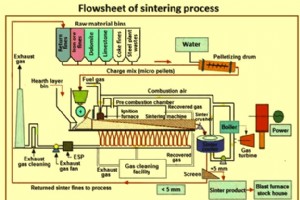
Key Factors That Shape the Sintering Process in Iron Ore Production
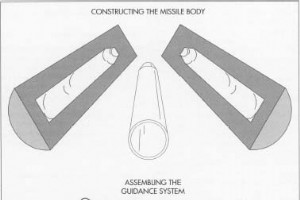
Laser‑Guided Missiles: Development, Manufacturing, and Strategic Impact

