Industrial manufacturing
Nanomaterials

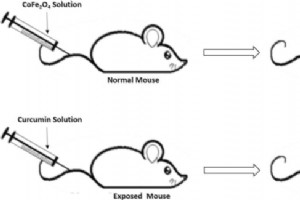
AbstractWe present a comparative study of the toxicity of polyethylene glycol (PEG)–coated cobalt ferrite nanoparticles and nanospheres. Nanoparticles were prepared by hydrothermal method while nanospheres were prepared by solvothermal technique. The surface of nanomaterials was successfully modifie
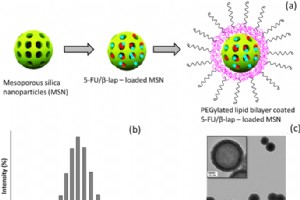
AbstractHead and neck squamous cell carcinomas (HNSCC) are one of the deadliest forms of cancer, and 90% of its origin is from squamous cells. NAD(P)H:quinone oxidoreductase 1 (NQO1), an enzyme overexpressed in squamous cell carcinoma, plays an important role in proliferation and chemoresistance. Th
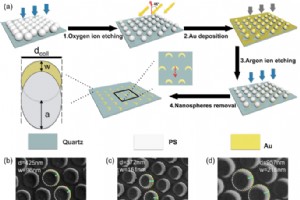
AbstractCircular dichroism (CD) is an interesting phenomenon originating from the interaction of light with chiral molecules or other nanostructures lacking mirror symmetries in three-dimensional (3D) or two-dimensional (2D) space. While the observable effects of optical chirality are very weak in m
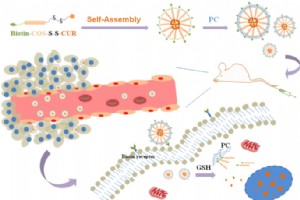
AbstractIn this paper, a type of phycocyanin (PC)-functionalized and curcumin (CUR)-loaded biotin-chitosan oligosaccharide-dithiodipropionic acid-curcumin (BCSC) nanoparticles, called CUR-BCSC@PCs, were designed to enhance the biocompatibility of CUR. The structure of BCSC was confirmed using 1H-NMR
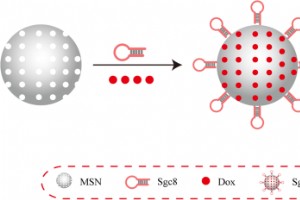
AbstractHow to deliver chemotherapeutic drugs efficiently and selectively to tumor cells to improve therapeutic efficacy remains a difficult problem. We herein construct an efficient cell-targeting drug delivery system (Sgc8-MSN/Dox) based on aptamer-modified mesoporous silica nanoparticles that rel
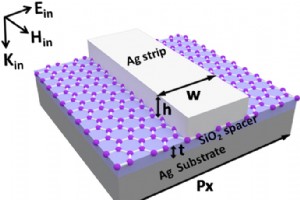
AbstractDesigning powerful electromagnetic wave modulators is required for the advancement of optical communication technology. In this work, we study how to efficiently modulate the amplitude of electromagnetic waves in near-infrared region, by the interactions between the interband transition of g
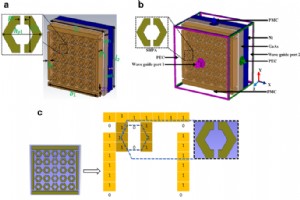
AbstractSolar energy is one of the ambient sources where energy can be scavenged easily without pollution. Intent scavenging by the solar cell to recollect energy requires a state-of-the-art technique to expedite energy absorption to electron flow for producing more electricity. Structures of the so
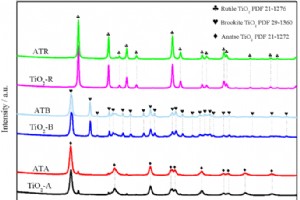
AbstractSupported Au–Pd bimetal nanoparticles on TiO₂ (P25) have demonstrated remarkable performance in solvent‑free benzyl alcohol oxidation. Yet, the influence of the TiO₂ crystal form on catalytic activity remains largely unexplored. Here, we successfully synthesized rutile, brookite, and anatase
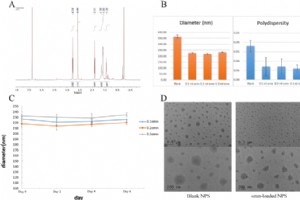
AbstractWe engineered gelatinase‑responsive nanoparticles (NPs) loaded with the clinically approved MRI contrast agent Omniscan (Omn) via a double‑emulsion technique. The resulting Omn‑NPs displayed a uniform size (~120 nm), high encapsulation efficiency (~45 %), and remained stable for at least six
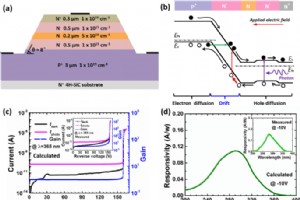
AbstractThis study presents a systematic parametric analysis of a 4H‑SiC separated absorption charge and multiplication (SACM) avalanche ultraviolet photodiode (UV APD). Our simulations reveal that the breakdown voltage is highly sensitive to the multiplication‑layer thickness and the charge‑control
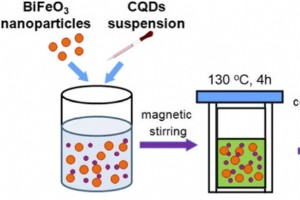
AbstractWe fabricated carbon quantum dot (CQD)‑decorated BiFeO3 nanoparticles via a simple hydrothermal route. TEM and XPS confirmed uniform CQD attachment on BiFeO3 surfaces. Using Acid orange 7 (AO7) and hexavalent chromium (Cr(VI)) as probe pollutants, we evaluated photo‑Fenton degradation and ph
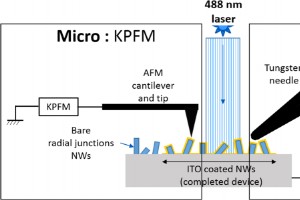
AbstractThis study demonstrates how Kelvin Probe Force Microscopy (KPFM) can accurately extract the open‑circuit voltage (VOC) of silicon nanowire (SiNW) radial‑junction (RJ) devices via surface photovoltage (SPV) mapping. Initial experiments on fully fabricated RJ SiNW solar cells show that SPV val
![Tailoring Side Facets of Vertical [100] InP Nanowires for Innovative Radial Heterostructures](https://www.mfgrobots.com/article/uploadfiles/202112/2021122512504404_S.png)
AbstractVertical [100] oriented InP nanowires offer a unique set of side facets and cross‑sectional geometries that are not accessible in conventional [111] growth. By systematically varying growth parameters and applying in‑situ post‑growth annealing, we engineered a spectrum of facet combinations—
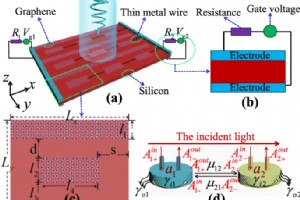
AbstractWe demonstrate a tunable plasmon‑induced transparency (PIT) effect in a patterned graphene metasurface composed of interleaved ribbons and strips. Finite‑difference time‑domain (FDTD) simulations and coupled‑mode theory (CMT) reveal that two independent gate voltages can selectively suppress
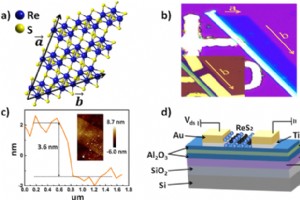
Abstract10⁵ weights, the network achieved a perfect 100 % recognition rate, demonstrating the device’s promise for practical neuromorphic applications. BackgroundTraditional von Neumann architectures separate computation from memory, creating a bandwidth bottleneck and high power consumption. In c
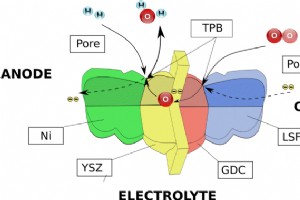
AbstractLong‑term operation of a solid oxide fuel cell (SOFC) can drive significant anisotropic changes in its anode. Using electron nanotomography, we examined the microstructure of a commercial SOFC stack before and after 3 800 h of continuous operation. Analysis of the 3D digital reconstruction r
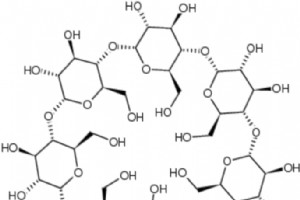
Abstract Polychlorinated biphenyls (PCBs) are persistent, endocrine‑disrupting pollutants that pose serious health risks, including carcinogenesis and reproductive toxicity. This study presents the synthesis of a composite material comprising 3A‑amino‑3A‑deoxy‑(2AS,3AS)-β‑cyclodextrin hydrate (β‑CD
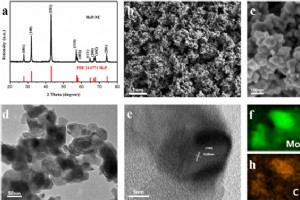
AbstractMolybdenum phosphide (MoP) is a promising non‑precious catalyst for the hydrogen evolution reaction (HER). Yet, its limited stability and conductivity in alkaline media have hindered practical deployment. We report a simple, two‑step synthesis that introduces N‑ and C‑co‑doped MoP (MoP‑NC)
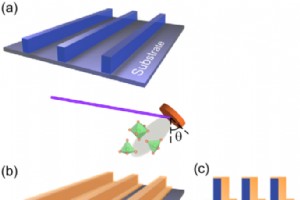
AbstractPerovskite manganites exhibit a broad range of structural, electronic, and magnetic properties, which are widely investigated since the discovery of the colossal magnetoresistance effect in 1994. As compared to the parent perovskite manganite oxides, rare earth-doped perovskite manganite oxi
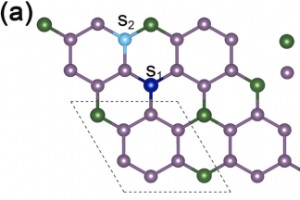
AbstractUsing first-principle calculations within density functional theory, we investigate the electronic property and stability of substitutionally doped 2D GeP3 monolayer with dopants from group III to VI. The conducting properties are found to be dramatically modified by both the doping sites an
Nanomaterials