


Industrial manufacturing
Nanomaterials


AbstractWe present corrections to the magic‑number formulas for body‑centered cubic (bcc) nanoclusters. The revised equations are validated by radial distribution function (RDF) calculations for several crystal structures, and we additionally report RDF‑derived data for truncated bcc and face‑cente
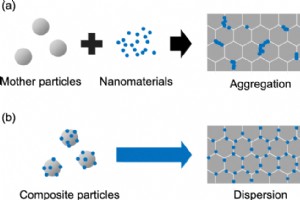
AbstractThis work reports on a novel controlled nanocomposite fabrication technique which is applicable for material design via a micro- and nano-assembly method. The principle is based on the use of electrostatic adsorption of the surface charge-modified particles via layer-by-layer assembly. The p
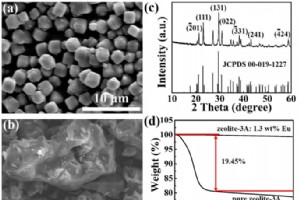
AbstractEu2+-activated phosphors are the cornerstone of modern lighting and display technologies, owing to their bright, stable, and eco‑friendly emission. Here we report a highly efficient green‑emitting phosphor based on zeolite‑3A doped with 1.3 wt % Eu. The material is synthesized by a high‑temp
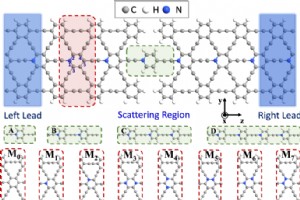
AbstractSince the rapid development of theoretical progress on the two-dimensional graphyne nanoribbons and nanojunctions, here we investigate the electronic band structures and transport properties for the junctions based on armchair-edged γ-graphyne nanoribbons (AγGYNRs) with asymmetrically nitrog
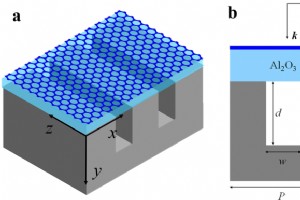
AbstractThe constructive interference of bright and dark plasmonic modes results in plasmon-induced absorption (PIA) effect. Here, we theoretically investigate PIA effect, which is realized by the constructive interference between a Fabry-Perot (F-P) resonance mode and a graphene quasi-guided mode.
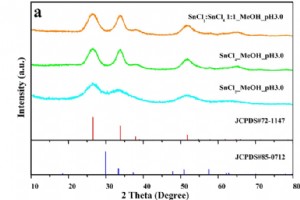
Abstract 420 nm illumination and produced hydrogen (with methanol as an electron donor) and oxygen (with AgNO₃ as an electron acceptor) without the need for additional co‑catalysts. The enhanced visible‑light performance is attributed to self‑doping of Sn²⁺ into the Sn⁴⁺ lattice, creating intermedia
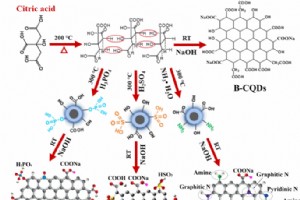
AbstractWe present a detailed investigation on the effect of functional group modulation at the edges of carbon quantum dots (CQDs) on the fluorescence from the CQDs. The CQDs attached by N, S, and P elements are synthesized via pyrolysis of a mixture of citric acid and NH3H2O, H2SO4, and H3PO4, res
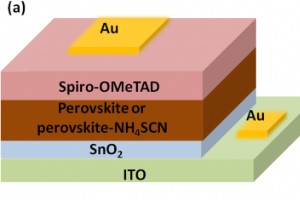
AbstractThe trap-state density in perovskite films largely determines the photovoltaic performance of perovskite solar cells (PSCs). Increasing the crystal grain size in perovskite films is an effective method to reduce the trap-state density. Here, we have added NH4SCN into perovskite precursor sol
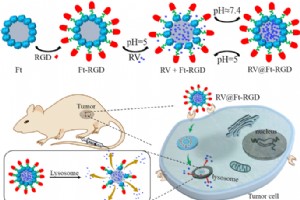
AbstractIn this report, we present a pH-induced reversible assembly system (PIRAS) based on ferritin (Ft) for targeted tumor therapy. It has been developed to easily load and release of the anticancer drug resveratrol (RV), based on its natural pH-sensitivity and unique hollow cavity of Ft. A tumor-
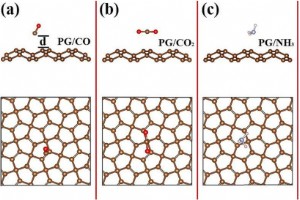
AbstractTwo-dimensional (2D) penta-graphene (PG) with unique properties that can even outperform graphene is attracting extensive attention because of its promising application in nanoelectronics. Herein, we investigate the electronic and transport properties of monolayer PG with typical small gas m
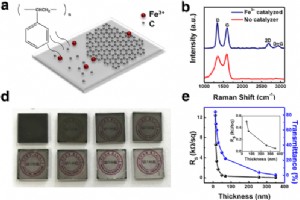
AbstractApplications of graphene as transparent conductive electrodes (TCE) have been hindered either by high cost of single crystal graphene or balance between transparency and sheet resistance of polycrystalline graphene. In this work, we propose to fabricate multilayer graphene film grids (MGFG)
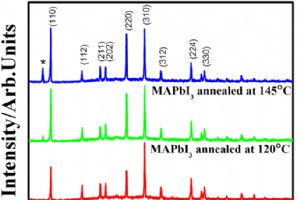
AbstractHybrid organic‑inorganic perovskites (HOIPs) are celebrated for their long carrier diffusion lengths, high absorption coefficients, and outstanding photovoltaic performance. Charge‑transport properties, particularly microscopic scattering mechanisms, are central to device efficiency. In this
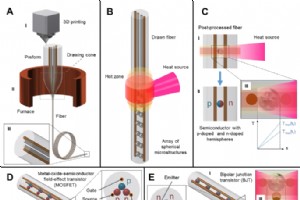
AbstractFibers are ubiquitous and usually passive. Optoelectronics realized in a fiber could revolutionize multiple application areas, including biosynthetic and wearable electronics, environmental sensing, and energy harvesting. However, the realization of high-performance electronics in a fiber re
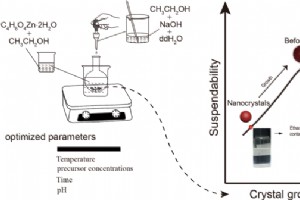
AbstractUnderstanding how nanocrystals grow is essential for tailoring their physical and chemical properties. While Ostwald ripening (OR) has long been considered the dominant growth pathway, recent evidence highlights oriented attachment (OA) as a significant complementary mechanism. In this work,
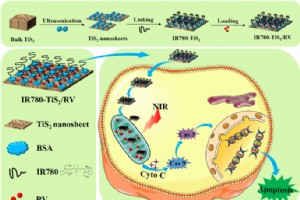
AbstractA subcellular organelle-targeted delivery of anti-cancer drugs is a promising strategy to maximize the anti-cancer effects and minimize the adverse effects. Herein, we prepared a mitochondria-targeted drug delivery nanoplatform based on IR780 iodide (IR780) and titanium disulfide (TiS2) nano
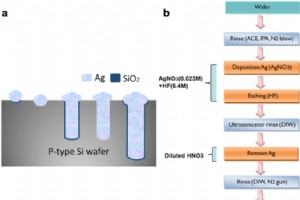
AbstractWe demonstrate a scalable, solution‑processed metal‑assisted chemical etching (MacEtch) technique that yields uniform silicon nanowire (SiNW) arrays on 6‑inch mono‑ and multi‑crystalline wafers. The SiNWs, 470 nm long and 3.02 × 10¹¹ cm⁻² dense, provide a broadband anti‑reflective effect wit
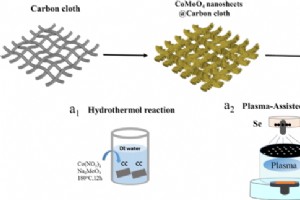
AbstractIn this work, three-dimensional (3D) CoMoSe4 nanosheet arrays on network fibers of a carbon cloth denoted as CoMoSe4@C converted directly from CoMoO4 nanosheet arrays prepared by a hydrothermal process followed by the plasma-assisted selenization at a low temperature of 450 °C as an anode fo
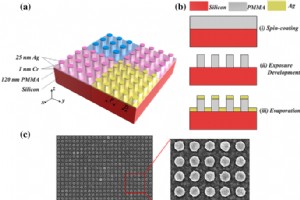
AbstractThe continuous shrinkage of pixel pitch on modern image sensors has outpaced the capabilities of conventional dye‑based color filters, which typically span several micrometres and therefore limit achievable spatial resolution. We report a plasmonic structural colour filter that exploits a ci
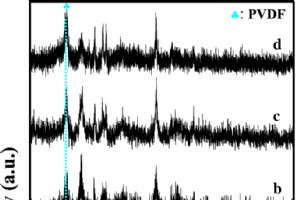
AbstractCuS nanoflowers were successfully anchored onto anatase TiO₂/polyvinylidene fluoride (PVDF) nanofibers through a single low‑temperature hydrothermal step following electrospinning of a tetrabutyl orthotitanate (TBOT)/PVDF precursor. The Cu²⁺ and thiourea stoichiometry governed both the crys
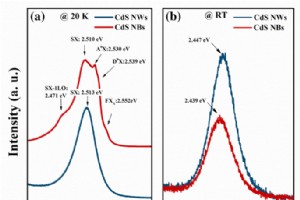
AbstractIn this report, comparative investigation of photoluminescence (PL) characteristics of CdS nanobelts (NBs) and nanowires (NWs) is presented. At low temperatures, emissions originate from radiative recombination of free exciton A, neutral donor bound exciton, neutral acceptor bound exciton an
Nanomaterials
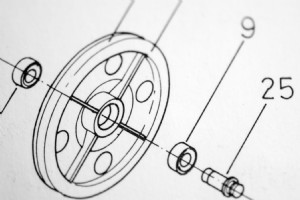
Machining Allowance: How Extra Material Guarantees Precision & Finish

Boost Equipment Reliability with Proven Statistical Process Control
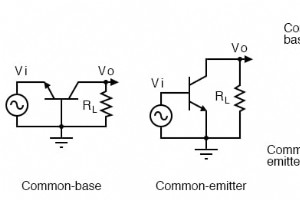
Cascode Amplifier: Combining Common‑Emitter and Common‑Base for Wide Bandwidth and High Input Impedance

Driving VHDL Testbenches from External Stimulus Files with TEXTIO
