Industrial manufacturing
Nanomaterials

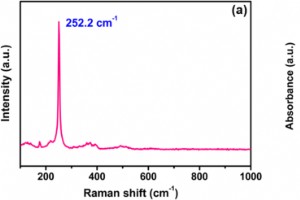
AbstractThe tungsten diselenide (WSe2) has attracted considerable interest owing to their versatile applications, such as p-n junctions, transistors, fiber lasers, spintronics, and conversion of solar energy into electricity. We demonstrate all-optical tuning of light in WSe2-coated microfiber (MF)
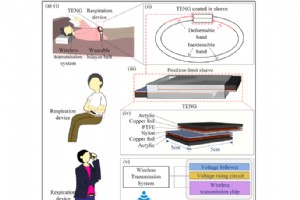
AbstractRespiratory rate is a critical biomarker for detecting respiratory disorders such as obstructive sleep apnea and cystic fibrosis. Conventional clinical monitors are bulky and unsuitable for everyday use, whereas mobile health devices require lightweight, power‑free solutions. We present a wa
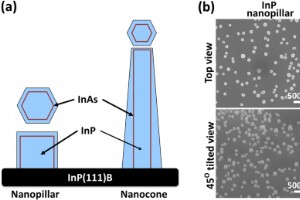
Abstract We investigated the optical phonon modes of self‑catalyzed InP/InAs/InP core‑shell nanostructures—nanopillars and nanocones—grown on InP(111)B substrates via metal‑organic chemical vapor deposition (MOCVD) using liquid indium droplets as catalysts. Raman analysis revealed the first‑order mo
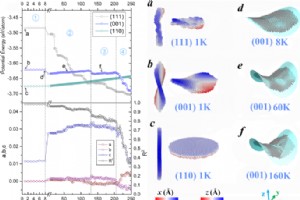
Abstract Metallic nanoplates exhibit remarkable functional versatility that is tightly linked to their morphology. Using atomistic molecular dynamics, we examined the shape stability of body‑centered‑cubic (bcc) nanoplates with low‑index surfaces. Our simulations reveal that (110) surfaces are intri
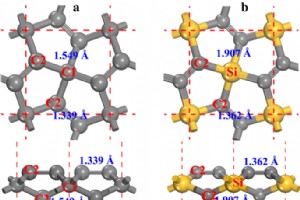
AbstractUsing first‑principles calculations, we predict that penta‑siligraphene (P‑Si2C4) is a promising anode material for Li‑ion batteries. The hybrid Si/C structure is more thermally stable than penta‑graphene and possesses a buckled pentagonal lattice that hosts an empty C‑2pz band. This elect
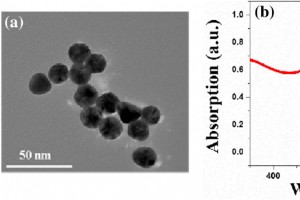
AbstractTo broaden the commercial impact of organic light‑emitting diodes (OLEDs), solution‑processed inverted polymer LEDs (iPLEDs) are emerging as a promising platform. However, the electron‑transport efficiency of the cathode interface layer—specifically PF‑NR2—remains a bottleneck. In this study
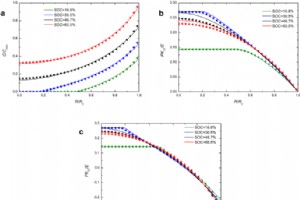
AbstractWe present a refined chemical‑potential expression that removes the low‑deformation‑rate assumption, enabling accurate modeling of diffusion‑induced stress and lithium distribution in silicon nanoparticle electrodes. Comparing the new expression with the traditional one under potentiostatic
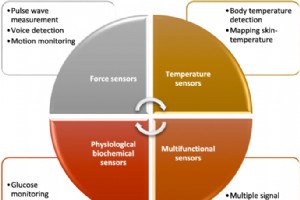
AbstractWearable electronics have emerged as a pivotal technology in healthcare, offering non‑invasive, real‑time monitoring of vital physiological parameters. By leveraging soft, skin‑conformable substrates, these devices capture data such as pulse, temperature, and glucose levels, enabling proacti
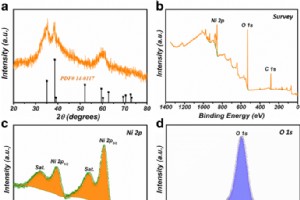
AbstractTransition‑metal hydroxides can reach their full electrochemical potential when engineered into cage‑like architectures. Here, we report a one‑pot Coordinated Etching–Precipitation (CEP) strategy that transforms cubic Cu₂O templates into hollow Ni(OH)₂ nanocages (NCs). The resulting NCs exhi
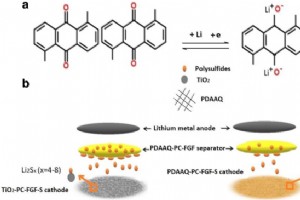
AbstractTo bridge the gap between the theoretical (1672 mAh g⁻¹) and practical performance of Li‑S batteries, we engineered composite cathodes comprising polycarboxylate‑functionalized graphene (PC‑FGF) doped with TiO₂ nanoparticles or poly‑1,5‑diaminanthraquinone (PDAAQ) and sulfur. PC‑FGF/S acts a
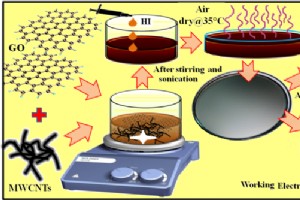
AbstractHerein, we report a novel, simple, and cost-effective way to synthesize flexible and conductive rGO and rGO/MWCNT freestanding films. The effects of MWCNT addition on the electrochemical performance of rGO/MWCNT nanocomposite films are investigated in some strong base aqueous electrolytes, s
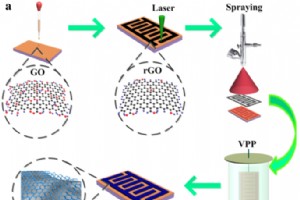
AbstractThree‑dimensional porous nanostructures are increasingly attractive for flexible microsupercapacitors (MSCs) because they expose more electrochemical active sites, accelerate ion diffusion, and reduce charge‑transfer resistance. In this study, we fabricated a highly open 3‑D network of reduc
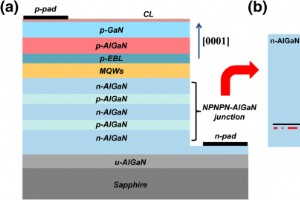
AbstractWe present a novel strategy to improve current spreading in AlGaN‑based deep ultraviolet light‑emitting diodes (DUV LEDs) by inserting a locally doped n‑AlGaN/p‑AlGaN/n‑AlGaN (NPN‑AlGaN) structure into the electron‑supplier layer. The thin p‑AlGaN insertion creates a conduction‑band barrier
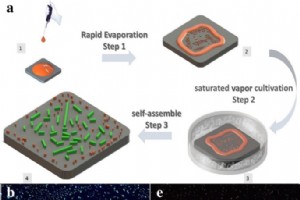
AbstractIn this study, we propose a one-drop self-assembly method, which proved capable of successfully preparing 4-N, N-dimethylamino-4′-N′-methyl-stilbazolium tosylate (DAST) single-crystalline nanowires (NWs). The apparent roughness of the DAST NWs was determined to be less than 100 pm by using a
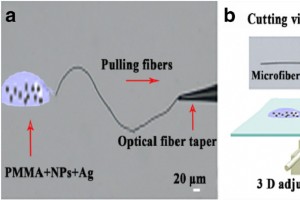
AbstractWe report a facile fabrication route for polymer microfibers that incorporate up‑conversion nanoparticles (UCNPs) co‑doped with silver (Ag). The resulting LiYF4:Yb3+/Er3+/Ag microfibers exhibit a transmission loss of α = 108.94 cm−1 and a temperature sensitivity of 0.0095 K−1 at 303 K, outp
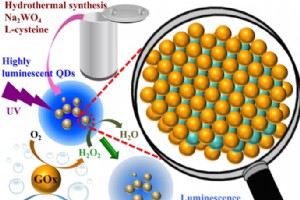
AbstractZero‑dimensional tungsten disulfide (WS₂) quantum dots (QDs) with strong, stable photoluminescence (PL) are rare, especially when produced without toxic solvents. Here we report a simple, one‑pot hydrothermal method that yields water‑soluble WS₂ QDs using sodium tungstate dihydrate and l‑cys
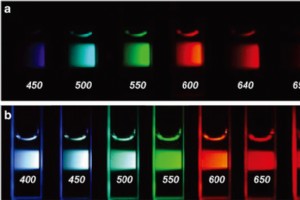
AbstractFluorescent carbon dots (CDs), including carbon quantum dots (CQDs) and graphene quantum dots (GQDs), are emerging nanomaterials prized for their low cost, minimal toxicity, and tunable optical properties. Surface passivation and functionalization allow precise control over fluorescence, ena

AbstractRNA interference (RNAi) offers unmatched specificity for gene silencing, yet siRNA stability and precise tissue delivery remain limiting factors. We engineered a dual‑responsive system by conjugating gelatin‑based nanogels (GS) with the nucleolin‑targeting AS1411 aptamer and deoxynucleotide‑
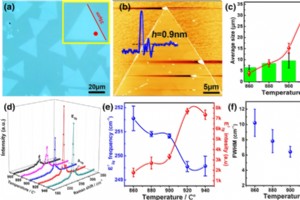
Abstract\nChemical vapor deposition (CVD) is the predominant route for producing large‑area transition metal dichalcogenide (TMDC) monolayers. Yet, the method often generates a high density of crystalline defects that limit optoelectronic performance and long‑term stability. In this study, we system
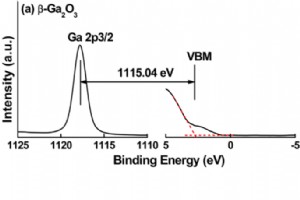
AbstractThe Al-doped effects on the band offsets of ZnO/β-Ga2O3 interfaces are characterized by X-ray photoelectron spectroscopy and calculated by first-principle simulations. The conduction band offsets vary from 1.39 to 1.67 eV, the valence band offsets reduce from 0.06 to − 0.42 eV, exhibiting an
Nanomaterials