Industrial manufacturing
Nanomaterials

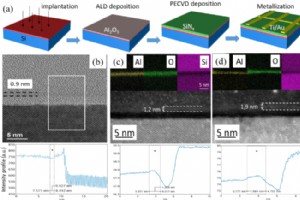
AbstractSilicon p‑n junctions rely on effective surface and contact passivation to minimize recombination losses. Aluminum oxide (Al₂O₃) deposited by atomic layer deposition (ALD) is widely adopted for this purpose because of its excellent thickness control and field‑effect passivation. In this st
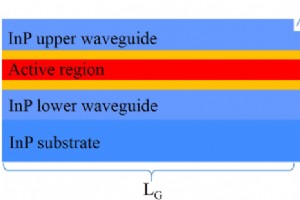
Abstract 0.6 W CW output at room temperature. Contrary to the conventional long‑wavelength drift with rising temperature or injection current, the lasing mode occasionally jumps to a shorter wavelength. Modal analysis shows that temperature‑induced refractive‑index changes shift the longitudinal mod
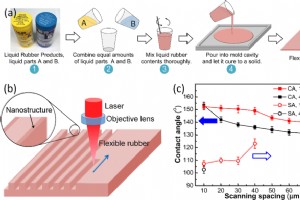
AbstractHighly stretchable and durable superhydrophobic surfaces are of great interest for a range of applications. In this study we fabricated such surfaces on Ecoflex silicone elastomer using a femtosecond laser texturing approach. The resulting materials can withstand strains up to 400 % without
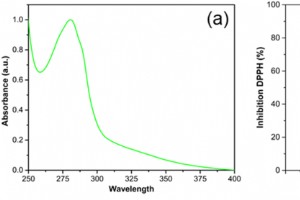
AbstractGold nanoparticles (AuNPs) produced via plant‐based green chemistry offer broad biomedical prospects. Here we report AuNPs synthesized from Mimosa tenuiflora bark extract (Mt) under controlled precursor concentrations. Mt was extracted in ethanol–water, and its antioxidant activity was quant

AbstractHere, we report a novel method for low-temperature synthesis of monolayer graphene at 450 °C on a polycrystalline bimetal Ni-Au catalyst. In this study, low-temperature chemical vapor deposition synthesis of graphene was performed at 450 °C on codeposited Ni-Au which shows successful monolay
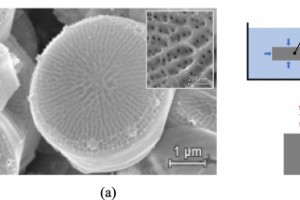
AbstractDrawing inspiration from the intricate nanostructure of diatom algae frustules, we present a novel approach that uses engineered nanoporous silica tablets to quantify the concentration of biomolecules or nanoparticles suspended in water. The method hinges on the well‑established reduction of
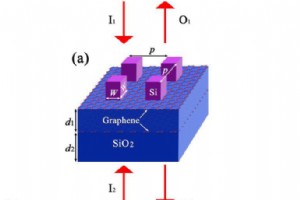
Abstract Graphene’s intrinsic 2.3 % absorption in the visible and infrared limits its optoelectronic impact. We present a tunable dual‑band, polarization‑insensitive coherent perfect absorber (CPA) operating in the mid‑infrared, built around a silicon‑nanostructure‑coupled double‑layer graphene wave
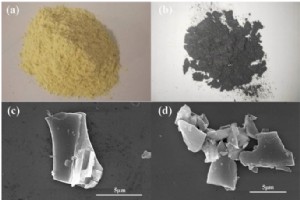
AbstractHemp stems, an abundant and inexpensive biomass waste, offer a promising route to high‑performance anode materials. In this study, we prepared activated carbon (AC) from hemp stems via low‑temperature carbonization followed by ZnCl2 activation at 500–800 °C. The natural fibrous architecture
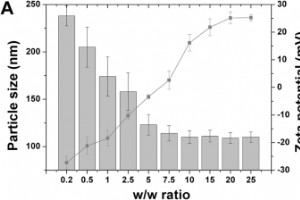
AbstractMultidrug resistance (MDR) and non‑specific distribution limit the effectiveness of conventional chemotherapy. We engineered a cancer‑cell‑membrane (CCM) coated silica (SLI) nanoparticle capable of co‑loading miR‑495 and doxorubicin (DOX) to address both challenges. The CCM, derived from t
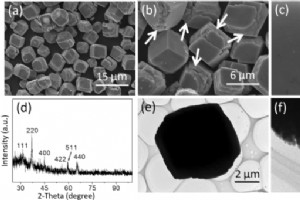
AbstractWe report a facile two‑step route to synthesize mesoporous Co3O4 quasi‑cubes by employing egg albumin as a bio‑surfactant during hydrothermal treatment followed by calcination at 300 °C. The resulting cubes exhibit a layered architecture, an average pore diameter of 5.58 nm and a Brunauer–E
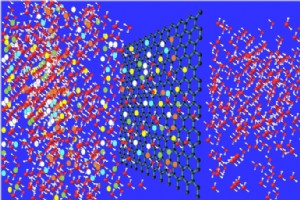
AbstractNanotechnology, by manipulating matter at the nanoscale, offers powerful solutions for environmental challenges. Carbon‑based nanomaterials—fullerene, carbon nanotubes (CNTs), graphene, graphene oxide (GO), and activated carbon—exhibit exceptional physicochemical traits: non‑toxic chemistry
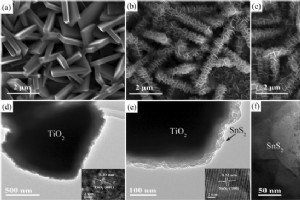
Abstract Converting solar energy into hydrogen fuel via photoelectrochemical (PEC) water splitting offers a sustainable solution to global energy and environmental challenges. Conventional TiO₂ nanomaterials suffer from limited visible‑light absorption and rapid electron–hole recombination. Here, we
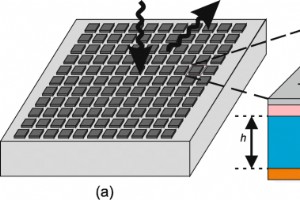
AbstractGraphene, an innovated 2D material with atomic thickness, is a very promising candidate and has drawn great attentions in various applications. Graphene metasurface enables dynamic control of various wavefronts, achieving distinguished functionalities. The flexibility of graphene metasurface
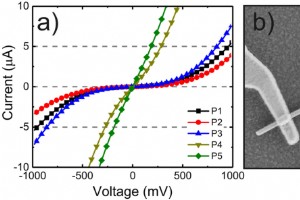
Abstract The performance of Ohmic contacts on semiconductor nanowires (NWs) is pivotal for integrating them into electronic and optoelectronic systems. Because NWs have nanometric dimensions and unique surface orientations, conventional planar processing techniques are inadequate. In this study, we
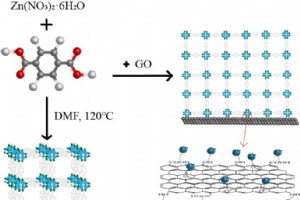
AbstractPrepared composite materials based on [Zn4O(benzene-1,4-dicarboxylate)3] (MOF-5) and graphene oxide (GO) via a simple green solvothermal method, at which GO was used as platform to load MOF-5, and applied to the thermal decomposition of AP. The obtained composites were characterized by vario
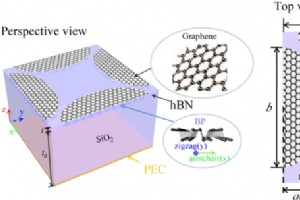
AbstractWe numerically propose a dual-band absorber in the infrared region based on periodic elliptical graphene-black phosphorus (BP) pairs. The proposed absorber exhibits near-unity anisotropic absorption for both resonances due to the combination of graphene and BP. Each of the resonances is inde
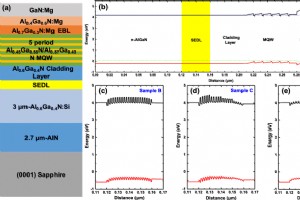
AbstractAlGaN-based deep ultraviolet (DUV) light-emitting diodes (LEDs) suffer from electron overflow and insufficient hole injection. In this paper, novel DUV LED structures with superlattice electron deceleration layer (SEDL) is proposed to decelerate the electrons injected to the active region an
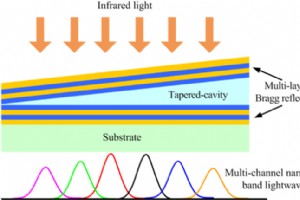
Abstract This study details the design, fabrication, and testing of a compact mid‑infrared (MIR) linear variable optical filter (LVOF) and an array of MEMS‑based uncooled thermopile detectors for simultaneous measurement of CH4, CO2, and CO. The LVOF, a tapered‑cavity Fabry‑Pérot filter, converts th
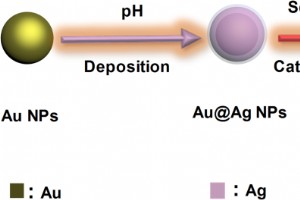
AbstractMetal–semiconductor heterostructures can outperform their individual components when their morphology and interfacial quality are finely tuned. Here we report a one‑step, aqueous synthesis of Au/CdSe Janus nanospheres that feature two hemispherical domains separated by a flat, crystalline in
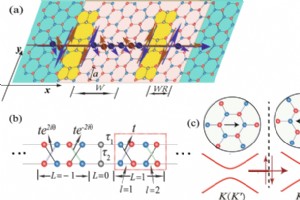
AbstractWe explore valley‑polarized transport in silicene that hosts two parallel line defects under Rashba spin‑orbit coupling (RSOC). When RSOC surpasses the intrinsic SOC, the transmission spectra of the two valleys oscillate synchronously, producing broad peaks and complete transmission gaps. In
Nanomaterials